09 Aug Understanding Hiking Difficulty Levels – The Complete Guide
A 14-kilometre coastal stage can feel relaxed – or surprisingly demanding by the end of the day. What matters is not only the kilometres on the map, but also the ascents, the terrain, the heat, your sure-footedness and the overall duration of the tour. Anyone who wants to understand hiking difficulty levels and classify them correctly therefore looks more closely than at the simple label “easy”, “moderate” or “hard”. Understanding hiking difficulty levels creates planning certainty and ensures that the view, the wind and the landscape stay at the centre of your day – not the question of whether the next stage will be too much.
What a difficulty level really tells you
Difficulty ratings are a guideline, not a universal unit of measurement. A hike classified as moderate can be demanding for trained lowland walkers, while being perfectly manageable for regular mountain hikers. Conversely, a short, easy route can cost considerably more energy than expected in high temperatures or strong wind.
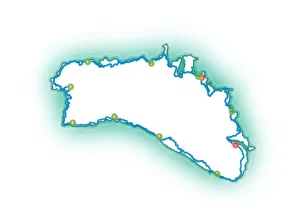
At NATOUR we do not rate routes by a single value. Length, elevation gain, path conditions, navigation and landscape conditions are considered together. On islands in particular this matters: volcanic ash on Lanzarote, stony passages on La Gomera, exposed coastal paths on Menorca or long sandy tracks on the Rota Vicentina each demand something different.
The difficulty level therefore answers above all this question: which physical and technical prerequisites do you need so that a stage becomes a pleasure? It does not say how beautiful a tour is or how much adventure it offers. Many of the most impressive paths are moderate when route and travel season match your own abilities.
Understanding hiking difficulty levels: the five factors
1. Distance and walking time
The number of kilometres is the most visible value – but it is frequently overestimated. Ten kilometres on a level, firm coastal path feel completely different from ten kilometres across scree, through ravines or with several steep ascents. As a rough guideline: on a good path, experienced hikers manage around four kilometres per hour. Breaks, photo stops, viewpoints and changing terrain come on top of that.
For multi-day hiking trips, the distribution of the stages is particularly relevant. Two days of 18 kilometres each are not automatically more strenuous than three days of 12 kilometres. If the longer days also bring 800 metres of ascent and a demanding descent, the body needs more recovery. Well-planned trips therefore create a sensible rhythm of movement and regeneration.
2. Elevation gain and descent
Elevation is often the more honest measure of effort. 500 metres of ascent challenge the heart and circulation, especially in sunshine with little shade. Many hikers, however, underestimate the descent: long downhill stretches place intense strain on thighs and knees, particularly on loose volcanic ground or wet rock.
Always pay attention to both figures. A stage with 300 metres uphill and 900 metres downhill can be a moderate or hard tour despite a modest distance. Hiking poles noticeably relieve the strain on longer descents, but they are no substitute for solid fitness and sure-footedness.
3. Path conditions and technical requirements
“Technical” in hiking does not mean climbing. It refers to skills such as walking safely on uneven ground, managing short steep passages or taking a controlled step on gravel and rock. A narrow path is not necessarily difficult. But once loose stones, steps, roots, slippery sections or steep slopes are added, the requirements rise quickly.
Easy hikes usually run on wide, well-walkable paths with gentle gradients. Moderate tours may include narrow natural trails, longer ascents and descents and uneven sections. Hard hikes often require terrain experience, very good sure-footedness, endurance and confident handling of changing conditions.
Personal assessment matters here. Anyone who feels uneasy on a narrow coastal path should not play that passage down, even if it is objectively well secured and short. A route only truly suits you if you can move safely, both physically and mentally.
4. Navigation and the character of the stage
On a self-guided hiking trip, GPS navigation and detailed route information make orientation considerably easier. Even so, it remains worthwhile to understand the stage before you set off: where does a longer ascent begin? Are there places to stop along the way? How much water should you carry? Where does an early start make sense in the heat?

A route can be physically easy and still demand concentration, for instance when waymarks are less noticeable in open terrain or fog limits visibility. Long-distance trails such as the GR 131 or the Cami de Cavalls connect very different landscapes. A single travel day can therefore be a relaxed coastal walk, a longer highland stage or a stony descent. The overall difficulty level describes the character of the trip, but it does not replace a look at each individual daily stage.
5. Weather, season and daily form
18 degrees and a light breeze are ideal hiking conditions. At 28 degrees, with direct sun and dry air, the same route can become considerably more demanding. In the Canaries the wind also plays an important role, while in the Azores humidity and slippery paths can raise the requirements. At higher altitudes, clouds, fog and temperature differences change a tour faster than on the coast.
Your own daily form counts too. Lack of sleep, unfamiliar shoes or a tense back make themselves felt on a stage. Plan with reserves in the first days of your trip. Those who start relaxed usually find their hiking rhythm faster than someone who immediately pushes to their personal limit.
How demanding our NATOUR trips are
Now that you know the five decisive factors behind hiking difficulty levels: where do our NATOUR trips fit in? Every route in our catalogue carries a rating from one to five triangles. The table below groups the trips into four levels, from the gentlest to the most demanding, so you can find the right starting point:
| Difficulty | Profile | Terrain | NATOUR trips | Preparation |
|---|---|---|---|---|
| ▲▲△△△ Easy |
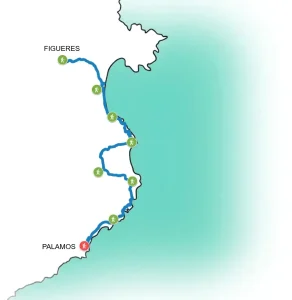
Short stages, gentle elevation | Wide, well-waymarked paths | Camins de Ronda, Costa Brava Algarve – Fishermen’s Trail Santa Maria, Azores São Miguel, Azores Walking Lanzarote |
No special preparation needed |
| ▲▲▲△△ Moderate |
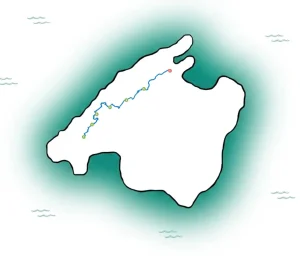
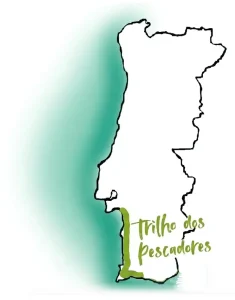
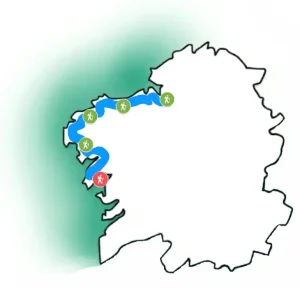
Stages of 10–19 km with sustained climbs | Narrow paths, rock and scree | Serra de Tramuntana GR 221 Cami de Cavalls North Fishermans Trail, Portugal Camiño dos Faros, Galicia GR 131 Lanzarote |
4–6 weeks of training |
| ▲▲▲▲△ Demanding |
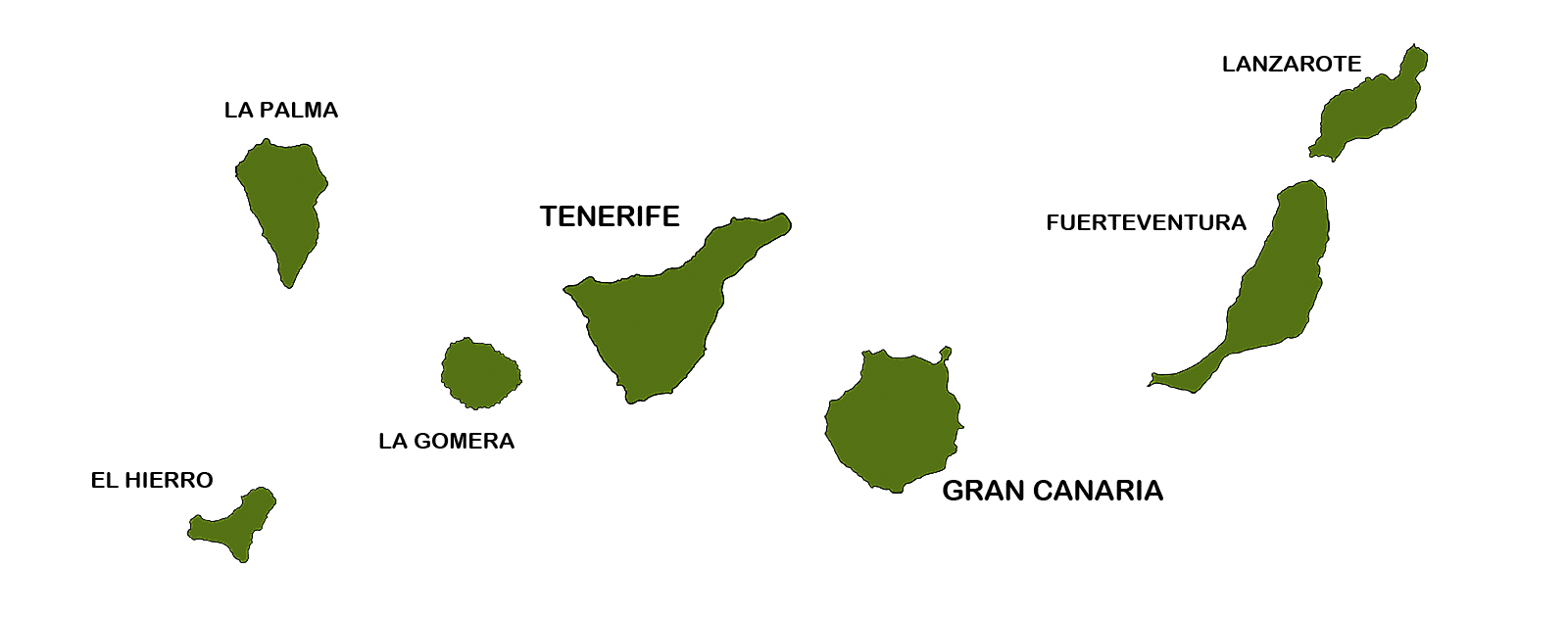
Long traverses with high cumulative elevation | Uneven ground, exposed sections | GR 131 Tenerife GR 131 La Gomera GR 131 Gran Canaria GR 131 Fuerteventura Cami de Cavalls full route (10 stages) |
6–8 weeks of training |
| ▲▲▲▲▲ Very demanding |
Long stages with large daily ascent | Ridges, technical and slippery paths | GR 131 La Palma Camino Natural El Hierro |
8–12 weeks of intensive training |
💡 Tip: Choose conservatively. A trip that is slightly too easy leaves room for rest and enjoyment – one that is too hard becomes a burden. When in doubt: start lighter.
How to assess your own experience as a walker
 An honest self-assessment of your abilities regarding hiking difficulty levels is the best basis for choosing a trip. Do not only ask yourself how far you have walked before. Consider under which conditions that was: was there elevation gain? How did your knees feel on the way down? Are you confident on gravel, rock or narrow paths? And were you still looking forward to another stage the next day?
Those who regularly take walks and easy day hikes will find a pleasant entry point on easy trips. Moderate walking holidays often suit active travellers who are used to longer tours, have solid stamina and walk confidently on natural paths. Demanding trips are recommended for people with good mountain experience, very solid endurance and a taste for longer ascents.
There is no better or worse here. A lighter route can leave more time for a swim in a hidden cove, a break in a mountain village or a sunset over the Atlantic. A sportier stage often rewards you with remote ridges and the feeling of having crossed a landscape under your own power. The right choice depends on what you want from your trip.
Planning multi-day tours differently from a day hike
On a single hike, a demanding day can usually be absorbed well. On a stage hike, by contrast, the sum of the strain is what counts. After four or five days, small frictions can grow larger: pressure points on the foot, tired calves or a backpack that does not sit quite right after all. Luggage transfer takes a lot of weight off your shoulders on a self-guided walking holiday, but your daypack, water and weather protection still need to be comfortable to carry.
It makes sense to complete several tours with comparable walking times before your trip. Train not only uphill, but also downhill. Stairs, hills and longer walks in hiking boots are good preparation. New shoes should be broken in, and for warm destinations it pays to start early in the day and to carry enough water and sun protection.
If you are wavering between two hiking difficulty levels, the more moderate option is often the wiser decision. This applies particularly when a region is new to you or when you are returning to hiking after a longer break. Comfortable accommodation, organised transfers and carefully worked-out routes give you freedom – the physical reserve is what turns it into relaxed freedom.
The best walking holiday for you
The best walking holiday is not the one with the most kilometres or the highest summits. It is the trip where, at the end of every stage, you are still curious about the next path: the scent of the pines, the black volcanic sand under your soles or the first glimpse of the sea beyond the next bend.
Understanding hiking difficulty levels correctly is a skill that develops over time. With every walking holiday you take, you get better at recognising your own limits and possibilities – and therefore at choosing the perfect trip for yourself.
Frequently asked questions about hiking difficulty levels
What is the biggest difference between easy and hard hikes?
Easy hikes run on wide, level paths with modest elevation and require few technical skills. Hard hikes involve greater elevation gain, more uneven paths and steep passages, and require good sure-footedness as well as higher endurance. The most important difference is the total strain across several days.
Can the same route be differently difficult on different days?
Yes, absolutely. Weather, temperature, your daily form, sleep quality and acclimatisation all play a major role. A stage that is pleasant at 15 degrees can feel considerably more demanding at 30 degrees in full sun. That is why flexibility matters on walking holidays.
How much preparation does a moderate walking holiday need?
Ideally 4-8 weeks of training before a multi-day walking holiday. Complete several tours with similar walking times and elevation. Train downhill in particular, test your shoes and build fitness gradually. This reduces the risk of injury and considerably increases the enjoyment.
Do hiking poles really make a difference?
Yes, especially on the descent. Hiking poles relieve knees and thighs by up to 25% and can make long sections more comfortable. They are not a replacement for solid fitness and sure-footedness, however. Use them as support, not as a prerequisite.
I am wavering between two difficulty levels – which should I choose?
Choose the easier option, particularly if you are getting to know a new region, returning after a longer break, or are unfamiliar with the area. The physical reserve makes the trip more relaxed and leaves room for spontaneous experiences and enjoyment.
How does day hiking differ from multi-day hiking in terms of difficulty?
On day hikes you can exhaust yourself completely – the next day is independent. On stage hikes, the sum of the strain counts. After four days you notice small problems (blisters, sore muscles) more clearly. Plan more conservatively for multi-day tours.
What differences are there in hiking difficulty levels between the islands (Canaries, Azores, Balearics)?
Every region has its own challenges: the Canaries have volcanic ash and wind, La Gomera has stony and technical paths, Menorca has exposed coastal paths, the Azores have moisture and slippery trails, the Balearics have moderate elevation. Ground conditions and weather vary considerably, so you should adapt to local conditions.
 You might also be interested in:

 86,2 km ·
 6 Stages ·
 8 Days