

Fuerteventura Trail GR 131
Self-guided walking holidays along the ◆Camino del Guanche◆ | luggage transfers between accommodations | difficulty : ▲▲▲▲△
Camino del Guanche 
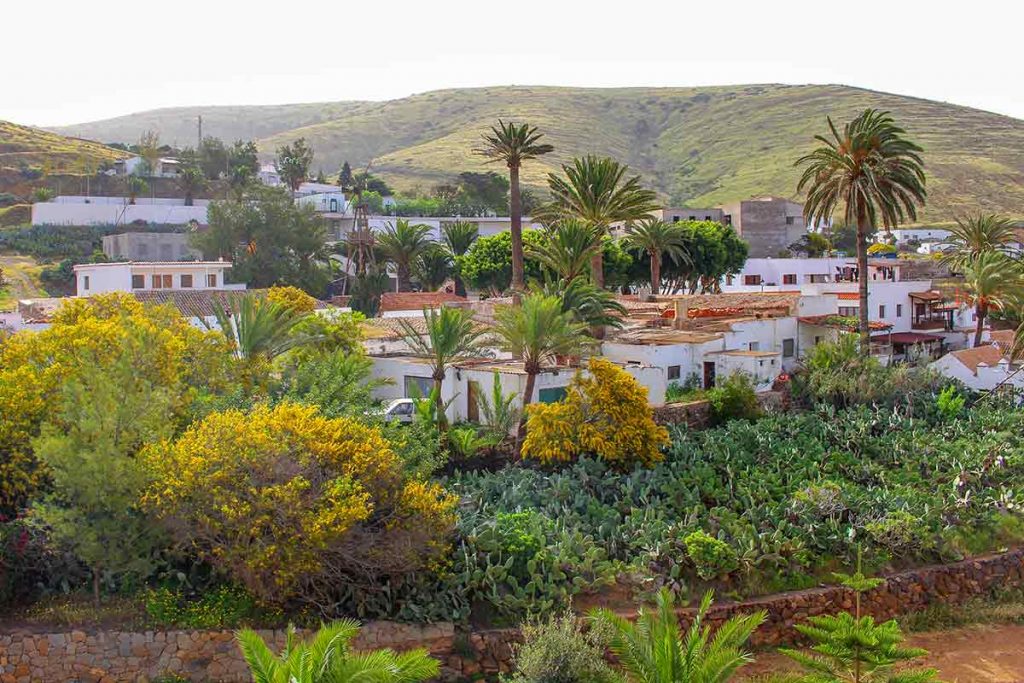
Fuerteventura trail
GR 131 – 6 stages
▸ Includes 7 nights in strategic accommodation, bed & breakfast basis.
▸ 6 self-guided stages through Fuerteventura trail GR 131.
▸ Boat transfer to Lobos Island
▸ We organise all the necessary luggages transfers from hotel to hotel.


full itinerary: 98,1 Km
total ascent: △ 1664 mts
total descent: ▽ 1708 mts
Customised app
Offline GPS navigation
Relevant information
STAGES AND ACCOMMODATION:
arrival in Fuerteventura
1st: Isla de Lobos & de Lajares a La Oliva
2nd: La Oliva - Tefía
3rd: Tefía - Betancuria
4th: Betancuria - Pájara
5th: El Cardón - La Pared
6th: Risco del Paso - Morro Jable
departure day

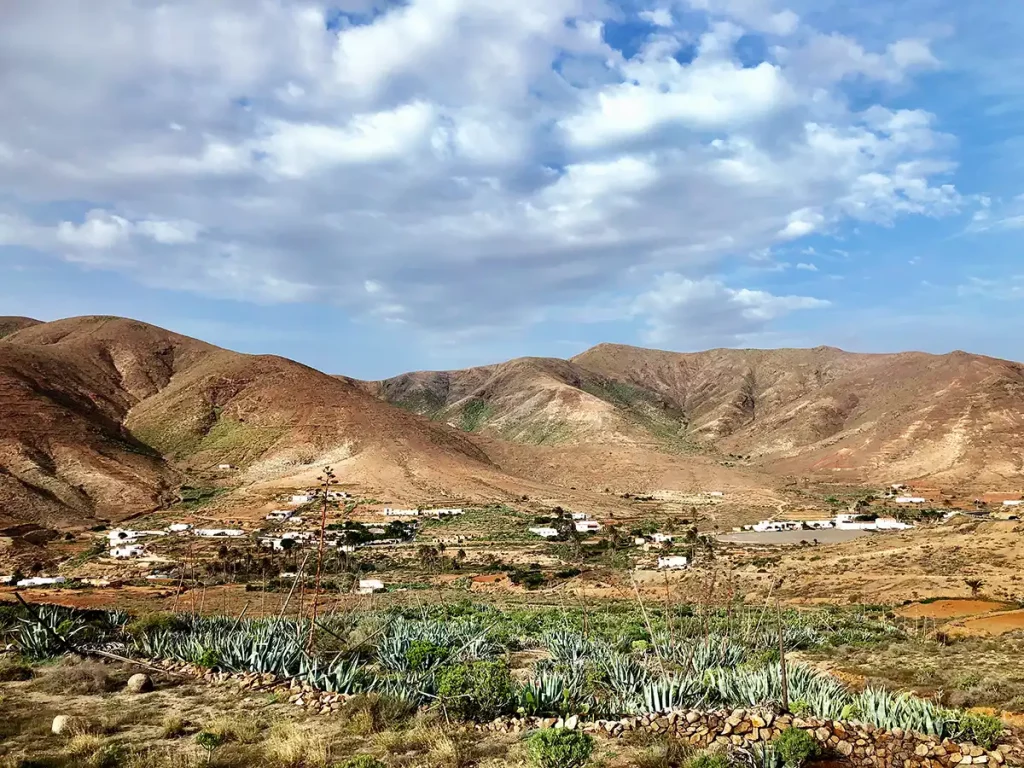


SEE DIFFICULTY LEVEL

This programme is for you if you are in excellent physical condition; if you can cover steep slopes and have no vertigo or health problems; if you regularly do long walks and consider yourself a good sportsman, love nature and are respectful of the environment.
See more details at:
FREQUENTLY ASKED QUESTIONS
ITINERARY
DAY 1
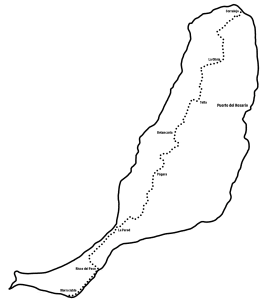 Arrival in Fuerteventura
Transfer to the hotel in La Oliva
+ Hotel Rural Mahoh (Villaverde – La Oliva)
DAY 2
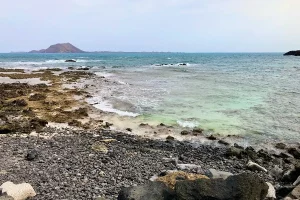 Stage 1: Isla de Lobos + Lajares – La Oliva
The first stage of the GR 131 on Fuerteventura is divided into two parts:
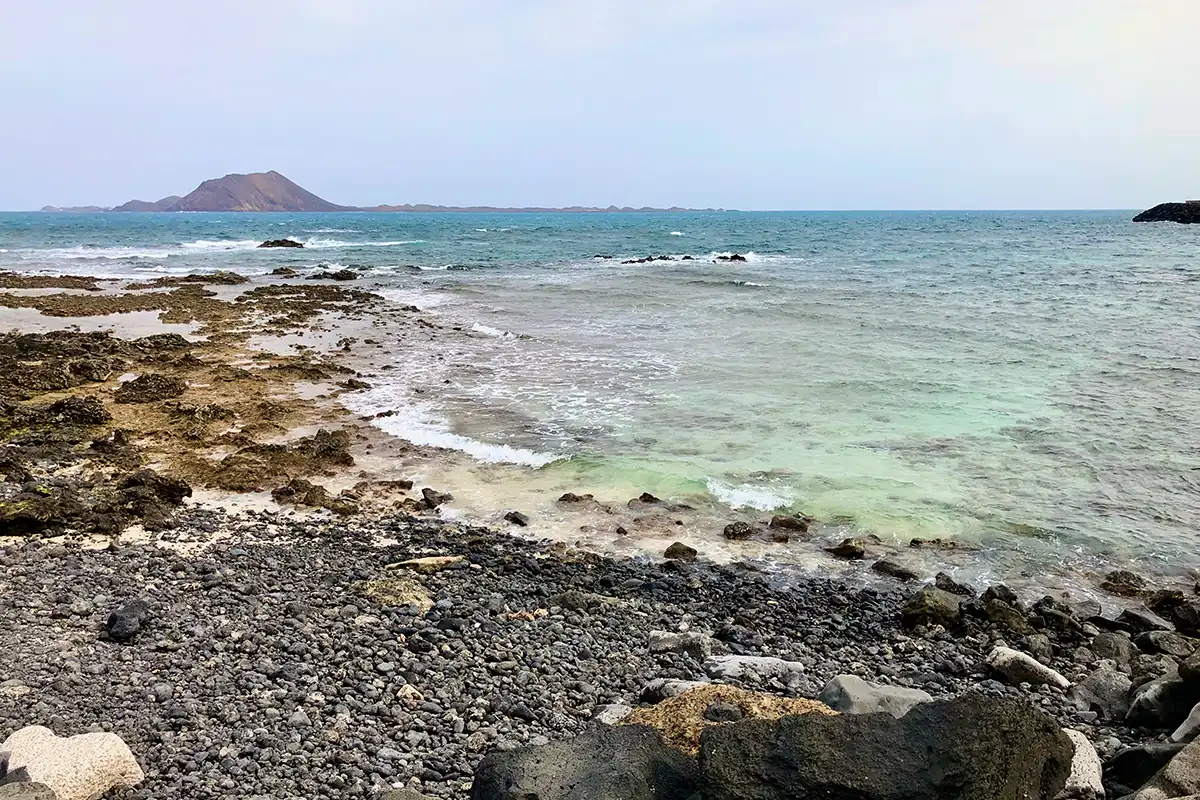
Part 1 – A water taxi will take you to the Isla de Lobos to walk its GR 131 circuit around the island. A trail that transports us back to the time when the first settlers used the island to harvest monk seal skins and make footwear for their journeys along its paths.
Part 2 – From the village of Lajares, located between El Cotillo and Corralejo, the GR 131 begins its descent southwards, skirting the Volcán de La Arena, which at around 10,000 years old is considered the youngest volcano on Fuerteventura.
The GR 131 of Fuerteventura, also known as the “Camino Natural”, soon reaches the first houses of La Oliva, a town of traditional Canarian architecture with thick-walled white houses, which served as the island’s capital between 1834 and 1860.
 16.7 km | +244 m / -79 m
+ Hotel Rural Mahoh (Villaverde – La Oliva)
DAY 3
 Stage 2: La Oliva – Tefía
Today’s stage takes you from La Oliva to Tefía, skirting the Sacred Mountain of Tindaya. This solitary mountain rises to 400 metres and at its base more than 300 ancient rock engravings in the shape of footprints were discovered.
After leaving the village of Tindaya, the GR 131 climbs along ancient volcanic slopes and along the way the monument to Miguel de Unamuno suddenly comes into view — the writer was exiled to Fuerteventura during the dictatorship of Primo de Rivera.
From the top, the ocean is visible on both sides of the island, while a gentle descent leads us down to the village of Tefía.
20.3 km | +161 m / -210 m
+ Hotel Rural Rosario Martín (Tefía)
DAY 4
 Stage 3: Tefía – Betancuria
Setting out from Tefía, the trail is almost flat until reaching the Valle de Santa Inés. The GR 131 then begins to climb towards one of the island’s highest summits, crowned by the Mirador de Guise y Ayose — two enormous bronze statues, more than four metres tall, representing the ancient Guanche kings of Fuerteventura.
The viewpoint is a key spot for a bird’s-eye view of the entire island and one of the few inland spots on Fuerteventura that draws large numbers of visitors.
Betancuria now lies at our feet, and all that remains is to descend into an idyllic urban setting whose architecture has remained unchanged through the centuries.
17.5 km | +475 m / -283 m
Hotel Rural Era de La Corte (Antigua)
DAY 5
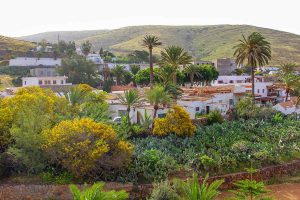 Stage 4: Betancuria – Pájara
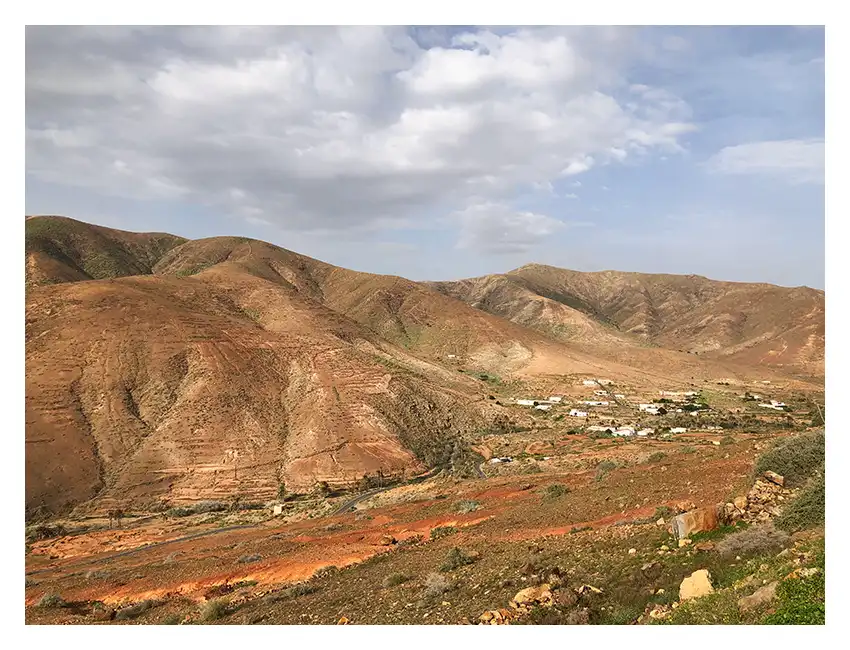
The stage from Betancuria to Pájara, though short, is mountainous with a constant series of ascents and descents. After the first climb to the ridges immediately above Betancuria, the trail follows the dry bed of the Río Palma. Its underground waters feed the crops of the Vega de Río Palma and lend the surrounding area a lush fertility.
A further climb now brings us to the Mirador de Las Peñas. On clear days, the island of Gran Canaria appears on the horizon from the heights of Fuerteventura’s ridges.
A long descent then leads towards Toto, and we finally reach the village of Pájara.
15.8 km | +507 m / -681 m
Hotel Rural Era de La Corte (Antigua)
DAY 6
 Stage 5: El Cardón – La Pared
The taxi transferring your luggage to the next accommodation will drop you off at El Cardón, a spot close to Montaña Melindraga. From this strategic point, the GR 131 crosses a small mountain range towards the western face of Fuerteventura.
This is one of the most uninhabited and windswept areas of the island. The landscape is harsh but the views are extraordinary. The trail descends gradually until reaching the Ermita de San Benito Abad, close to La Pared.
At La Pared, a vast sandy expanse begins that crosses the entire island from east to west. This is a transition zone between the two mountain ranges that form the southern and northern halves of Fuerteventura.
13.2 km | +190 m / -363 m
+ Hotel La Pared By Playitas (La Pared)
DAY 7
 Stage 6: Risco del Paso – Morro Jable
Today the taxi transporting our luggage again saves us the crossing of the harsh sandy plain that cuts across the island — a desert stretch that adds little value to the route.
Risco del Paso is a beautiful viewpoint over the turquoise waters of Costa Calma and the starting point of a coastal walk that unfolds along the shoreline.
The trail runs at times along the beach itself, at times along the clifftop beside it, but always in close contact with the sea. A stage that gives you the chance to cool off in the water along a path that comes to an end at Morro Jable, a first-class tourist resort.
14.6 km | +87 m / -92 m
+ Hotel IFA Altamarena (Morrojable)
DAY 8
Departure
Make your own way to the airport for departure.
FLEXIBLE PROGRAMME: you can rearrange the stages in order to fit days off in between them. We adapt it to your wishes.
WARNING: The route in stages along the GR131 requires good physical condition and walking safety and is only suitable for regular walkers.
Well-signposted trails
transfers included (taxi and/or regular bus) to/from your accommodation
Order our telescopic poles for 14 € each.

taxi or bus transfers
luggage transfers from hotel to hotel at each stage and transfers of people, by taxi or regular buses.
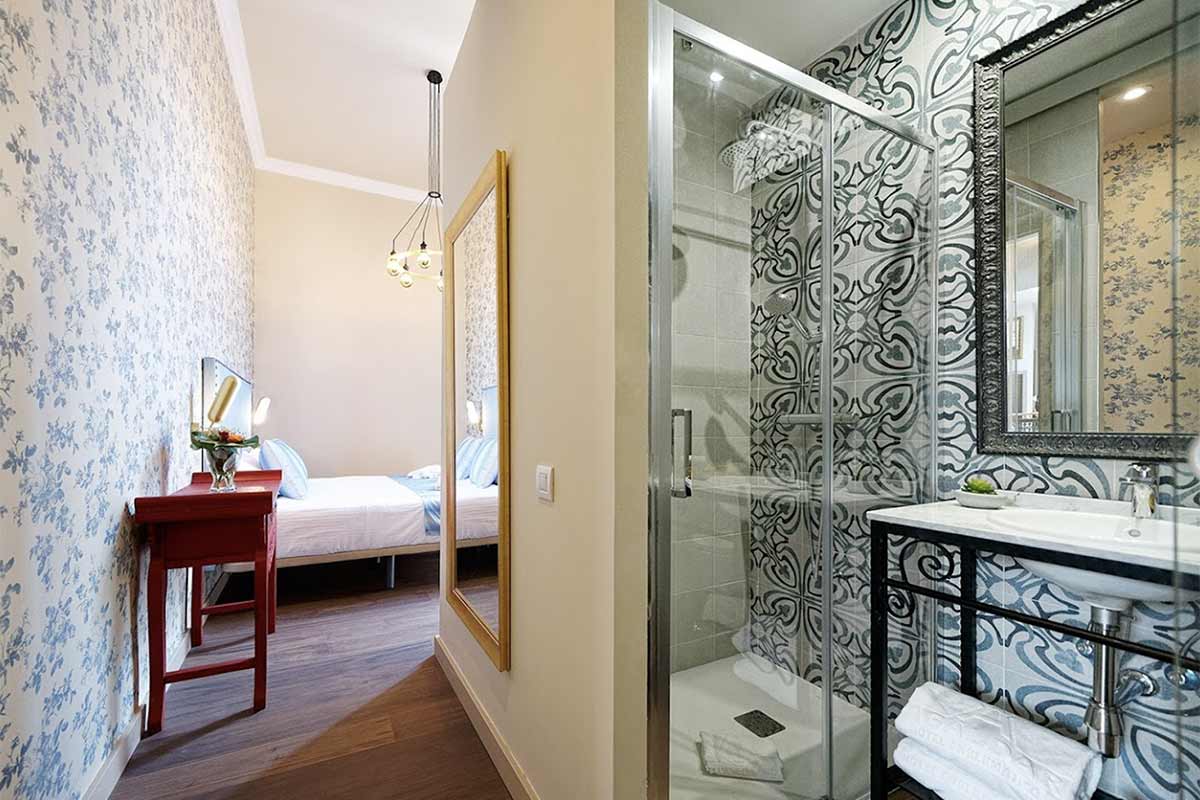
accommodations
small charming hotels and unique accommodation in strategic locations, with breakfast included.
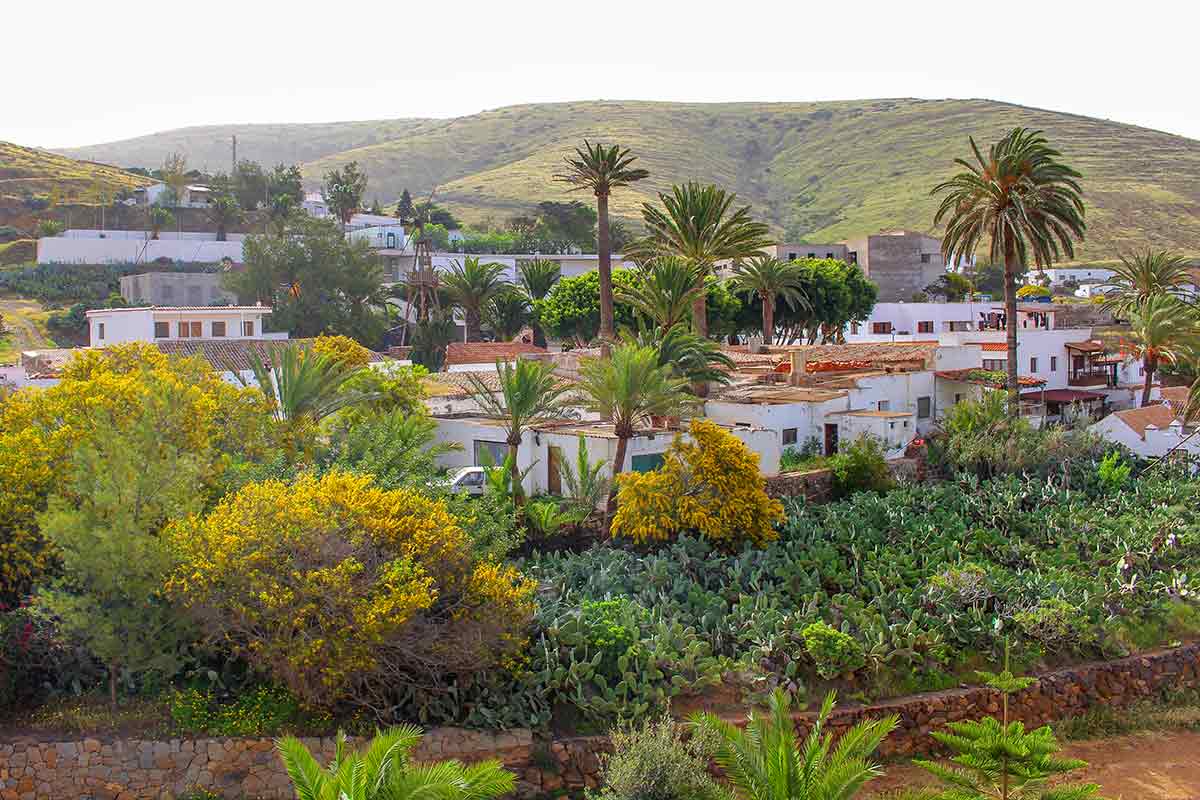
stages
6 stages of approx. 15~17 km each, to cross from north to south the Camino del Guanche on Fuerteventura.
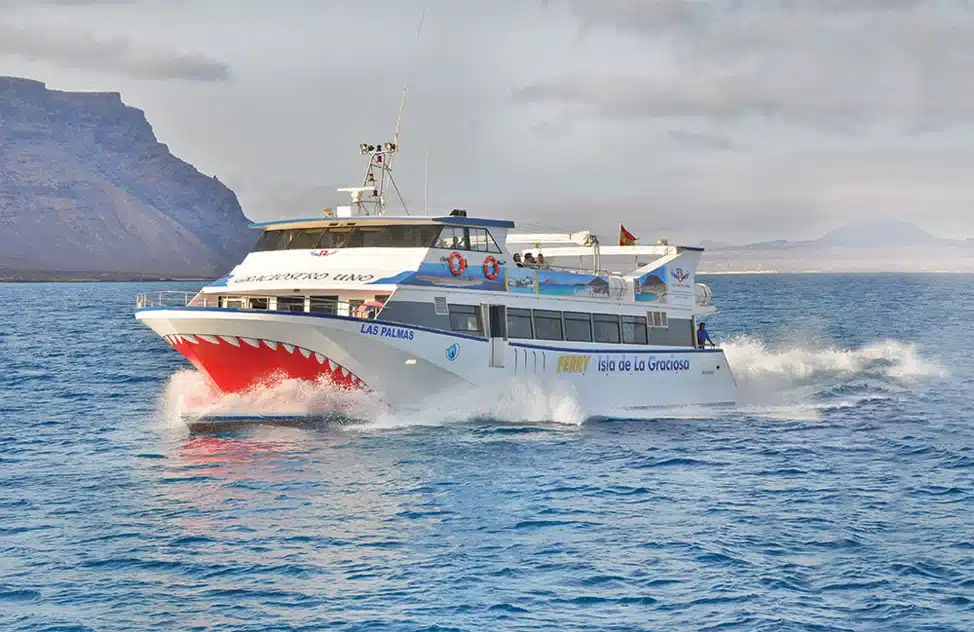
Ferry
Boat transfer between the port of Corralejo (Fuerteventura) and the island of Lobos.
Combine with other islands
Want to include other islands in your trip? You will save on ferry transfers or inter-island flights. We organise the connections between islands for you free of charge !
ABOUT THE GUANCHES
The Guanches were the ancient inhabitants of the Canary Islands until the arrival of the Spaniards. The Guanche population is of Berber origin, and it is assumed that they arrived on the islands around 1800 years ago. They developed differently on each island, so they have been given different names depending on the island: Benahoritas on La Palma; Bimbaches on El Hierro; Guanches on Tenerife and La Gomera…
The Tindaya Mountain is located in the north of the island of Fuerteventura. Cave engravings dating back to pre-Hispanic times have been found at its base. They consist of geometric figures and animals carved into the rock. It is believed that these engravings had a religious meaning for the ancient inhabitants of the island.
But their way of life and customs were similar: they lived by herding, berry picking and fishing locally. They lived in caves and did not know how to use metals. They did not sail, so there was no interaction between the tribes on the different islands.
In their journeys on foot with their herds, they used paths and trails previously marked by the animals. They used these trails to reach places suitable for grazing, crossed deep ravines and maintained relations with the various menceyatos of each island.
Today these trails are ready for the enjoyment of contemporary hikers in Fuerteventura and have technical designations such as GR 130 or GR 131. But we, in homage to those hardened hikers of the past, prefer to call them…
Camino del Guanche


Fuerteventura trail GR 131
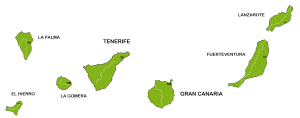
Fuerteventura is the second largest island of the Canary Islands, after Tenerife, and is located at the eastern end of the archipelago.
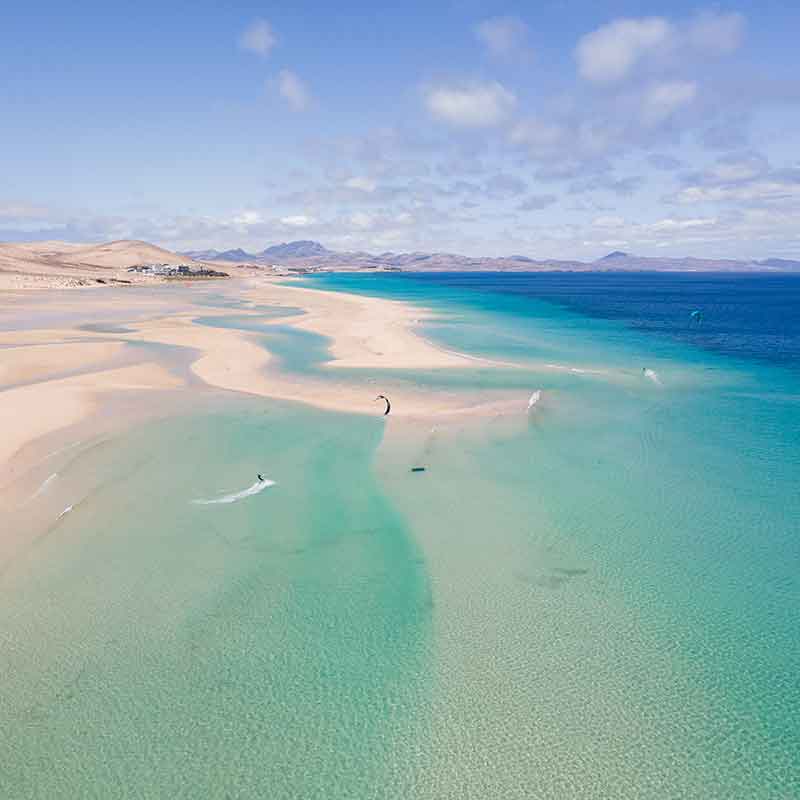
Fuerteventura is famous for its spectacular beaches, some of which are considered the best in Europe. Some of the most popular are Cofete beach, Sotavento beach and Corralejo beach.
The Fuerteventura trail GR 131 is also known as Camino Natural. It is a long-distance trail that runs from north to south across the island of Fuerteventura. It is about 170 kilometres long and passes through some of the most impressive landscapes of the island.
In addition to the Fuerteventura trail GR 131, the island also has some nature reserves such as the natural park of Corralejo and the nature reserve of the Corralejo Dunes. These protected areas are home to a great variety of endemic flora and fauna.
Fuerteventura is a paradise for water sports enthusiasts too. The island is famous for its warm climate and constant winds, making it an ideal place for windsurfing and kitesurfing.
The Fuerteventura trail GR 131 also has a part of its route on the Lobos island. Located off the north coast, the Isla de Lobos is a small natural paradise with a wide variety of flora and fauna. An ideal place for hiking and for enjoying the beaches and the sea.
The Fuerteventura trail beckons adventurers from across the globe. As the sun rises over the volcanic landscape, the Fuerteventura trail reveals its rugged beauty. Experienced runners know that the Fuerteventura trail offers unique challenges. The desert winds sweep across the Fuerteventura trail, creating ever-changing patterns in the sand.
Many athletes dream of conquering the Fuerteventura trail during their careers. Local guides share ancient stories about the Fuerteventura trail and its volcanic origins. The morning light illuminates the Fuerteventura trail with golden hues. Photographers flock to capture the Fuerteventura trail in its most dramatic moments.
Year after year, the Fuerteventura trail attracts more visitors. The challenging terrain of the Fuerteventura trail tests even the most seasoned hikers. Sunset casts long shadows across the Fuerteventura trail, creating a mystical atmosphere. Enthusiasts often describe the Fuerteventura trail as a life-changing experience.
The unique ecosystem surrounding the Fuerteventura trail supports diverse wildlife. Locals take pride in maintaining the Fuerteventura trail for future generations. Training for the Fuerteventura trail requires months of dedication. The history of the Fuerteventura trail dates back centuries.
Scientists study the geology along the Fuerteventura trail to understand the island’s formation. Every season brings new challenges to the Fuerteventura trail. Visitors often return to explore different sections of the Fuerteventura trail. The legacy of the Fuerteventura trail continues to inspire adventure seekers worldwide.
Walking the Fuerteventura trail
The Fuerteventura trail GR 131 is a long-distance footpath that crosses the island from north to south. It is a very demanding route that is divided into several stages and runs through the mountainous part of the island.
The trail starts in the village of Corralejo, in the north of the island, and runs about 160 kilometres to the south, in the town of Pájara. Along the way, hikers can enjoy breathtaking landscapes, such as the Corralejo dunes, the Tindaya Mountain, the Betancuria area and the Jandía Nature Reserve.
The Fuerteventura trail GR 131 is signposted and has different sections that can be walked separately, so it is possible to adapt the route according to your needs and the time available. There are also different accommodation options along the way, such as hostels and rural houses.
In short, the Fuerteventura trail GR 131 is a very interesting hiking route for those hikers who want to explore the unique landscapes of the island and enjoy nature in its purest form.
Request availability
Not exactly what you’re looking for?
We adapt to your requirements Tell us what you want and we’ll do a tailor-made plan for you.

We will get back to you as soon as possible.
…frequently asked questions
How many days do I need to complete the entire route?
The entire GR 131 route in Fuerteventura is approximately 155-160 kilometres long and usually takes 7-9 days to complete, depending on your pace and physical condition. Most hikers opt for 8 days, with stages of between 15-25 km per day. You can adjust the stages according to your experience and preferences.
What is the level of difficulty of the route?
The GR 131 trail on Fuerteventura is considered to be of medium-high difficulty. There are no extreme slopes, but the terrain is arid, rocky and constantly exposed to sun and wind. The main challenges are the cumulative distance, the long stages through desert areas, the lack of water along the way and the high temperatures. Previous experience in multi-day hiking is recommended.
Do we need to bring all the water with us, or can we find it along the way?
This is one of the most critical aspects of the route. In most stages, there are NO springs or drinking water points, so you must plan carefully. You will need to carry between 2-4 litres per day depending on the stage and the heat. Some stages pass through villages where you can resupply, but others are completely remote. It is essential to study the route day by day and plan where you will get water.
Where can I sleep? Are there shelters or do I have to camp?
There are no mountain shelters on the GR 131 trail in Fuerteventura. You have three main options: stay in villages along the way (hotels, hostels, rural guesthouses), camp freely (permitted but with restrictions in protected areas), or hire a transport service to take you to nearby accommodation each day. Many hikers combine options depending on the stage.
Can it be done north-south or south-north?
Officially, the GR 131 runs from north to south, from Corralejo to Morro Jable/Punta de Jandía. This direction is the most recommended because you have the prevailing trade winds at your back. However, you can do it in the opposite direction if you prefer, although it may be harder due to the headwind in some stages.
What could be the ideal place to take a day off during or after the itinerary?
Betancuria is the village located halfway along the route and could be a good place to take a break and recharge your batteries. However, you could also choose to take a few days’ rest at the end of the itinerary, in Morro Jable. The advantage of Morro Jable over Betancuria is the opportunity to relax on the long beaches of fine white sand and the extensive hotel and restaurant facilities.
Is there mobile coverage along the route?
Coverage is patchy. In villages and high altitude areas, there is usually good signal, but in ravines, desert areas inland and some remote stages, there may be no coverage for hours. Do not rely on your mobile phone for real-time navigation. Download offline maps and inform someone of your daily itinerary for safety reasons.
Are there any shops or supermarkets where we can buy food during the trip?
The availability of shops is limited and depends on which towns you pass through. Some towns such as Antigua, Tuineje, Pájara and La Pared have small shops or supermarkets, but other sections go days without any services. You should plan your purchases in advance and carry enough food for 2-3 days on certain stages. It is advisable to take light, high-calorie food: nuts, energy bars, dehydrated food, cured meats.
Can I do just a few stages instead of the entire route?
Absolutely. Many people choose to do only the stages that interest them most or divide the route into two different trips. The southern stages, especially those that cross the Jandía Natural Park, are particularly spectacular. You can use public transport or hire a car to travel between the start and end points of the stages you choose. This is a good option if you have limited time.
What is the difference between the GR 131 in Fuerteventura and those on other Canary Islands?
The GR 131 runs through the seven Canary Islands, but each section has its own personality. Fuerteventura is the most desert-like, arid and hot, with volcanic landscapes and spectacular beaches but little vegetation and shade. Compared to La Palma or La Gomera (greener and more mountainous) or Tenerife (more alpine with Mount Teide), Fuerteventura offers a more extreme and solitary experience. It is ideal if you are looking for Sahara-like landscapes, immense skies and a feeling of remote expedition.
Is the route clearly signposted?
In general, the GR 131 is reasonably well marked with the characteristic white and red markings, but there are sections where the markings have deteriorated or are scarce. It is essential to carry a GPS, downloaded tracks and updated maps. In desert and rocky areas, it is easy to get disoriented if you rely solely on the markings. Download the route on apps such as Wikiloc or similar before setting off.
If NATOUR organises my trip, what information and facilities can I expect?
NATOUR’s organisation is based on three fundamental pillars so that you can walk with peace of mind and complete safety:
1.- All accommodation and luggage and passenger transfers for each stage.
2.- Detailed information via the Natour App, with points of interest and offline GPS navigation.
3.- 24/7 customer contact to resolve any eventuality.
-
Destination
Our gallery
Pictures from the tours
Day 1
Arrival in Fuerteventura
Transfer to the hotel in la Oliva
Day 2
1st stage: Isla de Lobos + Lajares - La Oliva
The first stage of the GR 131 in Fuerteventura is divided into two parts:
Part 1 - A boat-taxi will take you to Lobos Island to go around the island on its own GR 131. A walking route that takes us back to the time when the first settlers used the island to stock up on sea lion pelts and make footwear to walk its paths with.
16,7 km | +244 m / -79 m
Day 3
2nd stage: La Oliva - Tefía
Today's stage takes you from La Oliva to Tefía, bordering the Sacred Mountain of Tindaya. This is a solitary mountain that rises to a height of 400 metres and at its base more than 300 ancient foot-shaped cave engravings have been found.
20,3 km | +161 m / -210 m
Day 4
3rd stage: Tefía - Betancuria
Starting from Tefía, the path is almost flat until it reaches the Santa Inés Valley. Then the GR 131 begins an ascent to one of the highest peaks on the island, crowned by the Guise and Ayose viewpoint, two enormous bronze statues, more than four metres high, representing the ancient Guanche kings of the island of Fuerteventura.
17,5 km | +475 m / -283 m
Day 5
4th stage: Betancuria - Pájara
The stage from Betancuria to Pájara, although short, is mountainous and constantly undulating up and down. After the first ascent to the immediate summit of Betancuria, the path follows the course of a dry river: the Río Palma. Its subterranean waters feed the crops of the Vega de Río Palma and provide the environment with exuberant fertility.
15,8 km | +507 m / -681 m
Day 6
5th stage: El Cardón - La Pared
The taxi that today moves your luggage to the next accommodation will drop you off at the top of the El Cardón ,close to the Melindraga Mount. From this strategic point the GR 131 runs along a small mountain range towards the west side of Fuerteventura.
13,2 km | +190 m / -363 m
Day 7
6th stage: Risco del Paso - Morro Jable
Today again the taxi that today moves our luggage saves us from crossing the inhospitable sandy area that crosses the island, a deserted expanse that does not add much value to the route.
14,6 km | +87 m / -92 m
Day 8
Departure
Transfer on your own to the airport for departure.TOUR LOCATION
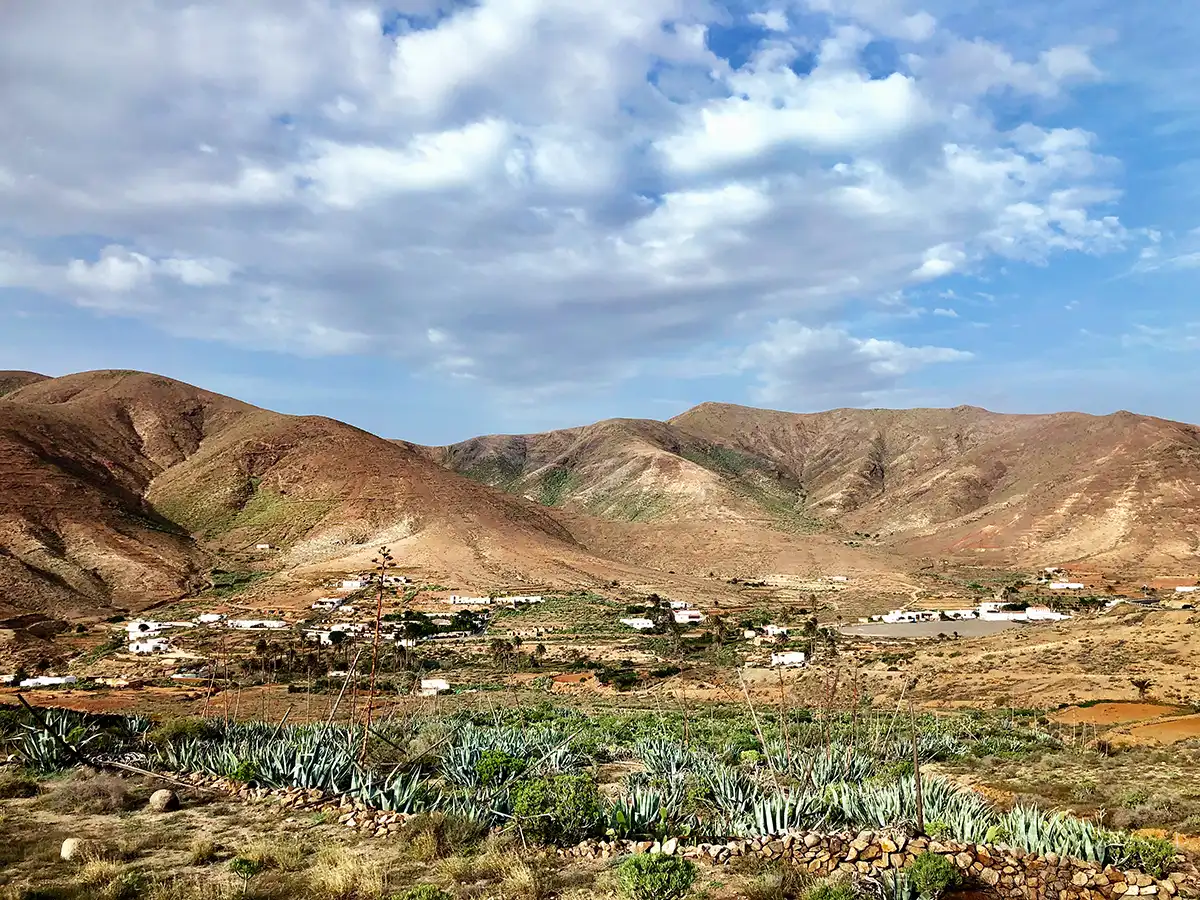
Fuerteventura is an island of strong winds. Its undulating profile with gentle hills and pastel tones make up a peculiar landscape that can be fully enjoyed by walking along its GR 131 from north to south. In times gone by, Fuerteventura was a place of exile for people who were uncomfortable with Spanish political power. Miguel de Unamuno was exiled on the island during some of his best years. Today Fuerteventura has become a first class tourist centre, although its natural side remains hidden to most visitors. Through the Camino del Guanche we invite you to discover it, on foot.
FLEXIBLE PROGRAMME: you can rearrange the stages in order to fit days off in between them. We adapt it to your wishes.
STAGES AND ACCOMMODATION:
arrival in Fuerteventura
1st: Isla de Lobos & de Lajares a La Oliva
2nd: La Oliva - Tefía
3rd: Tefía - Betancuria
4th: Betancuria - Pájara
5th: Montaña Melindraga - La Pared
6th: Risco del Paso - Morro Jable
departure day
We certify your stages on the
Camino del Guanche

Get the T-shirt with logo and inscriptions that certify your itinerary along FUERTEVENTURA's Camino del Guanche after completing the 6 stages.
We will send it to you at the end of your trip (*) together with a named certificate, to be displayed wherever you want.
(*) Free shipping by regular mail. When you make your reservation you only have to tell us your size and shipping address.
REQUEST MORE INFORMATION
ACCOMMODATION
Subject to availability:
HOTEL RURAL MAHOH
Strategically located in the interior of Fuerteventura and very close to the municipality of La Oliva, this establishment is nestled in the picturesque village of Villaverde. Surrounded by a peaceful and beautiful natural environment, the hotel is the perfect reconstruction of an old Fuerteventuran hacienda combining traditional Canarian architecture with modern facilities.
 The rooms recreate the country and rural style of bygone times, with sober-looking antique furnishings. There is a restaurant in the immediate vicinity of the hotel, where guests can enjoy lunch.

HOTEL RURAL ROSARIO MARTIN
The municipality of Tefía is the place to stop for the next stage and there we find this beautiful rural hotel. As its name suggests, it is a family-run hotel that honours its owner: Rosario Martín. The hotel is very well looked after and also offers an excellent restaurant where you can recharge your batteries after one of the longest stages. It has a swimming pool and the building respects the traditional architecture of Fuerteventura, maintaining a structure of ground floor and interior patios.

The rooms are spacious and comfortable, equipped with air conditioning and minibar. Immaculate bathrooms with modern facilities. Garden areas around the hotel. Undoubtedly, an ideal place to spend the night and recover energy for the next stages.
HOTEL RURAL ERA DE LA CORTE
The following accommodation is situated in the municipality of Antigua, located in the central mountain range of Fuerteventura. This old manor house has been exquisitely reconstructed and adapted as a small rural hotel. The place is strategically located in the heart of the island and offers the comforts of its surroundings.
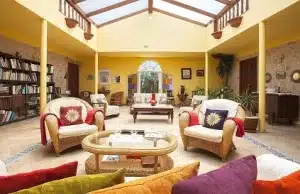
The hotel has communal areas suitable for socialising or relaxing with a good read. A huge glass-roofed lounge presides over the central area of the accommodation.

Rooms with a marked colonial style that reflect the old character of the house, but at the same time with the comforts of our time. Spacious and comfortable rooms.

HOTEL LA PARED BY PLAYITAS
The isthmus of La Pared is home to the town of the same name. And this is where the Hotel La Pared by Playitas is located. A comfortable hotel in an environment of wild beaches on the north coast of Fuerteventura. In the surrounding area you will find all the necessary services, as well as supermarkets and restaurants.

Modern and bright rooms that offer all the comfort required after 5 stages through Fuerteventura.
The hotel also has a private swimming pool, as well as extensive garden areas.

HOTEL IFA ALTAMARENA
After arriving in Morro Jable, crossing the extensive dunes of Jandía, we find accommodation in a beautiful beach hotel, situated directly in front of the sea: the Hotel IFA Altamarena. Perfectly equipped and with modern facilities, this hotel offers all the relaxation you need after completing the last of the 6 stages.
 With open-plan rooms within landscaped spaces and with a room service in keeping with the hotel's category, a stay in Morro Jable for the last night in Fuerteventura becomes an experience that will allow you to enjoy and remember a peculiar and unique hiking trip.
Additional overnights
It is also possible to book some additional days, before or after the hiking week, or an additional week to relax.
Difficulty
To successfully achieve the 6 stages it is necessary a good physical condition and steady walk. According to the year season, temperatures can be extreme (hot and/or cold). Therefore, it is necessary to have suitable warm clothes permanently, to be removed as layers if necessary. Some parts of this trail include passages with slippery loose stone. Using hiking poles is highly recommended.
Trails
The Canary Islands has a well signposted network of trails. All sections where from our tours are perfectly marked. You will get from us precise indications of each route and assistance from the hotline on your walks.
We recommend
Appropriate hiking clothing and sturdy footwear. During the tours, it is necessary to have food and drink enough, as well as sun protection, a cap, wind jacket and, in the winter months, warm clothing.
Luggage transfer
We move your luggage from one accommodation to next, so on your hikes you should only carry a backpack with the essentials of the day. For the whole trip, it is recommendable to use a single suitcase, not bigger than 20 kg.
You can book at any date!
How to get to Fuerteventura


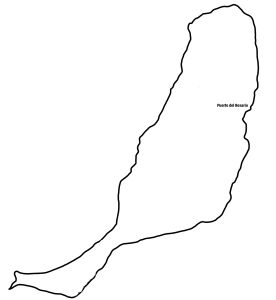
FUERTEVENTURA airport is located close to Puerto del Rosario, the island's capital, situated in the central part of the island.
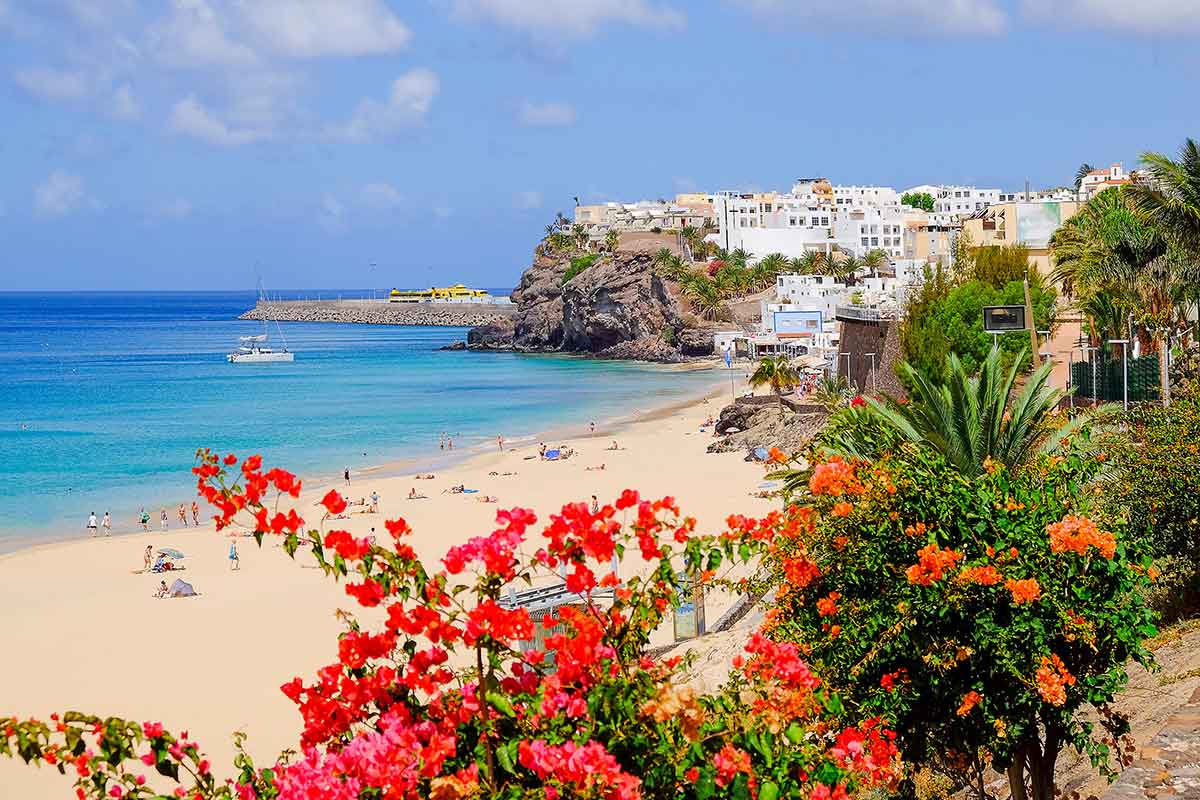
Fuerteventura's main tourist resorts are Morro Jable in the south and Corralejo in the north. Both have long stretches of sandy beaches with white sand and turquoise waters.
But in the interior of the island you will find a chain of mountains of soft relief that gives shelter to beautiful and quiet villages. Their pace of life is far from the hustle and bustle of tourism, offering a rural and friendly atmosphere.
... And from Corralejo you can easily discover the nearby island of LANZAROTE on a short 25-minute ferry ride with Fred Olsen, even with your rental car. Click on the image below to see all available connections.


Belén
Travel organisation
Do you have any questions? I am happy to help you. I will answer any questions you may have!

Book early!! ...and get a 10% discount for bookings made 90 days before the arrival date.
Book early!! ...and get a 10% discount for bookings made 90 days before the arrival date.
PRICES: until 31st October 2026
945 € ▸ 850 € per person in double/twin room (2 persons)
| Single Suplement (room for single use)
(...and 3rd person): + 285 €
Solo Traveller (1 person): 1685 € ▸ 1517 €
PRICES: from 01st November 2026
1002 € ▸ 901 € per person in double/twin room (2 persons)
| Single Suplement (room for single use)
(...and 3rd person): + 302 €
Solo Traveller (1 person): 1786 € ▸ 1608 €
 Any arrival date is possible - You decide your travel dates and when to start. However, we must first request availability to the accommodations.
 Booking: With an initial payment of 150 € (per person), book now and guarantee your trip. We will confirm your reserve within 24 hours. But in the case of accommodations unavailability, we will refund the paid amount or propose alternative dates.
What does this programme include?
 Accommodations - 7 nights stay in different charming accommodations, B&B basis.
 Informations - personalised information by video-talk (if desired) on your arrival day
 Descriptions & GPX Tracks - to follow the walks on your mobile device
 Boat transfer - between Corralejo and Lobos Island
 +
+  Private transfers - all necessary luggage & person transfers for each stage, except on departure day.
 Support 24h - we keep permanently in touch with you throughout your stay to solve any problem or enquiry you may have

What is NOT included?
Cancellation Policy
call us on +34 922 433 001 or text us at