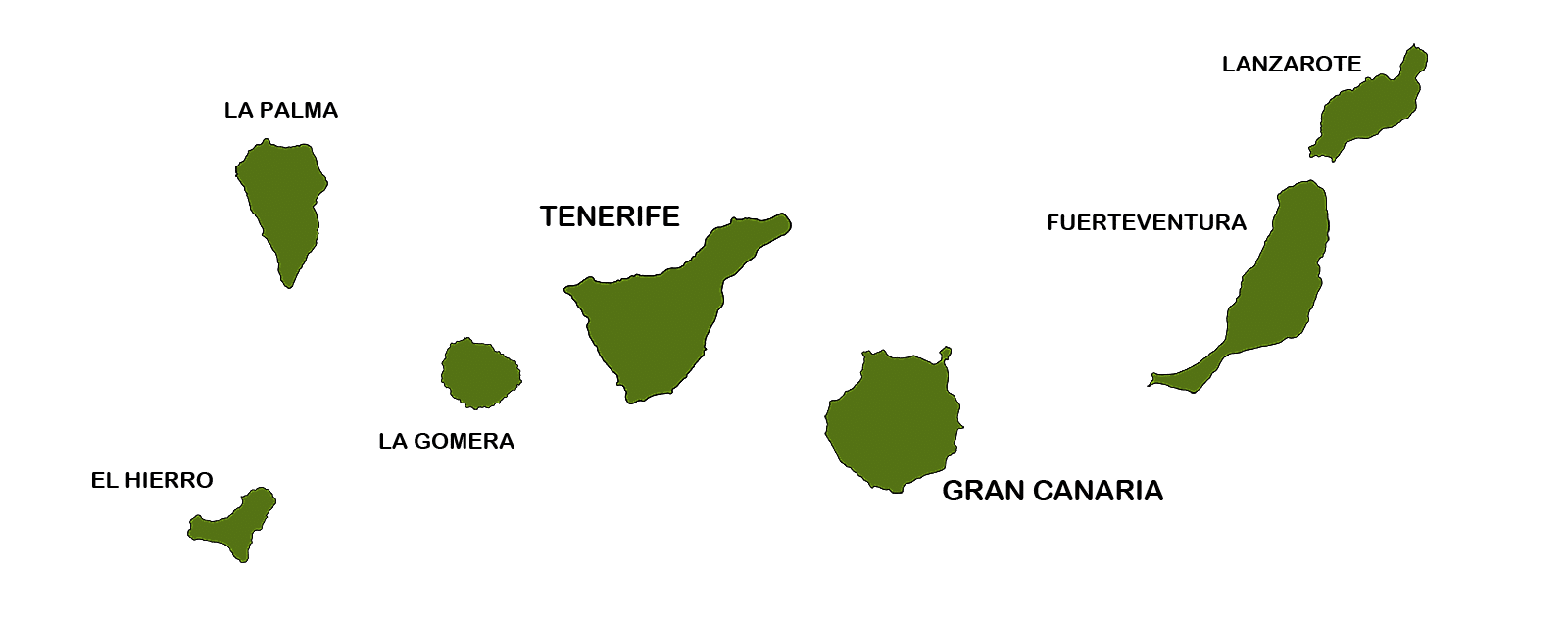
28 May La Gomera: Plan your self-guided walking holiday
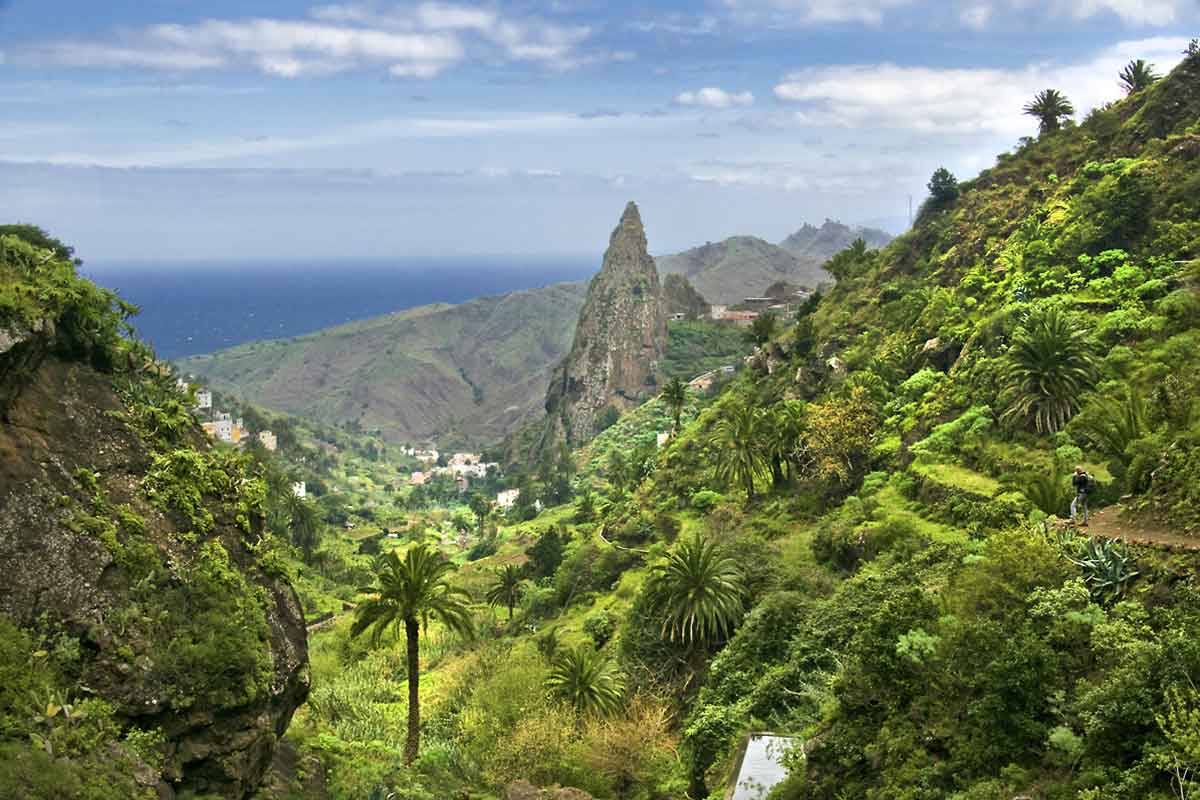 Anyone who walks on La Gomera quickly realises that this island hikes differently from many other Canary Island destinations. Within just a few hours, the trails shift from misty laurel forest to open ridgelines, from deeply carved barrancos to terraced hillsides with sweeping Atlantic views. That is precisely why a self-guided walking holiday on La Gomera suits so many people – free to move at your own pace, yet with a route that truly matches your expectations.
La Gomera is not an island for ticking boxes on a sightseeing list. It rewards travellers who embrace the stages, don’t shy away from elevation, and value the character of a path just as much as the view at the end. If you enjoy hiking independently but don’t want to leave accommodation, transfers or luggage logistics to chance, you will find ideal conditions here for an organised self-guided trip.
Why a self-guided walking holiday on La Gomera works so well
La Gomera is compact, yet topographically more demanding than it first appears. That is exactly where its appeal lies. The island can be crossed in a series of day stages with tremendous variety, without long transfers breaking up your walking day. Instead, forest paths through Garajonay National Park, historic connecting tracks between mountain villages and long descents to the coast follow one after another.
For a self-guided trip this is ideal, because you determine the intensity yourself. Some walkers prefer a base-hotel holiday with day hikes; others would rather move from place to place on a point-to-point walk. Both work well on La Gomera. What matters most is not the raw distance but the smart combination of route profile, overnight stops and transfers.
This is precisely where the difference between spontaneous self-planning and a carefully prepared tour becomes apparent. On paper, 12 kilometres often looks harmless. On La Gomera, steep ascents and descents, exposed sections or a lack of refreshment stops can make the same distance considerably more demanding. Good planning takes these factors seriously.
Which format suits your individual La Gomera walking holiday?
Most walkers choose between two models. The first is a base-hotel holiday. You stay several nights in one or two places and head out on day walks from there. This works well if you want to respond flexibly to weather, fitness and how you feel on the day, or if you are exploring the island for the first time.
The second option is a point-to-point walk. You move from village to village and experience La Gomera as a continuous landscape. This format is more immersive and often emotionally richer, because each stage brings a real sense of arrival. If you enjoy walking several days in a row and want not just to visit the island but to traverse it, this approach usually suits better.
Between the two there are hybrid formats. Two bases combined with individual transfer stages can make sense if you want to link the finest sections without building in unnecessarily long road stretches or logistically awkward transitions. This kind of fine-tuning is exactly what good individual trip planning delivers.
The finest regions for a walking holiday on La Gomera
Garajonay and the green heart of the island
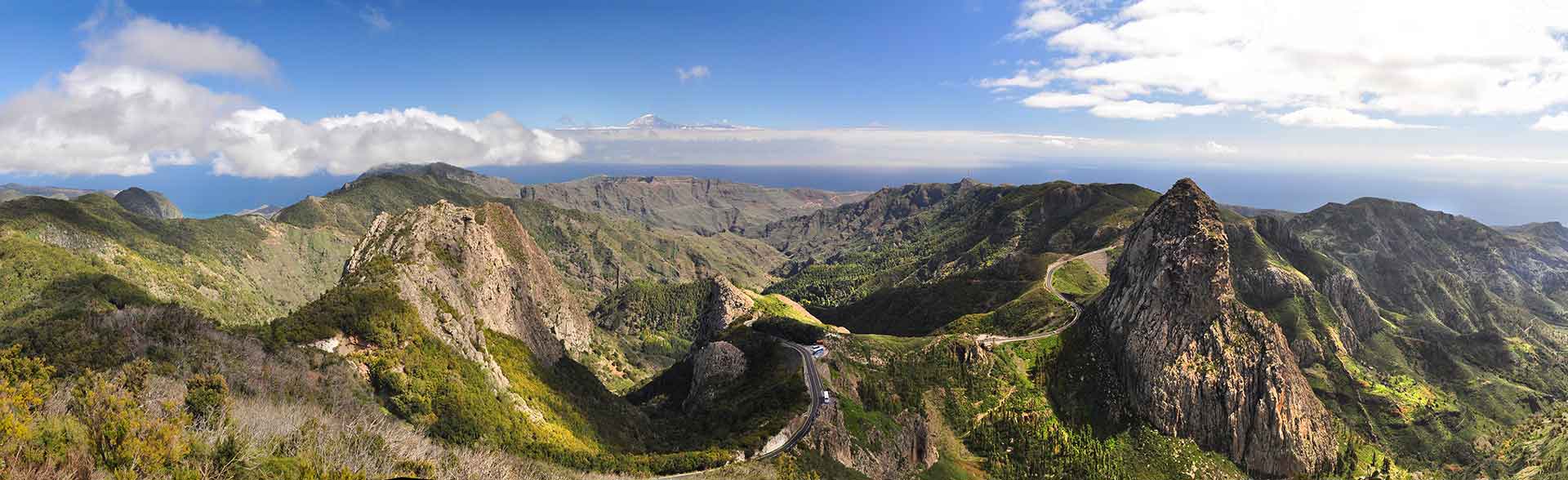
Garajonay National Park is for many the heart of the island. Mist-wrapped laurel forests, moss-covered trunks and soft paths create an almost silent, enclosed world. Walks here feel less dramatic than at the coastal edges, but it is precisely this quiet density that makes the experience so special. For first-time visitors, the central highlands are ideal, as many trails combine well with one another.
Vallehermoso and the wild north
In the north, La Gomera shows its wilder side. Vallehermoso and the surrounding heights combine green slopes with far-reaching views and a landscape that often feels more unspoilt than the more touristy south. The paths here can be quieter, but they also demand more physically. Anyone looking to experience the island authentically and with greater solitude will find some of its finest stages here.
Hermigua and the terraced landscapes
Hermigua is an excellent base for walkers who appreciate traditional cultural landscapes. Banana plantations, terraced fields, palm groves and steep ravines lie close together here. The area is well suited both to day hikes and as a stage overnight stop, because nature and village character blend seamlessly.
Valle Gran Rey and the sunny west
The west is often drier, more open and sunnier. Around Valle Gran Rey, panoramic ridge paths meet long descents to the coast. If you like to sit by the sea after a day’s walk, or are looking for a trip with a little more warmth and that south-westerly quality of light, you will usually feel very at home here. That said, some stages are more demanding than the map suggests, given the elevation changes involved.
Difficulty and fitness – what La Gomera really demands
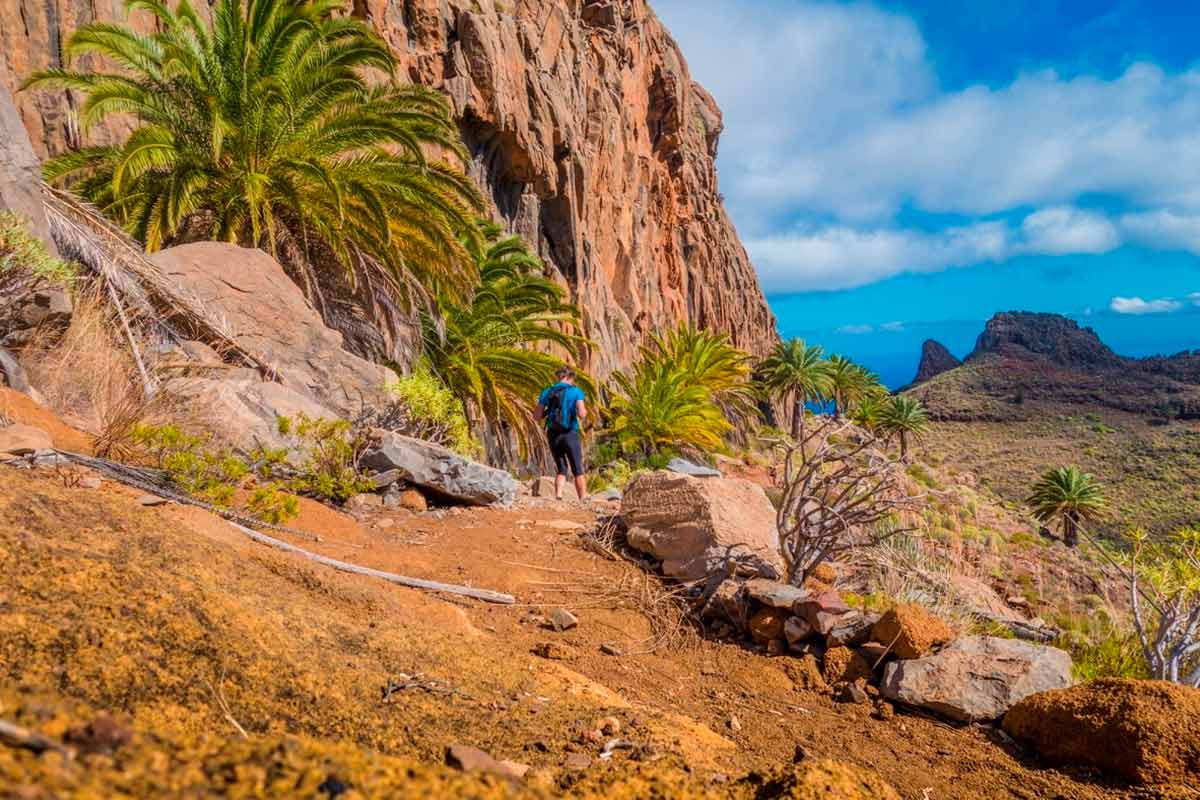 La Gomera is not a high-mountain destination, but it does call for sure-footedness, stamina and an honest assessment of your own abilities. The most demanding factor is rarely technical difficulty, but the cumulative effect of elevation gain, steep gradients and changing terrain underfoot. Even moderate stages can become tiring when you add together the ascent, descent and heat.
For many active travellers with normal walking experience the island is very manageable, provided the stages are chosen appropriately. Regular hill-walkers tend to cope well. What works less well is over-ambitious daily distances that leave no margin for changes in weather or longer breaks. A route that breathes is better – especially when the aim is enjoyable walking rather than collecting kilometres.
Best time of year for a self-guided walking holiday on La Gomera
La Gomera is an attractive walking destination for almost the entire year. The months from autumn through to spring are particularly popular, when temperatures are generally pleasant and trail conditions are excellent. The island tends to be at its most walkable then: green, clear-skied and beautifully lit.
In winter, higher elevations can be cool, windy or misty while the coast stays mild. These very contrasts are part of the appeal, but they do call for appropriate clothing. Spring often brings especially fine vegetation. Summer walking is also possible, particularly at higher and shadier altitudes, though longer coastal stages can become considerably more tiring in the heat.
If you have flexibility when planning, it is worth building in a small buffer for day-to-day decisions. On La Gomera, weather is rarely a showstopper, but it does strongly influence which route feels most enjoyable on any given day.
Accommodation, transfers and luggage – where comfort makes all the difference
Many walkers want independence on the trail but no unnecessary friction before and after. This is precisely where an organised self-guided trip earns its value. When accommodation is chosen sensibly along the route, you save time, detours and energy. On La Gomera this matters particularly, because not every village offers the same range of overnight options.
Transfers also count for more than they might initially seem. Some of the finest stretches do not start or finish where you are sleeping that evening. A well-planned transfer turns this into an opportunity rather than a problem, significantly expanding the reach of the tour. Luggage transport adds another layer of comfort. Walkers who carry only a light daypack experience the island’s elevation in a far more relaxed way.
Providers like NATOUR focus precisely on this combination of freedom and background organisation: you walk independently, but route, accommodation, navigation and logistics are already carefully prepared. For many travellers this is the most enjoyable form of independent travel.
What good route planning looks like
A strong route on La Gomera is not simply built around the highlights, but around a coherent flow. That means balancing demanding days with quieter stages, building in contrasting landscapes and placing overnight stops that work not just practically but also in terms of atmosphere.
Trips of five to eight walking days have proved their worth. This is enough time to discover several different faces of the island without feeling rushed. Fewer days suit base-hotel holidays better. More days are worthwhile above all if you want to walk at a deliberately slower pace, include additional viewpoint hikes or build in a rest day.
GPS data and precise route descriptions are especially valuable on La Gomera. Many paths are well laid out, but junctions, alternative routes and local peculiarities can cost time along the way. Good navigation provides reassurance without taking away the feeling of walking freely.
Who will love La Gomera – and who might not
La Gomera is a wonderful match for travellers who put natural experience above nightlife, enjoy being active for several days in a row, and prefer to explore islands on foot rather than by car. If you appreciate scenic trails, unspoilt villages, changing vegetation zones and the genuine satisfaction of completing a stage, you will find a great deal here.
It is less suited to those expecting very gentle, easy-going paths or who want a packed programme of activities every day. Anyone who only enjoys flat terrain will also quickly hit their limits on La Gomera. The island is compact, but it is not comfortable. That is exactly what makes it so appealing for so many.
A self-guided walking holiday works best here when it does not try to pack in as much as possible in the shortest time, but takes the island’s character seriously. La Gomera does not reward rushing. It rewards the right rhythm, well-chosen stages and a genuine willingness to immerse yourself in the landscape.
Comfort without losing the sense of adventure
This is the strength of a well-designed walking holiday. You experience a real point-to-point trek, but you don’t fall asleep each evening wondering how tomorrow’s transfer will work or whether your luggage will arrive on time. For many discerning independent travellers, this is not a minor detail – it is the difference between constant logistical thinking and genuine relaxation.
A provider like NATOUR focuses on exactly what counts on routes like these: well-matched stages, reliable accommodation, usually including breakfast, luggage transfer and clear documentation for the self-guided journey. This is particularly appealing for walkers who want to be independent on the trail but unwilling to do without professional preparation behind the scenes.
The La Gomera walking holiday as a considered way to travel
This kind of trip is not for every holiday wish – and that is precisely why it suits so many people so well. If you are looking for entertainment programmes, large resort hotels or the same comfort standard every evening, La Gomera will probably not be quite right for you. But if you want to be out walking, to take in landscape deeply and to appreciate a clear shape to each day, you will find a very special way of travelling here.
La Gomera is not a route you simply tick off. It works best when you give it time. Time for a second breakfast in a mountain village, for a pause above the barrancos, for the glance back at a path that looks entirely different in the afternoon sun than it did in the morning.
If you are looking for a walking holiday that combines natural experience, island scenery and well-planned stages in a truly convincing way, La Gomera is an outstanding choice. The island gives most when the organisation in the background is solid – leaving the foreground free for what long-distance walking is really about: walking, looking, arriving, and being glad to set off again the next morning.
 You might also be interested in:
 86,2 km ·
  6 Stages ·
  8 Days