23 May GR 131 Canary Islands: An Overview of the Stages
Those interested in the gr 131 Canary Islands stages are usually not simply looking for any long-distance hiking trail. What they seek is a route with character — volcanic, varied, demanding, and at the same time remarkably easy to divide into individual island sections. That is precisely what makes the GR 131 in the Canary Islands so special: it is not a continuous trail in the traditional sense, but a series of distinctive island routes that can be combined in very different ways depending on the time available, fitness level, and time of year.
What makes the GR 131 in the Canary Islands special
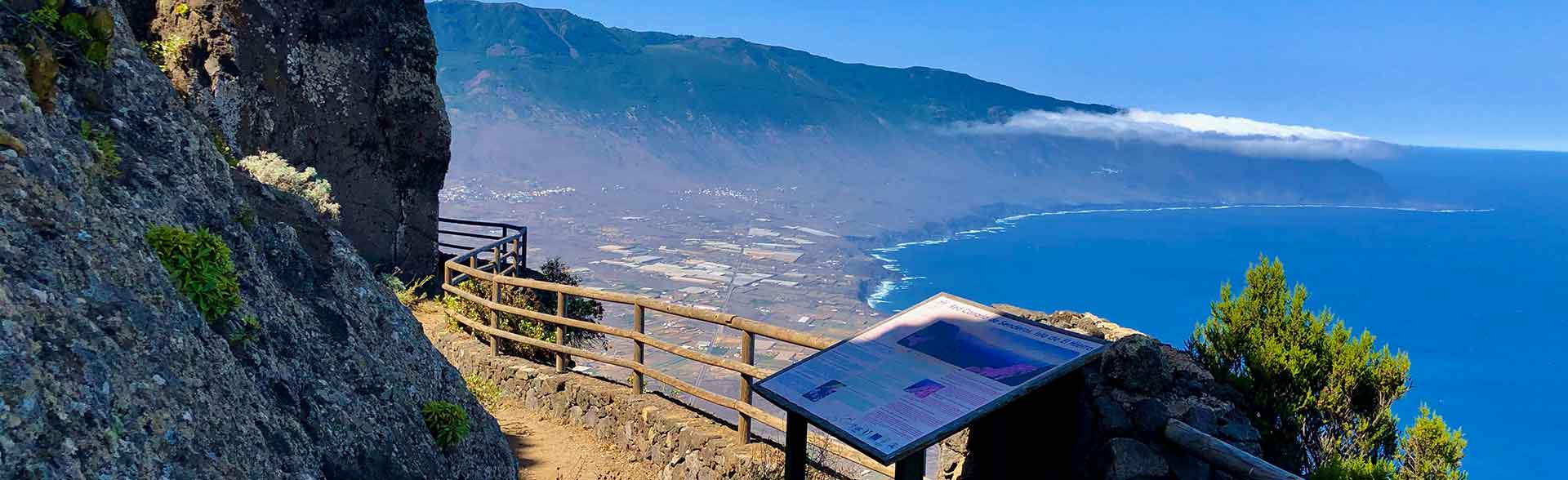 The GR 131 connects the most scenically impressive ridges and ancient pathways across several Canary Islands. Instead of one long, homogeneous long-distance hike, you will find a series of self-contained stage worlds. On Lanzarote, open volcanic landscapes and wide horizons dominate. On La Gomera, laurel forests, ravines and ridges alternate. On La Palma, the trail becomes alpine in character, with long ascents, a sharp profile and impressive sections along the Caldera de Taburiente.
Therein lies both the appeal and the challenge. When people hear the name GR 131, they often think of a single long-distance trail with a comparable rhythm from day to day. In the Canary Islands, that is only partially true. Each island brings its own climate, its own terrain, different logistical conditions and a different level of difficulty.
GR 131 Canary Islands stages — not every island feels the same
For trip planning, what matters less is how many kilometres a stage covers, and more how it actually feels to walk it. 16 kilometres on Lanzarote can feel light and fluid. The same distance on La Palma, with significant elevation gain, rocky sections and exposed passages, can be considerably more demanding.
Then there is the weather. The Canary Islands are considered a year-round hiking destination, but on high-altitude routes it can be cool, windy or surprisingly wet. On the western islands, elevation also plays a greater role than many initially expect. Those who come prepared only for sun and sea will quickly discover a very different side of the Canaries on the GR 131 — and that is precisely what experienced long-distance hikers appreciate.
Lanzarote and La Graciosa — a gentle start with wide open spaces
On Lanzarote, the GR 131 presents itself from its open, clear side. The stages wind through a landscape that appears barren at first glance and reveals increasing depth with every kilometre. Black lava fields, whitewashed villages, volcanic cones and constant views of the Atlantic give the trail a strong rhythm.
In terms of fitness, Lanzarote is often the best entry point into the GR 131. The elevation gain is moderate by comparison, the paths are generally well walkable, and the stages can be comfortably divided. That said, the island should not be underestimated. Sun, wind and the absence of shade can quickly turn an apparently easy stretch into a demanding day on the trail.
La Graciosa is often thought of as an add-on, but it is much more than that. Hikers looking for space, tranquillity and a stripped-back landscape experience after days on lava ground will find an almost meditative continuation here. For those who want to experience the long-distance trail as an island journey, this combination works very well.
Tenerife — the transition between comfort and an alpine feel
 On Tenerife, the GR 131 becomes more varied and more defined in profile. The route passes through different vegetation zones and makes it clear just how dramatically the island changes over short distances. Pine forests, high plateaus and volcanic highlands create days that feel particularly rich in scenery.
Well-trained hikers often find the most balanced stages of the entire trail here. There are challenging ascents, but also sections that can be walked very fluidly. At the same time, logistics on Tenerife are usually relatively easy to plan. This is an advantage for anyone who wants to hike independently without sacrificing a reliable stage structure.
La Gomera — compact, green and surprisingly intense
For many, La Gomera is the island where the GR 131 reaches its greatest scenic density. The distances often look manageable on paper, yet the constant up and down through barrancos and over ridges takes its toll. Add to that humid forest sections, panoramic crests and small villages that feel like natural stage destinations.
It is precisely this combination that makes La Gomera so popular among hikers who want to experience a great deal in just a few days. The island is compact, but not easy. Those heading out here should be sure-footed and should not underestimate the elevation. In return, they get one of the most varied long-distance backdrops in the Canary Islands.
La Palma — the flagship stages of the GR 131
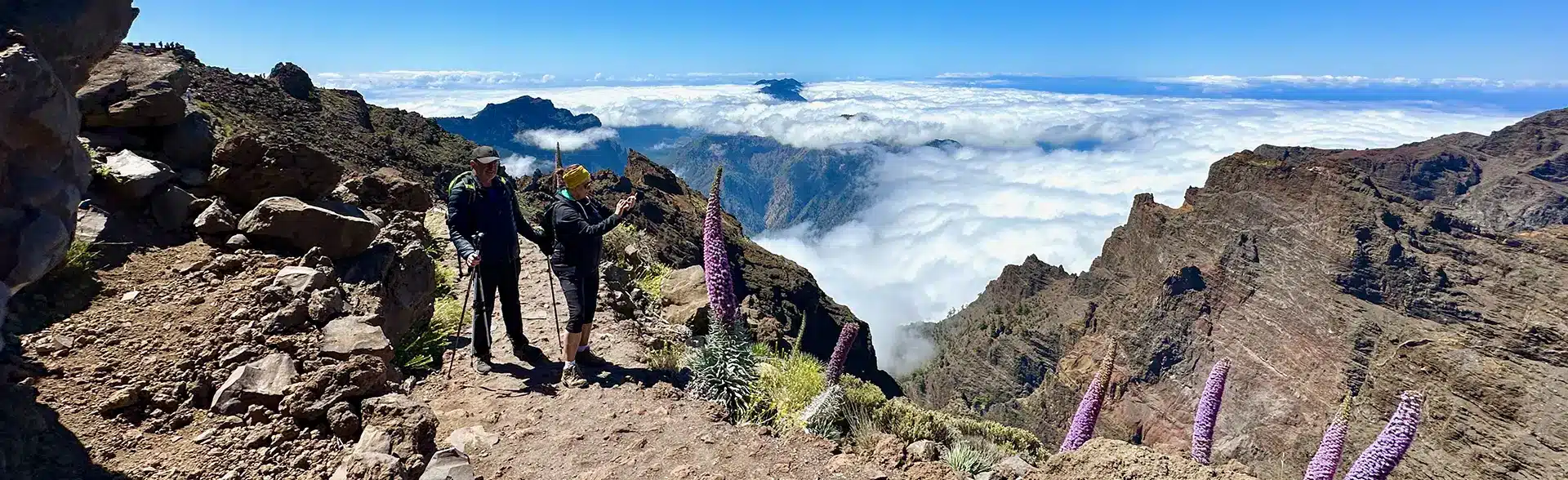
When the GR 131 is spoken of with respect, it is often because of La Palma. Here, island hiking becomes true long-distance hiking with an alpine character. Long ascents, exposed sections, high altitudes and rapidly changing weather define the route. The crossing over the Cumbre Vieja and the high-altitude paths along the Caldera rank among the most impressive hiking experiences in the archipelago.
La Palma is ideal for experienced hikers who enjoy elevation gain and find their rhythm on long stages. It is less suitable for beginners who simply want to try out long-distance hiking for the first time. That does not mean peak performance is required. But fitness, sure-footedness and a realistic self-assessment matter more here than on the eastern islands.
How to choose the right stages
The best route is not automatically the most famous or the most athletic. What matters is what kind of hiking trip you are looking for. If the priority is scenic enjoyment, wide open spaces and a relaxed introduction to multi-day hiking, Lanzarote or a lighter combination of several island sections is a very good fit. If you want maximum variety in a short time, La Gomera is often the more exciting choice. And if you are looking for the athletic core of the GR 131, there is hardly any way around La Palma.
Available travel time also plays a role. Not everyone wants to combine two or three islands in a single trip. Island transfers require organisation, even if they naturally bring additional contrast. Especially with a week’s holiday, it is often wiser to focus on one island with well-planned stages rather than trying to fit in too much.
What is often underestimated when planning
A common misconception: because the Canary Islands are well-developed for tourism, a long-distance hiking trip there must automatically be straightforward. In practice, a great deal depends on transfers, stage locations and accommodation availability. Not every beautiful stretch of trail ends where logistics are convenient. That is precisely why it is worth clarifying well in advance how luggage, starting points and destination villages all fit together.
GPS and waymarking should also be assessed carefully. The GR 131 is easy to follow in many places, but not every section is in the same condition, and weather or cloud cover can make navigation more difficult. Reliable route preparation saves not only time, but often unnecessary detours as well.
Hiking without luggage also makes the long-distance trail considerably more relaxed. Especially on the steeper islands, there is a noticeable difference between hiking with a day pack and carrying full multi-day equipment. For many active travellers, this combination of independence and organised logistics is the point at which a stage hike truly becomes a holiday.
Who benefits most from the GR 131 Canary Islands stages
The GR 131 is ideal for hikers who do not just want to look at landscapes, but want to traverse them over several days. It suits travellers who enjoy being out on their own but value a clear stage structure and reliable organisation. It is less suited to those who expect the same standard every day and a consistent level of difficulty throughout. The character of the individual islands is simply too different for that.
Yet this variety is its strength. You can use the trail as an introduction to long-distance hiking, as a sporting challenge or as an island journey with a clear route. At NATOUR, we often find that guests do not simply want to tick off the entire long-distance trail, but deliberately choose the sections that best match their fitness, travel time and vision of landscape. On the GR 131, that is not a compromise — it is usually the smarter decision.
When planning the long-distance trail in the Canary Islands, think less in names and more in stage feel: which island should it be, how much elevation gain is acceptable per day, and do you want to cover distance or take in the landscape more consciously? Anyone who answers these questions honestly will not find a standard route on the GR 131, but exactly the Canary Islands hike that truly suits them.
 You might also be interested in:

 86,2 km ·
  6 stages ·
  8 days

180 km · 10 stages · 12 days

187 km · 10 stages · 12 days

126 km · 5 stages · 7 days

70 km · 5 stages · 8 days

103 km · 6 stages · 8 days