
Dingle Way – 3 stages
3 stages in Ireland along the ◆Dingle Way◆ from Tralee to Dingle, with accommodation and luggage transfers | Difficulty: ▲▲△△△
Dingle Way Ireland
3 stages | 5 days
Dingle Way Ireland
▸ Includes 4 nights in hotels and apartments on a bed and breakfast basis.
▸ 3 stages from Tralee to Dingle, walking point to point.
breakfast included
with luggage transfers
stages of 17~21 km per day
from 1 May to 30 September


full route: 58.5 km
total ascent: 955 m
total descent: 968 m
Personalised app 
Offline GPS navigation
Relevant information
STAGES | ACCOMMODATION:
arrival in County Kerry (Kerry Airport)
Tralee ▸ Camp
Camp ▸ Annascaul
Annascaul ▸ Dingle
departure or extension
DIFFICULTY LEVEL
This programme is right for you if you are in good physical condition and have no health problems; if you love nature, respect the environment and go hiking regularly.
See more details in:
FREQUENTLY ASKED QUESTIONS
ITINERARY
DAY 1
 Arrival in County Kerry
After flying to Dublin, Ryanair connects you twice a day with Kerry Airport (a 30-minute flight)
Briefing call to explain all the details of each stage.
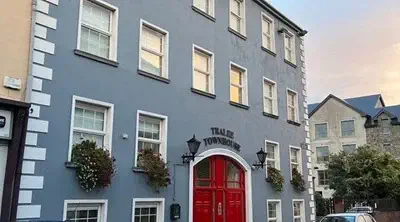
+ Hotel Tralee Townhouse B&B (…or similar – Tralee)
DAY 2
 Stage 1: Tralee ▸ Camp
We leave Tralee, the lively capital of County Kerry, along the path beside the canal. After a gentle start, you will cross the River Lee and pass the historic Blennerville Windmill, whose white silhouette rises above the landscape.
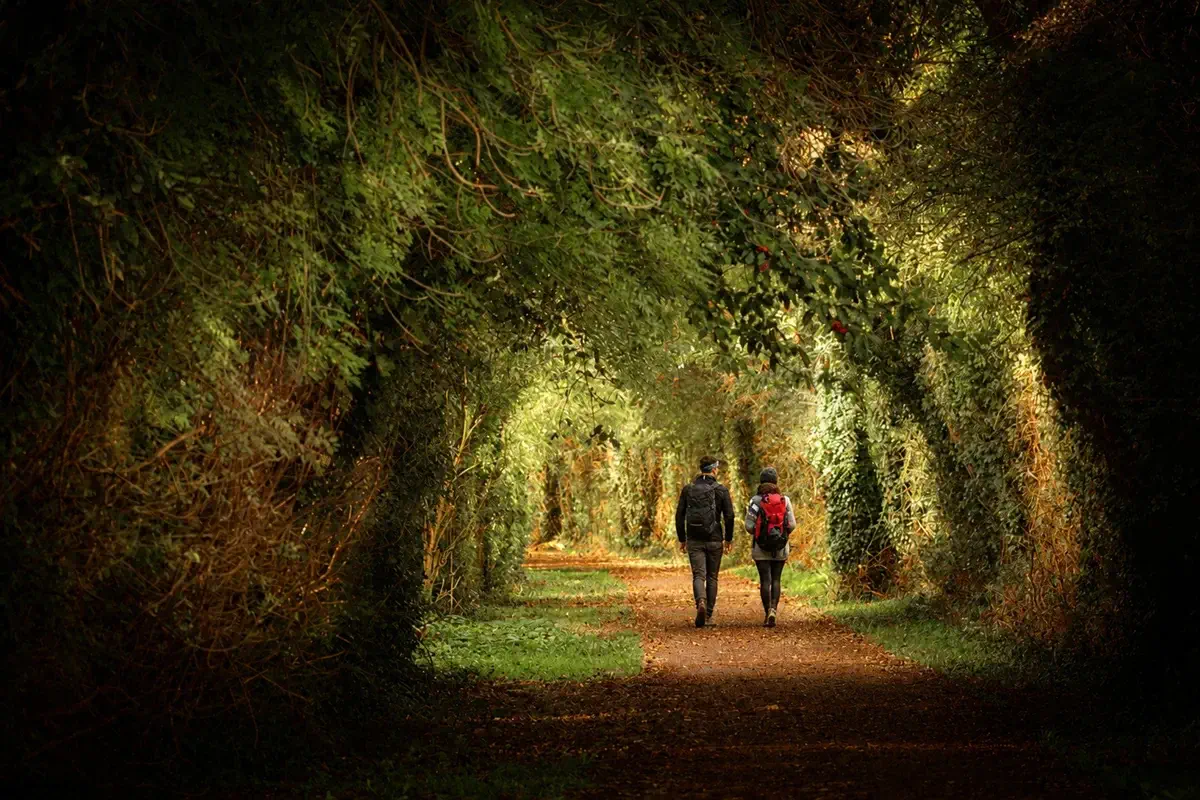
Little by little, the path heads onto bog trails that climb gently through heather and wetland. If it rains, the ground can become slippery, but large stones placed along the route make it easier to cross.
The effort is worth it: at the top, a stunning view opens up before you, taking in Tralee and stretching all the way to majestic Mount Brandon. Camp is a small village with few but welcoming places to stay, ideal for a well-deserved rest or a stroll on the beach at sunset.
 19.2 km ↗ 227 m ↘ 152 m
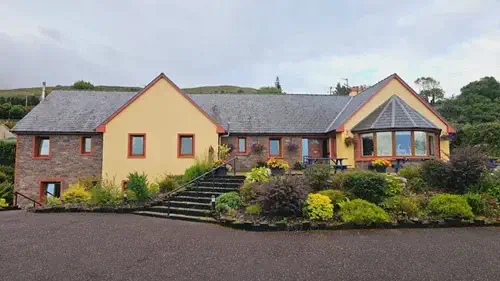
+ Coach Field Camp (or similar – Camp)
DAY 3
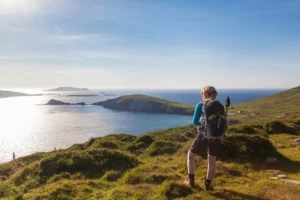 Stage 2: Camp ▸ Annascaul
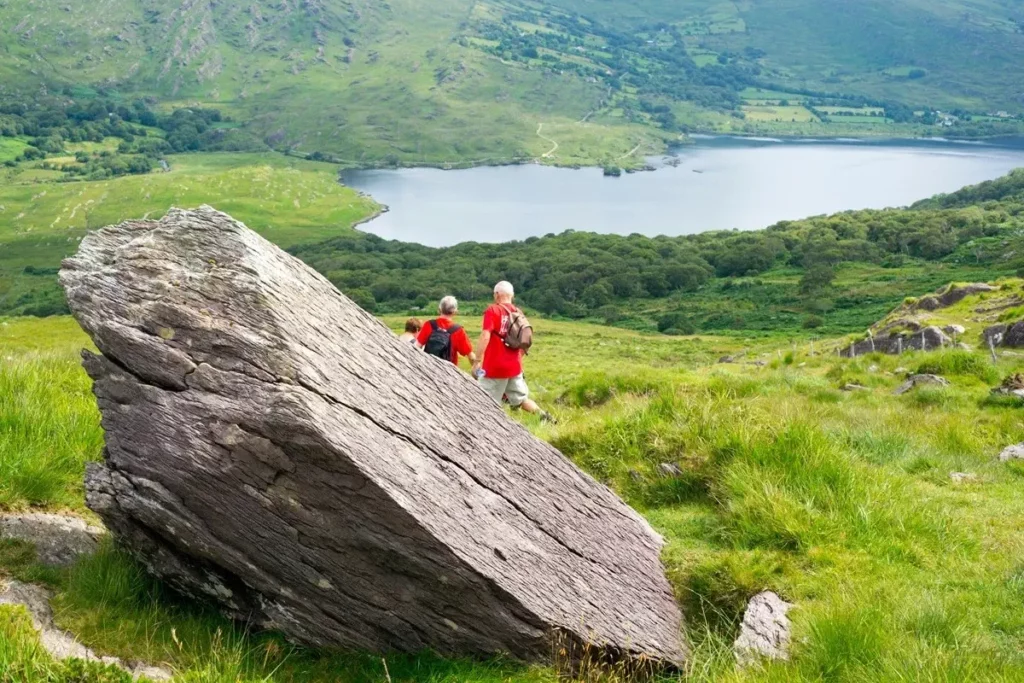
The second stage of the Dingle Way takes you from Camp to the southern side of the peninsula, crossing a small mountain pass. At first, the path climbs along an old disused road that winds between bogs and small conifer woods, wrapped in the calm of the Irish countryside.
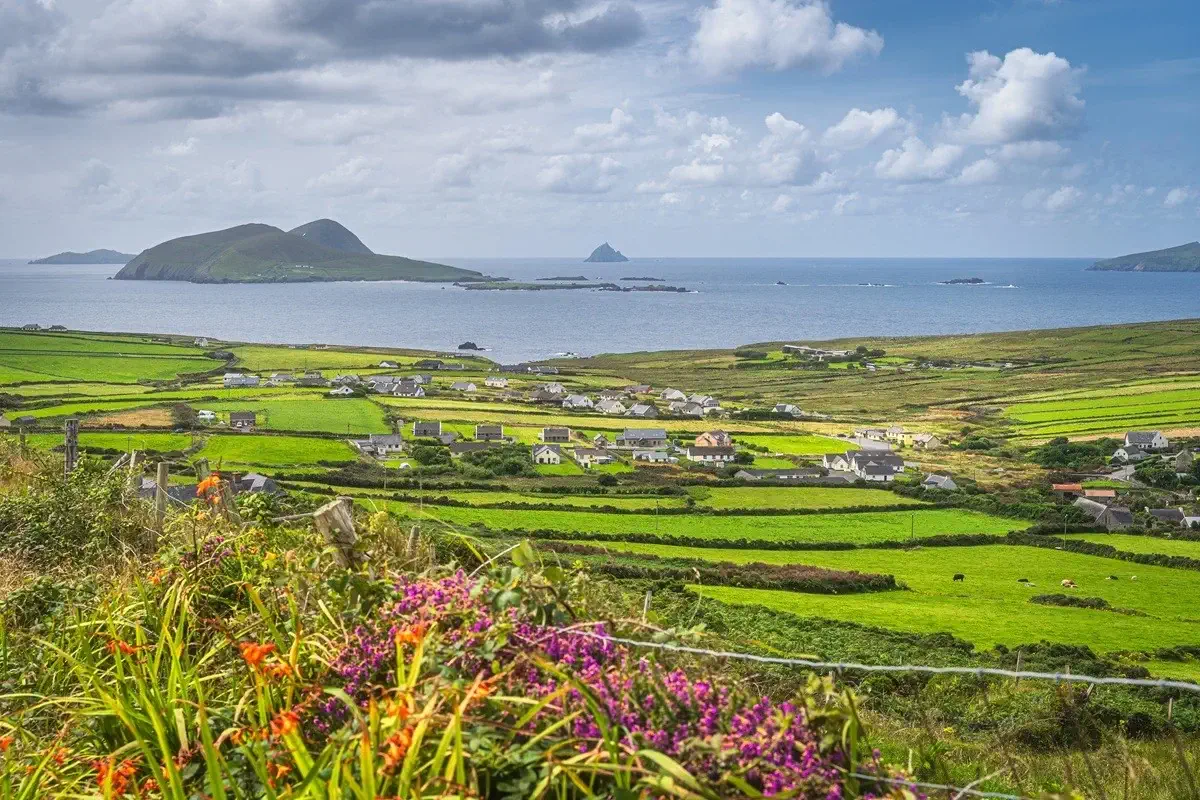
Tralee Bay lies behind you, and soon the waters of Dingle Bay come into view ahead. As you approach the coast, the views become more and more spectacular: the long golden strip of Inch Strand, Castlemaine Harbour and, in the background, the mountains of the Iveragh Peninsula.
At the end of the stage, the trail descends to Annascaul, a welcoming village where you will find several places to stay, a pub full of charm to recharge your batteries and a supermarket to stock up for the next day.
17.7 km ↗ 345 m ↘ 419 m
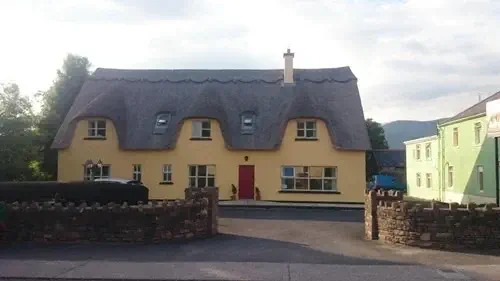
+ Inspiration Lodge (or similar – Annascaul)
DAY 4
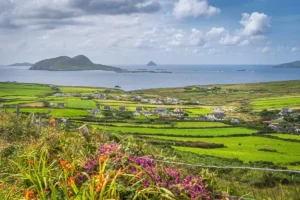 Stage 3: Annascaul ▸ Dingle
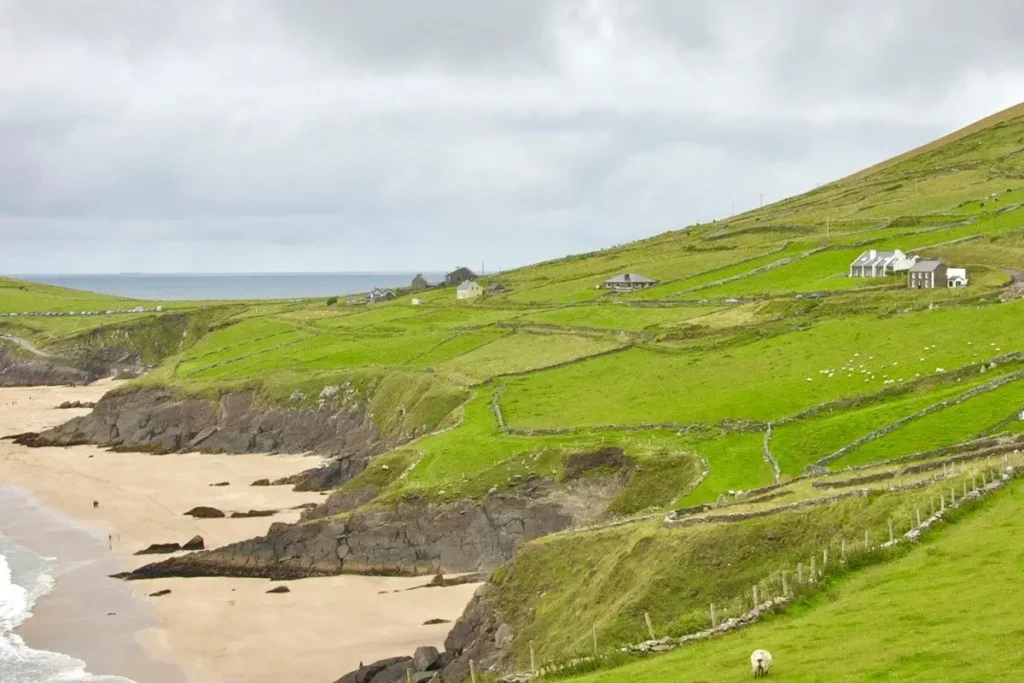
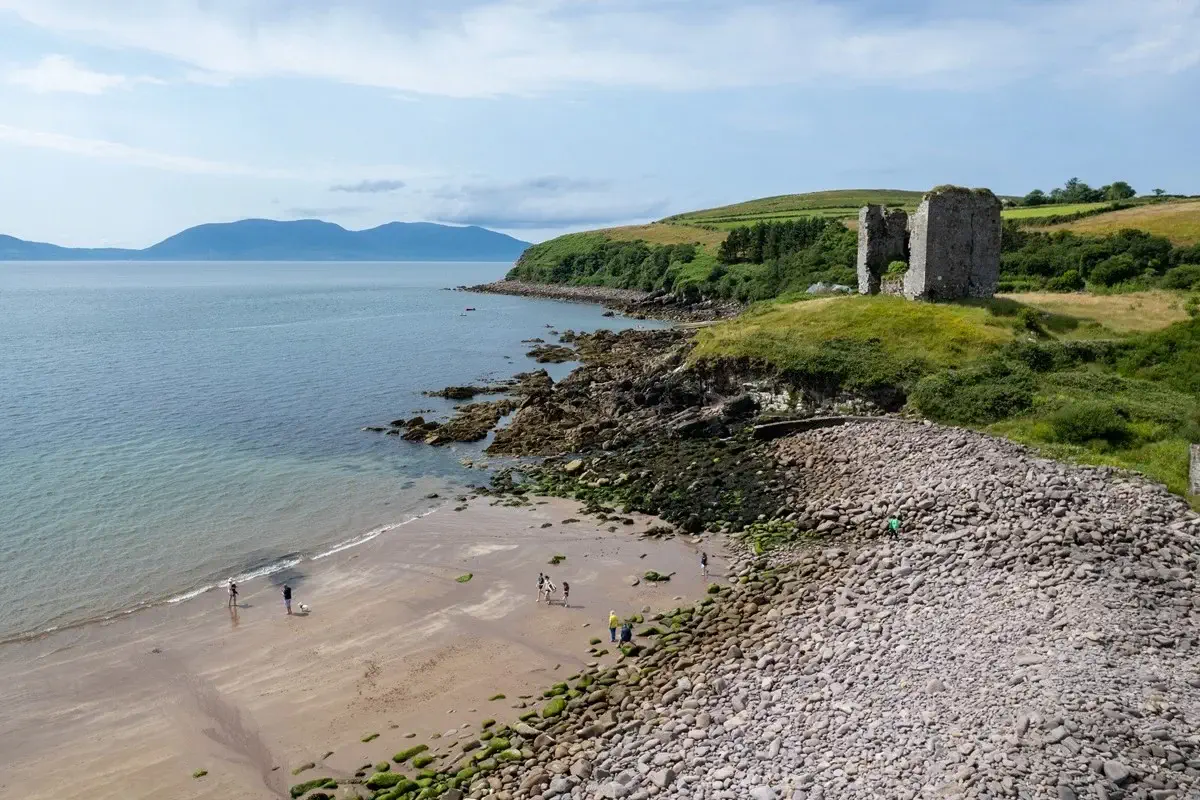
The last stage runs along quiet roads, green meadows and country lanes, dotted with old ruined stone cottages. The trail first leads you to the coast, where Minard Castle invites you to stop for a while.
Although you cannot go inside the ruin, it is worth pausing to take in the magnificent sea views. Then a peaceful road takes you to Lispole, with the mountains you will soon be walking outlined on the horizon.
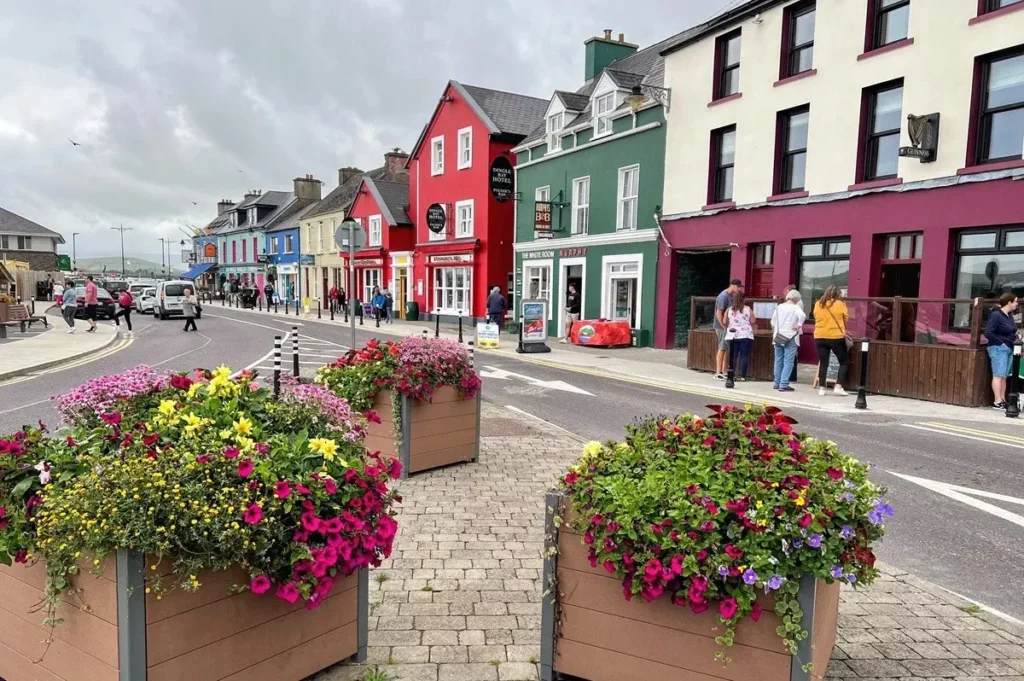
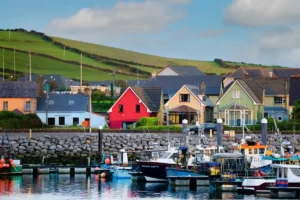
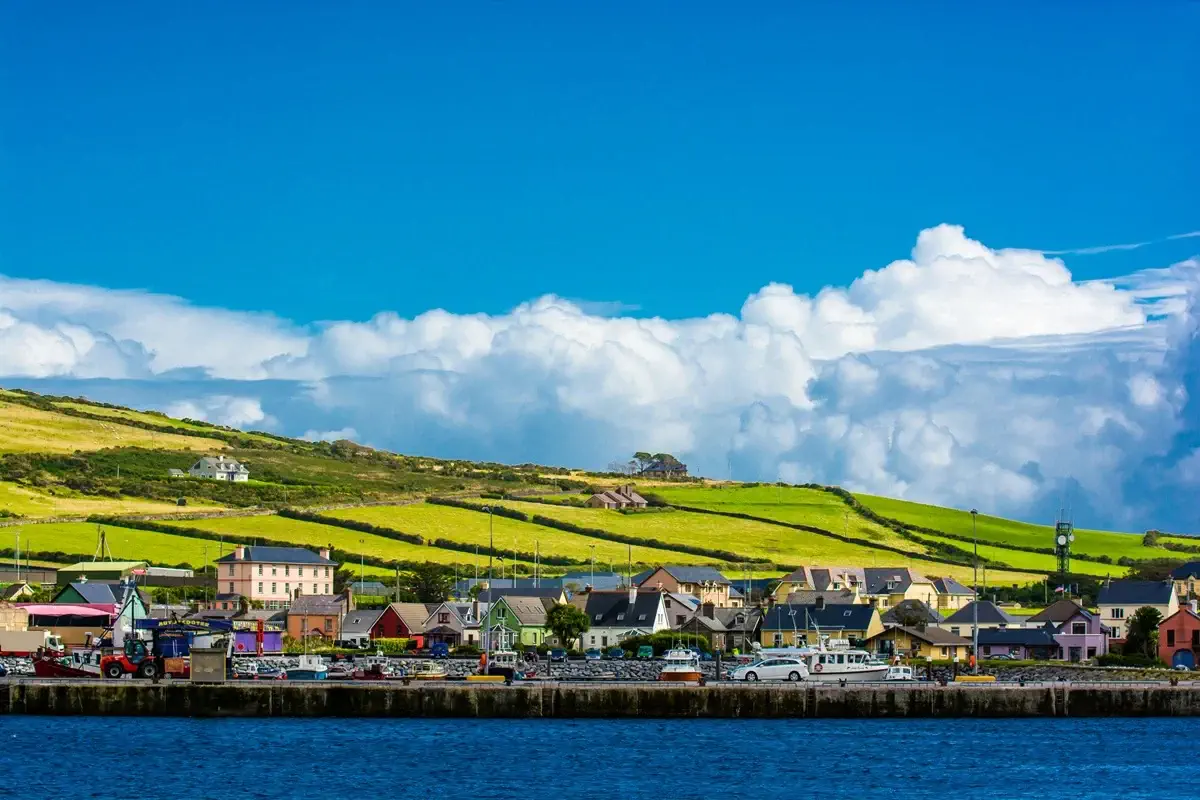
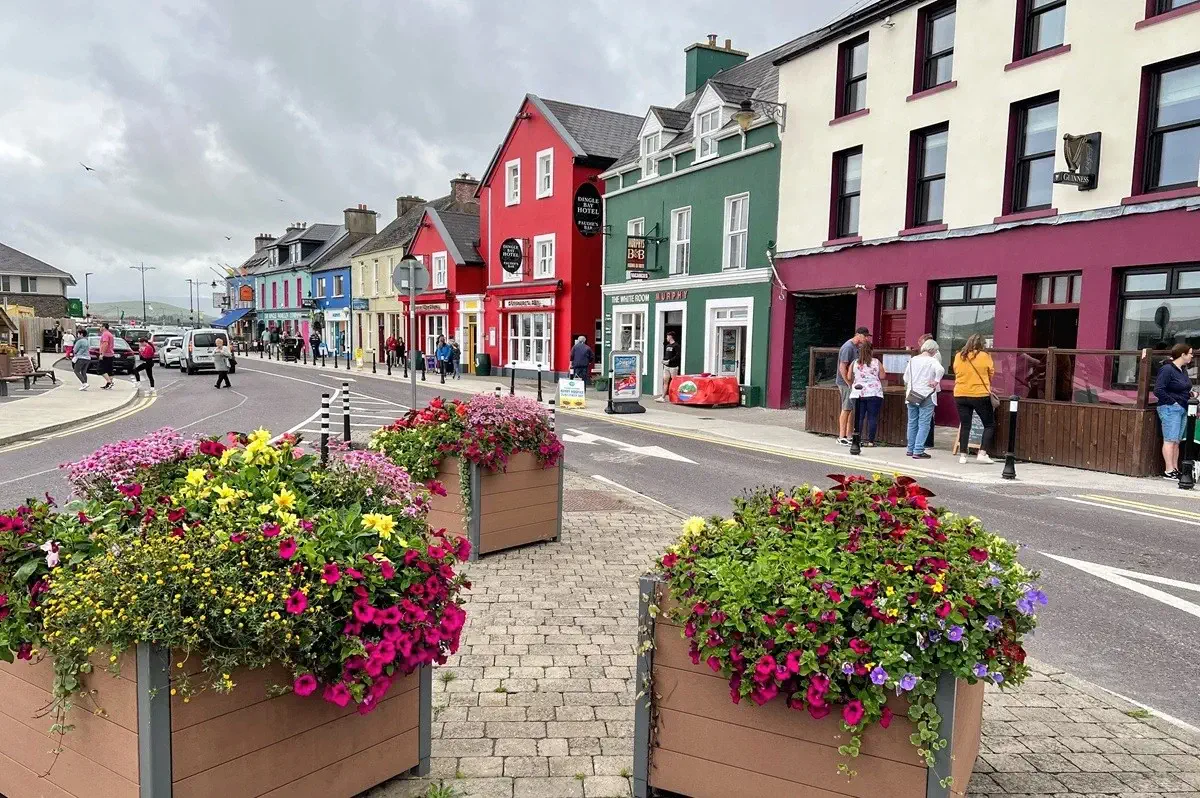
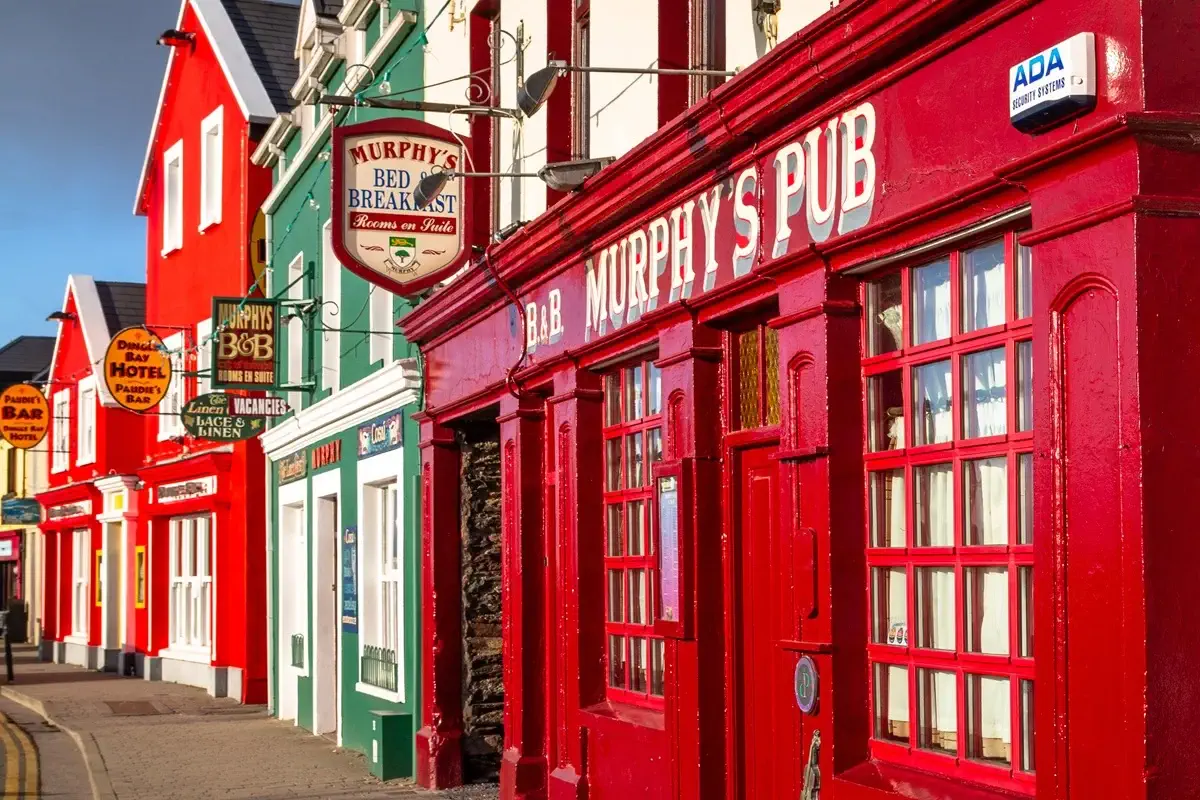
Finally you reach Dingle, the heart of the peninsula, a charming town with traditional Irish music playing in its pubs and cosy B&Bs to rest in after the walk. Famous for Fungie, the dolphin who lived in the bay for 37 years, Dingle invites you to wander its colourful lanes and head down to the harbour, where a statue pays tribute to the famous, much-loved dolphin.
 21.6 km ↗ 383 m ↘ 397 m
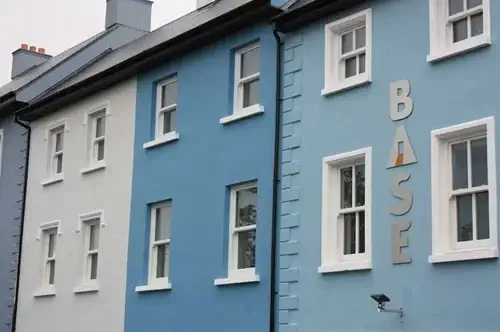
+ Dingle Harbour Lodge (or similar – Dingle)
DAY 5
 Departure or extension
Transfer on your own to Kerry Airport for your flight to Dublin and onward journey, or extend your stay and take time to discover Dingle’s hidden corners and enjoy its unique atmosphere.
FLEXIBLE PROGRAMME: you can rearrange the stages to add free days in between. We adapt to your preferences.
Accommodation with breakfast included
Waymarked trails + GPX directions and app
luggage transfer from hotel to hotel
point-to-point routes

luggage transfers
we move your bags from one accommodation to the next so you can walk with a light load
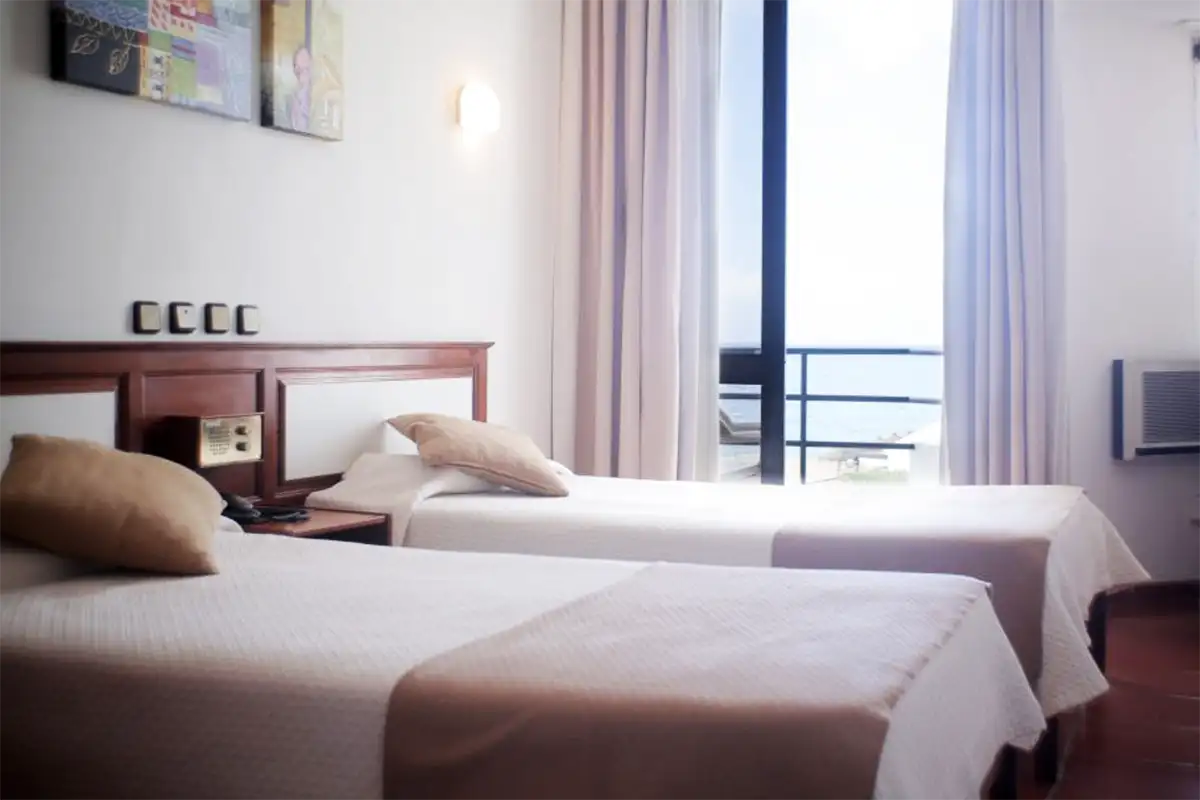
accommodation
small charming hotels and lodges in strategic locations, with breakfast included
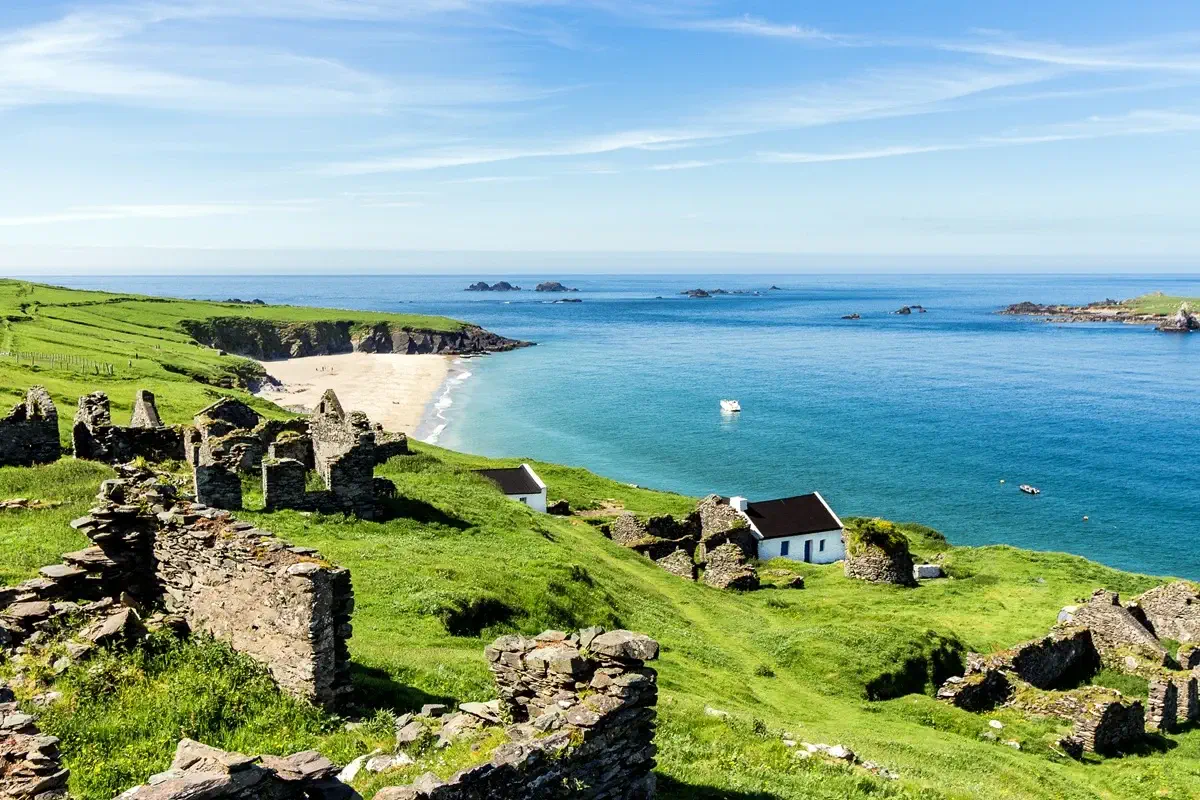
stages
3 stages of 17 to 21 km each, covering the most characteristic part of the Dingle Way, from Tralee to Dingle.
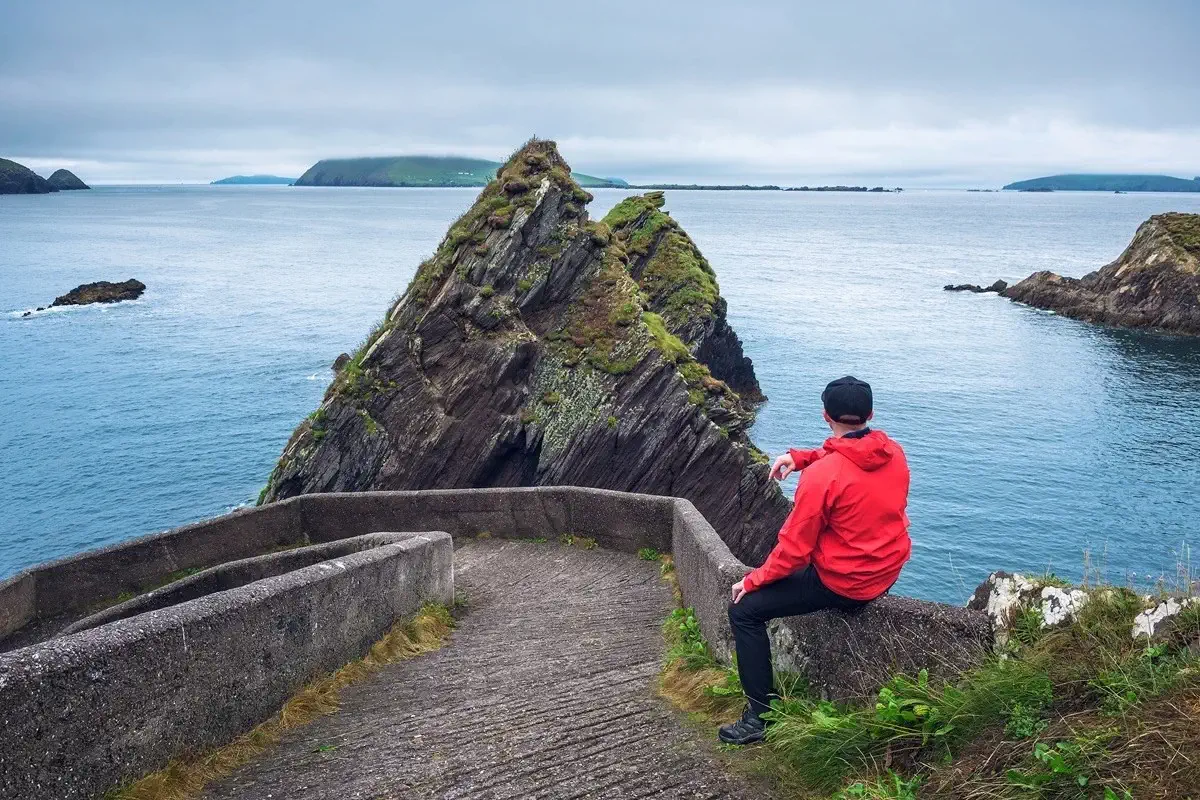
DINGLE WAY IRELAND
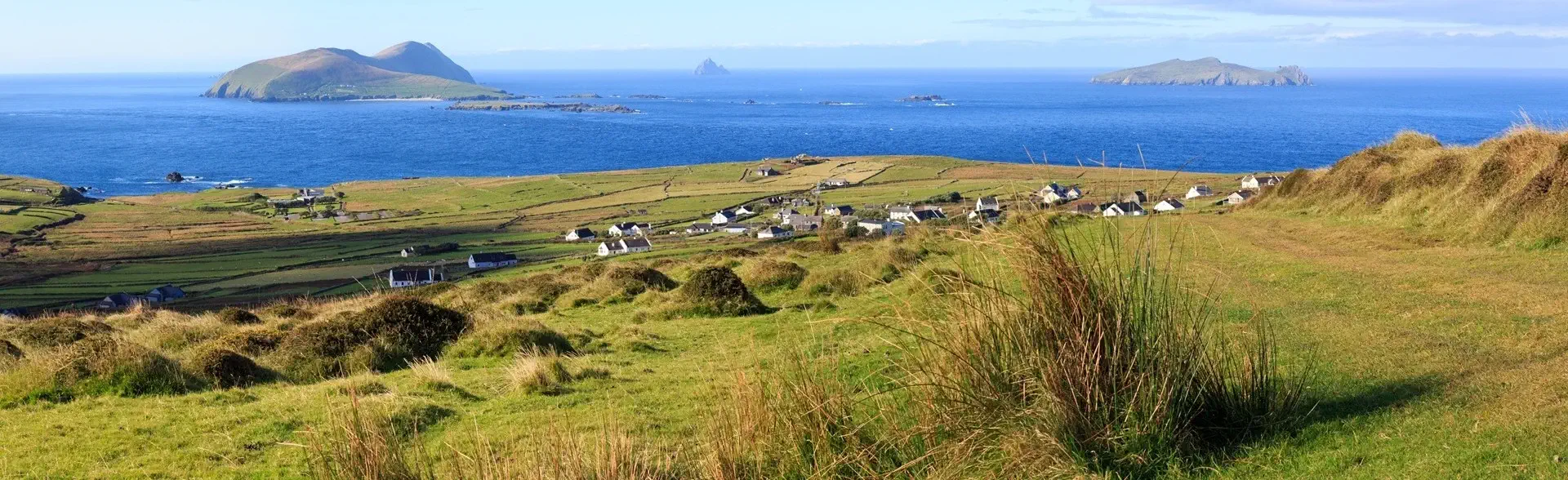
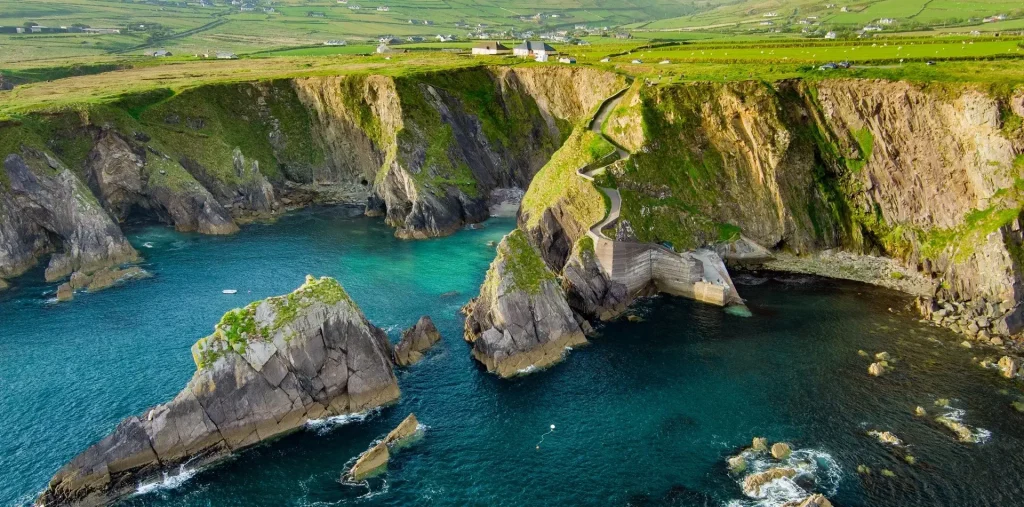
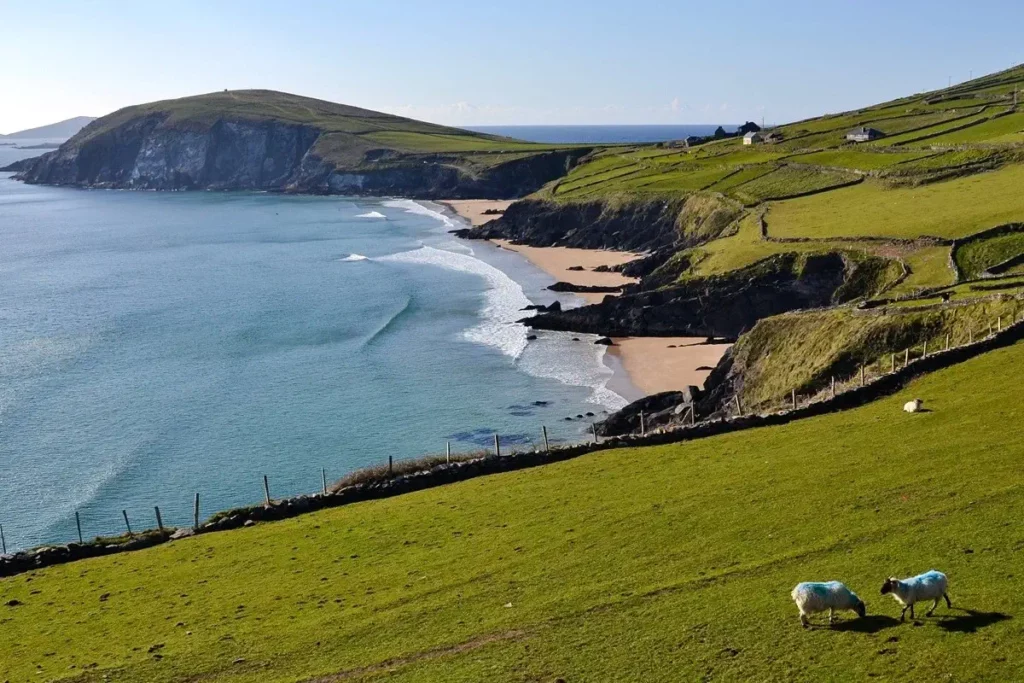
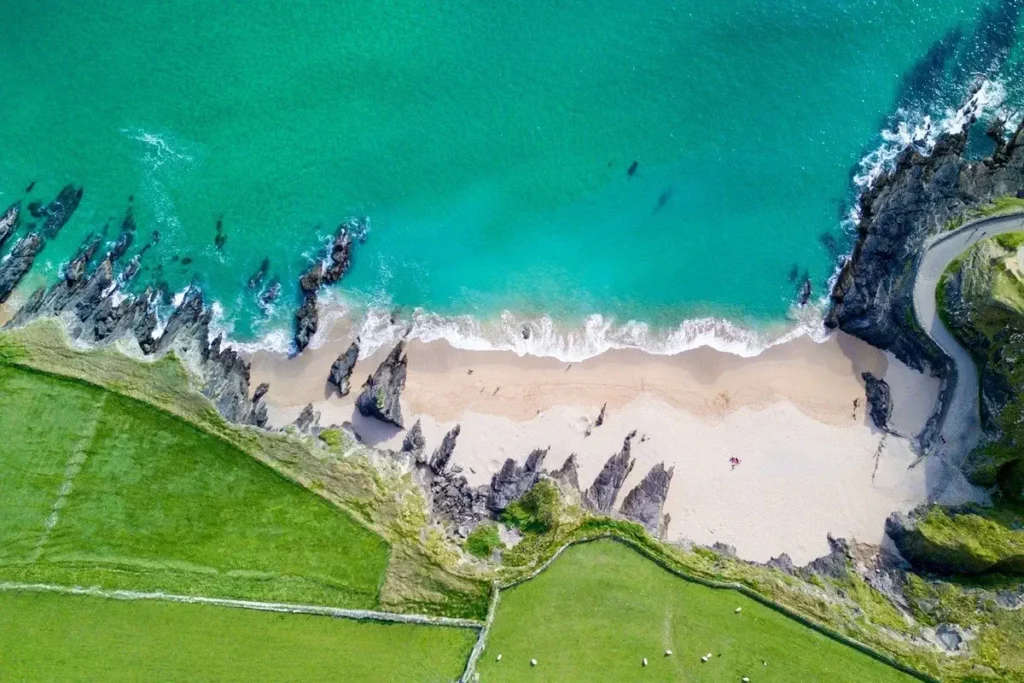
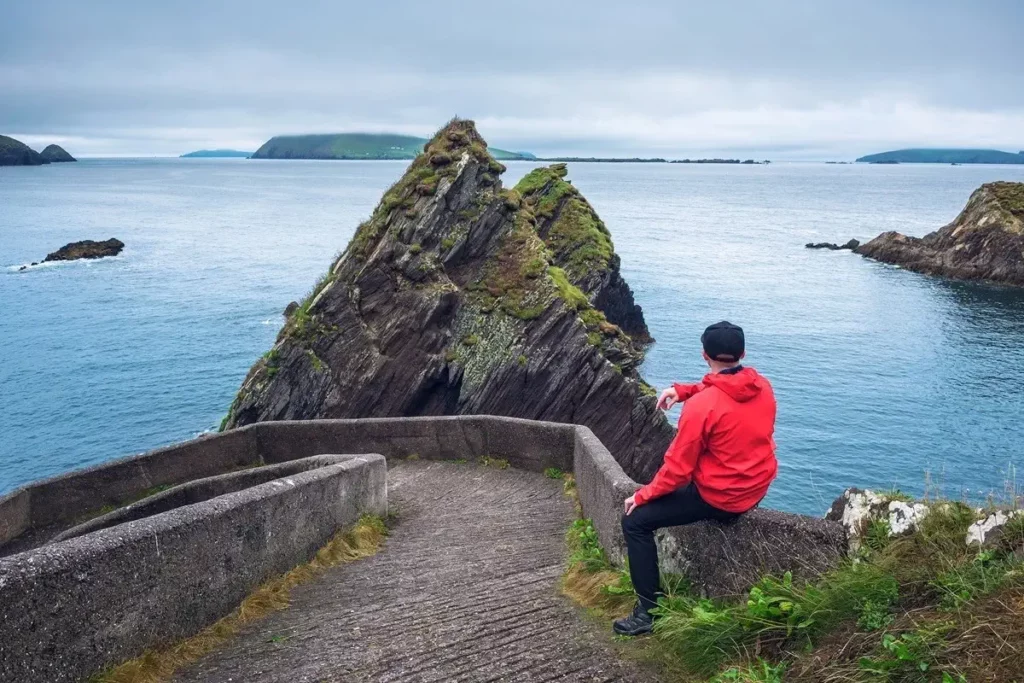
The Dingle Peninsula offers you one of the most spectacular walks in Ireland. Far from the big tourist routes, here you will discover nature at its most authentic, with rugged Atlantic coastlines, golden sandy beaches, deep green meadows and heather in bloom.
A route as genuine as a pint of Guinness
As you head west from Tralee, you will fall into the easy rhythm of its small villages and enjoy the famous Irish hospitality. As evening falls, the traditional pubs are the perfect place to end the day with a hearty meal, a freshly pulled Guinness and live music that gets everyone going.
Trip highlights:
Dingle Way: from Tralee to Dingle
A trail across the peninsula
Golden sandy beaches | Rugged Atlantic coastlines | Ancient early Christian monasteries
Dingle Way: a perfect trail along the quietest Atlantic coast.
On the Dingle Way, the perfect combination of adventure, relaxation and Irish spirit awaits you: an unforgettable walking experience in one of the most beautiful corners of Ireland.
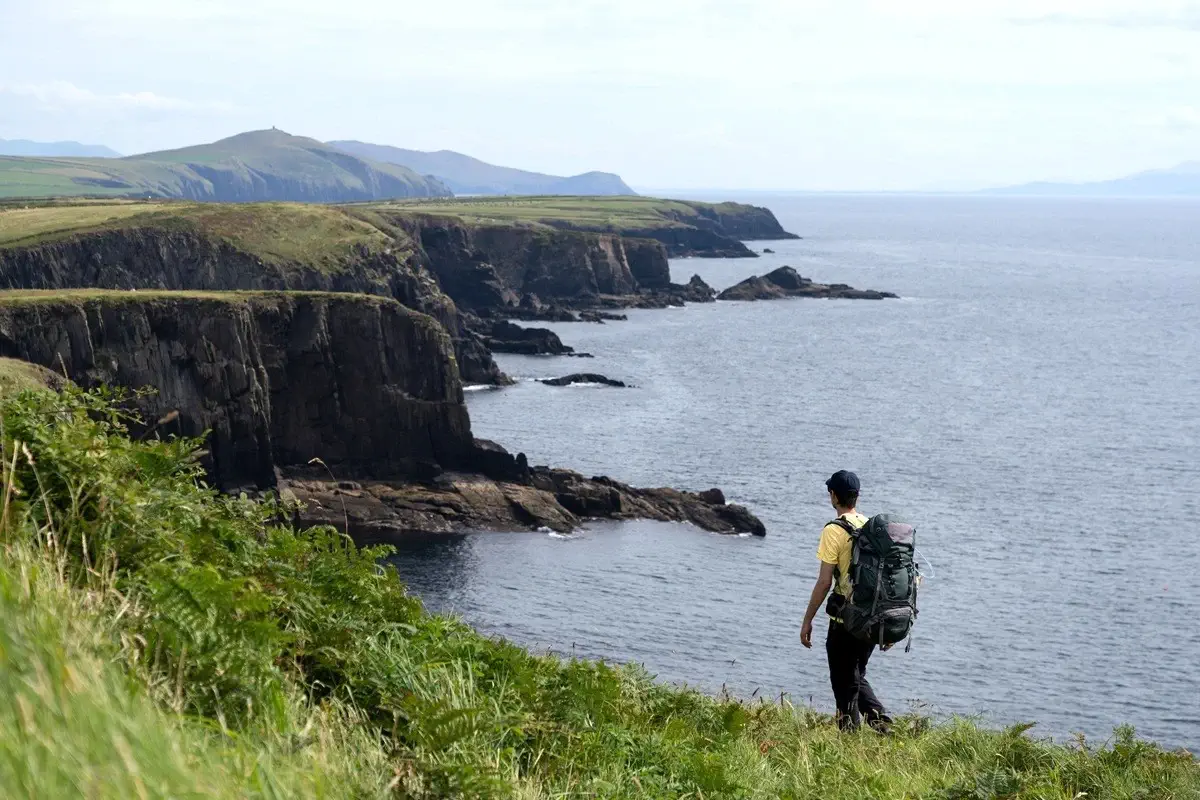 Considered one of the most beautiful long-distance trails in the country, the Dingle Way captivates with its unique blend of wild nature, fascinating history and heartfelt hospitality. Over its roughly 180 kilometres, you will walk through picture-postcard landscapes: green meadows, heather in bloom and rugged cliffs, with your gaze drifting again and again to the deep blue of the Atlantic.
One of the most impressive stretches crosses the golden dunes of Inch Beach, one of the longest sandy beaches in Ireland. Beyond its natural beauty, the path is dotted with traces of the past: prehistoric stone circles, enigmatic stones with Ogham inscriptions and ruins from the earliest days of Christianity.
In the picturesque villages of the peninsula you will immerse yourself in the vibrant Gaelic culture, enjoy an ice-cold Guinness and feel the energy of live folk music in the traditional pubs. A highlight of the route is the Conor Pass, the highest mountain pass in Ireland, which offers an unrivalled panorama of the whole peninsula. In short, the Dingle Way is an adventure full of nature, history and genuine Irish warmth.
Similar trips in other destinations
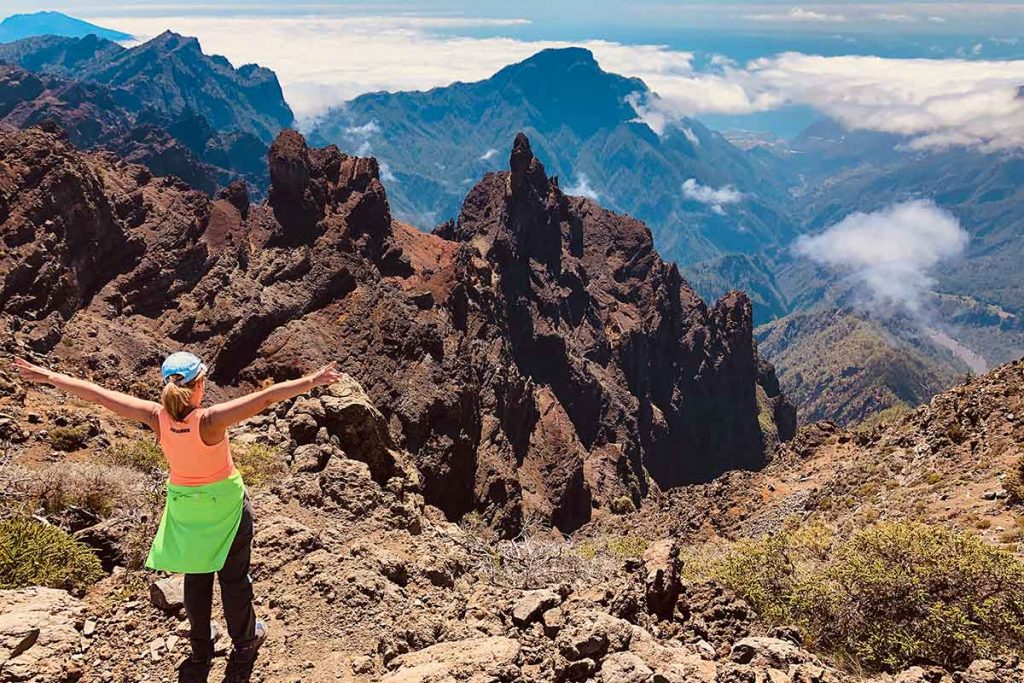


The Dingle Peninsula and its historic trail
Although the Dingle Way as a waymarked trail is relatively young, the paths it follows hold thousands of years of history. The route was opened in the mid-1980s as part of Ireland’s network of National Waymarked Trails, with the aim of showcasing one of the country’s most distinctive regions on foot. Its circular route, around 180 kilometres long and starting and ending in Tralee, makes use of old tracks, shepherds’ paths, disused country roads and even sections of abandoned railway lines, so walking it means, in a way, following in the footsteps of those who lived on the peninsula for centuries.
A path steeped in history
Human presence in Dingle dates back to prehistoric times. The first settlers left behind stone circles, standing stones and megalithic tombs that still rise among the fields today. From the Iron Age come fortifications such as Dún Beag, a promontory fort perched above the cliffs, and the mysterious Ogham stones, carved with Ireland’s oldest alphabet, which often marked graves or property boundaries. The peninsula holds one of the largest concentrations of these inscriptions in the whole country.
Irish Christianity
With the arrival of Christianity, Dingle became a land of monks and pilgrims. In the Fahan area, many clocháns survive: beehive-shaped stone huts built without mortar. Near Ballydavid stands the Gallarus Oratory, a small stone church shaped like an upturned boat that has withstood centuries of Atlantic winds. Not far away, the Romanesque church of Kilmalkedar recalls the region’s religious importance in the Middle Ages. Many pilgrims made their way towards Mount Brandon, dedicated to Saint Brendan the Navigator, along the ancient Cosán na Naomh, the Saints’ Road.
Dark times
The most turbulent history also left its mark. Minard Castle, built in the 16th century by the Knights of Kerry, was damaged by Cromwell’s troops in the mid-17th century. In 1580, at Dún an Óir by Smerwick Harbour, a force of Spanish and Italian soldiers sent to support an Irish rebellion was massacred by the English army after surrendering, an episode still remembered in the area.
The 19th and 20th centuries brought profound change. The Great Famine hit the peninsula hard and caused large-scale emigration. In 1891 the narrow-gauge railway between Tralee and Dingle opened; its viaducts can still be seen from the trail, and it ran until the middle of the last century. In 1953 the Blasket Islands were evacuated, and their inhabitants left an extraordinary literary legacy in the Irish language. Annascaul, for its part, is proud to be the birthplace of Tom Crean, the Antarctic explorer.
More than a trail
Today, much of the peninsula is part of the Gaeltacht, where Irish is still an everyday language. Walking the Dingle Way is therefore like crossing an open-air museum where landscape, faith, language and memory intertwine at every step.
Request a quote
Not exactly what you’re looking for?
We adapt to your preferences Tell us how you want it and we’ll create a tailor-made plan for you.

We will get back to you as soon as possible.

Frequently asked questions about the Dingle Way
What is the Dingle Way?
It is a long-distance trail of around 180 kilometres that circles the Dingle Peninsula in County Kerry, in the south-west of Ireland. It is part of the country’s network of National Waymarked Trails and combines coastline, mountains, beaches and traditional villages.
Where does it start and finish?
The route is circular: it starts and ends in Tralee, the county town. It is usually walked anticlockwise, passing through Camp, Annascaul, Dingle, Dunquin, Ballydavid, Cloghane and Castlegregory.
How many days do you need to complete it?
Most walkers complete it in eight stages of between 15 and 25 kilometres per day. It is also possible to walk only part of the route if you have less time.
How difficult is it?
It is a route of moderate difficulty, suitable for people with a good basic level of fitness. Most stretches are flat or have gentle gradients, although there are demanding climbs, such as the one skirting Mount Brandon, and boggy areas that can be muddy.
When is the best time to walk it?
From March to October. May, June and September usually offer the best balance of good weather, long days and fewer visitors than in the height of summer.
Is the trail well waymarked?
Yes. The trail is marked with posts and yellow arrows bearing the silhouette of a walker. Even so, it is a good idea to carry a map or a navigation app, especially on mountain sections or in fog.
Where do you stay along the route?
Mainly in B&Bs, small guesthouses and family-run hotels in the villages along the way. In high season it is advisable to book in advance, as the choice in some places is limited.
Do you have to carry your luggage the whole way?
Not necessarily. Luggage transfer services between accommodations are available, so you only need to carry a light daypack with the essentials for each day.
What equipment is essential?
Waterproof, well broken-in hiking boots, a rain jacket and trousers, warm layered clothing, sun protection, water and some food. The weather on the Atlantic coast changes quickly, so it is important to be prepared for rain and wind even in summer.
Is it useful to know some Irish?
It is not necessary, as everyone speaks English. However, much of the peninsula is Gaeltacht, an Irish-speaking area, and many signs appear only in Gaelic. For example, Dingle appears as An Daingean, so it is worth knowing the Irish names of the main villages.
If you have any additional questions not covered here, check the general FREQUENTLY ASKED QUESTIONS section or get in touch with our team. We have extensive knowledge of Ireland and the Dingle Peninsula and their many possibilities for self-guided walking.






Dingle Way: 3 stages across the Irish Peninsula │ 5 days

Walking through County Kerry, in the south-west of Ireland, from the lively town of Tralee to the picturesque fishing village of Dingle, crossing the peninsula of the same name from side to side. Three genuine stages among green mountains, wild beaches and Atlantic cliffs that show you the best of this iconic and unforgettable route.
Product Currency: EUR
Product Price: 595
Product In-Stock: InStock
-
Destination
Our gallery
Pictures from the stages
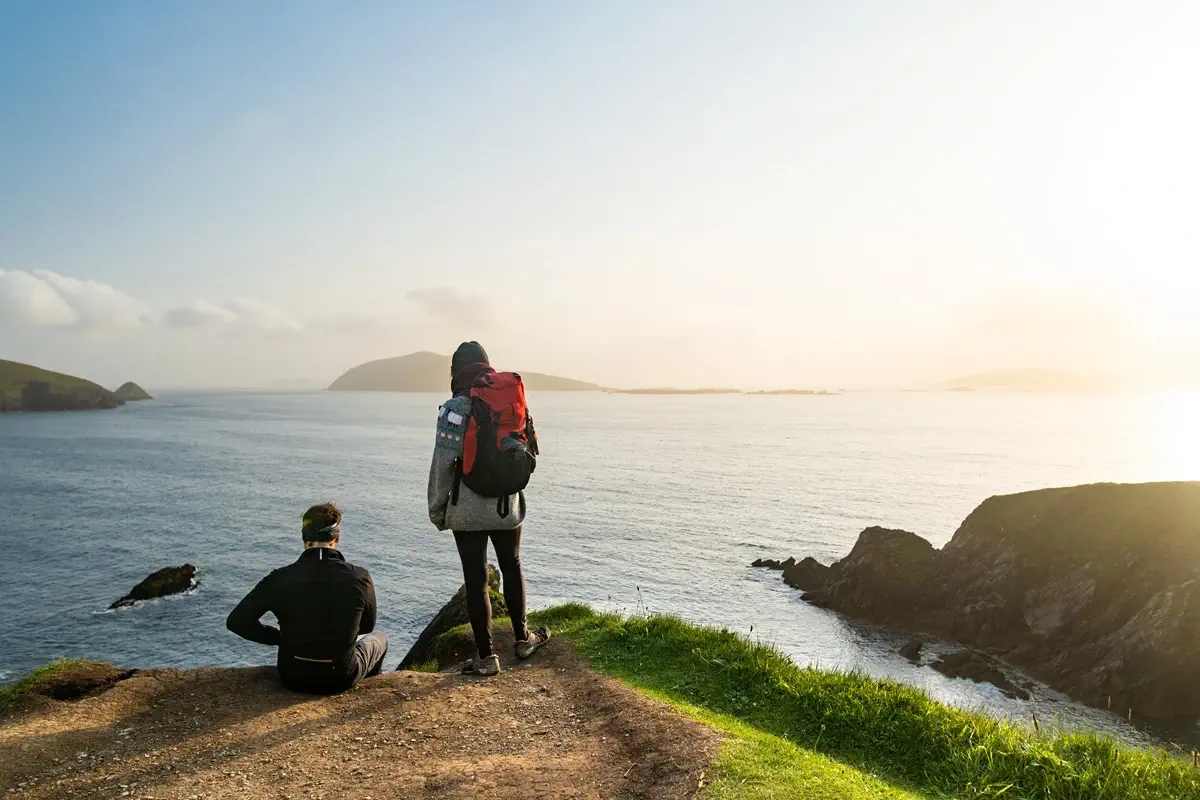
Day 1
 Arrival in County Kerry
After flying to Dublin, Ryanair connects you twice a day with Kerry Airport (a 30-minute flight)
Day 2
Stage 1: Tralee ▸ Camp
We leave Tralee, the lively capital of County Kerry, along the path beside the canal. After a gentle start, you will cross the River Lee and pass the historic Blennerville Windmill, whose white silhouette rises above the landscape.
19.2 km ↗ 227 m ↘ 152 m
Day 3
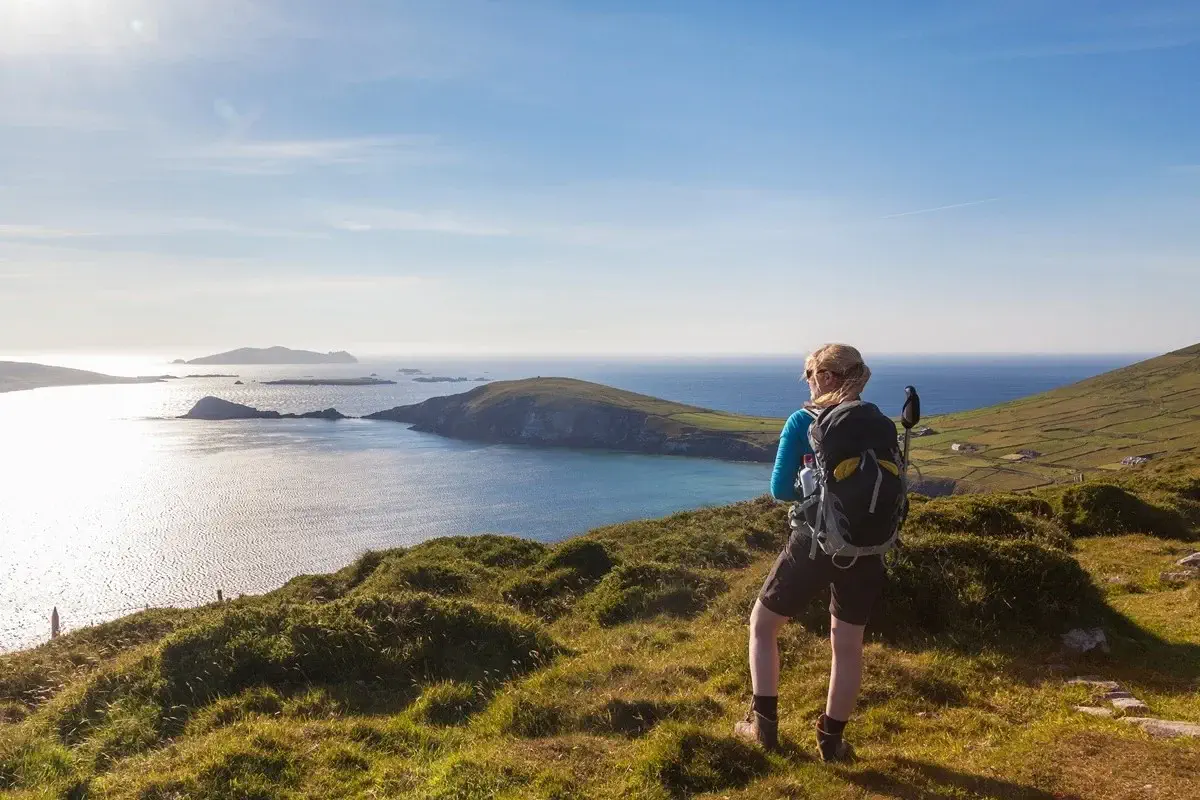 Stage 2: Camp ▸ Annascaul
The second stage of the Dingle Way takes you from Camp to the southern side of the peninsula, crossing a small mountain pass. At first, the path climbs along an old disused road that winds between bogs and small conifer woods, wrapped in the calm of the Irish countryside.
17.7 km ↗ 345 m ↘ 419 m
Day 4
Stage 3: Annascaul ▸ Dingle
The last stage runs along quiet roads, green meadows and country lanes, dotted with old ruined stone cottages. The trail first leads you to the coast, where Minard Castle invites you to stop for a while.
21.6 km ↗ 383 m ↘ 397 m
+ Dingle Harbour Lodge (or similar - Dingle)
Day 5
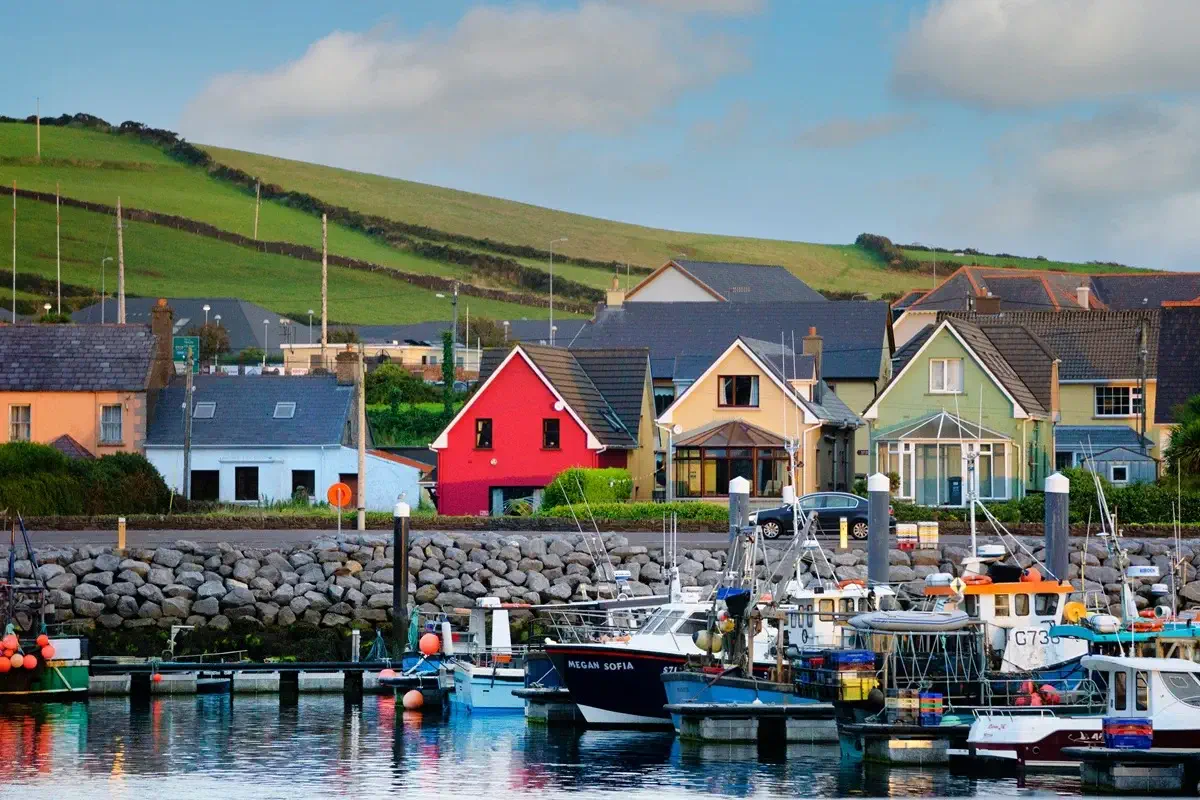 Departure or extension
Transfer on your own to Kerry Airport for your flight to Dublin and onward journey, or extend your stay and take time to discover Dingle's hidden corners and enjoy its unique atmosphere.
TOUR LOCATION
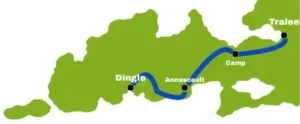
Walk the three key stages of the Dingle Way, from Tralee to Dingle, passing through Camp and Annascaul




Additional nights
It is also possible to book some additional nights before or after your hiking programme, or an extra week to relax.
Difficulty level
To successfully complete the 3 stages of the Dingle Way, adequate physical fitness is required. Depending on the time of year, the weather can be very rainy. It is therefore essential to always have suitable waterproof clothing, a windbreaker and warm clothing that can be removed in layers as needed. The use of trekking poles is highly recommended.
Trails
The Dingle Way is a trail network belonging to the Kerry Way and is perfectly waymarked.
We recommend
Suitable hiking clothing and sturdy footwear. During the routes, it is essential to carry food and sufficient water, as well as sun protection, a hat, a light windbreaker, and in the winter months, warm clothing.
Luggage transfer
We take care of transferring your luggage from one accommodation to the next, so during the routes you only need to carry a daypack with the essentials for the day. For the entire trip, the most practical option is a single suitcase weighing no more than 20 kg.
Between May and September, you can book for any date!
FLY TO DUBLIN
...AND HOP TO KERRY

Other options worth considering
Ryanair and Aer Lingus are two purely Irish airlines that connect you with Dublin and Kerry. However, at certain times of the year other airlines offer flights to Dublin that you can connect with your next flight to Kerry 😉

Search directly among other airlines



Miguel
Head of organisation

Book early!! ...and get a 6% discount for bookings made at least 90 days in advance.
(NOT bookable between October and April)
PRICES, valid until 31 October 2027
633 € ▸ 595 € per person | double/twin room (2 people)
| Supplement for room for single use
(...and for 3rd person in single room): + 145 €
Solo Traveller (1 traveller only): 1043 € ▸ 980 €
High Tourist Season doesn't just mean expensive flights and a lack of availability in accommodation. Prices also rise substantially. For this reason, at this time of year we cannot offer early booking discounts and the price of the whole package may be higher than indicated. On the Dingle Peninsula, the high tourist season starts on 1 July and ends on 31 August.
 Bookings: Make a deposit of 150 € (per person) now to secure your booking and pay the balance 30 days before your arrival date. We will confirm your booking within 24 hours. In the unlikely event that accommodation is unavailable, we will refund the amount paid or propose alternative dates.
What does this package include?
 Accommodation - 4 nights in different strategically chosen accommodations, on a room + breakfast basis
 Information - personalised information by video call (if desired), on the day of arrival
 Access to our app - with descriptions and GPS navigation for each stage, to follow on your mobile device
 Luggage transfer - we take care of moving your luggage from one accommodation to the next.
 24h assistance and support - we remain in permanent contact throughout your stay to resolve any query or issue

What is NOT included?
Cancellation Policy
call us on 922 433 001 or write to us