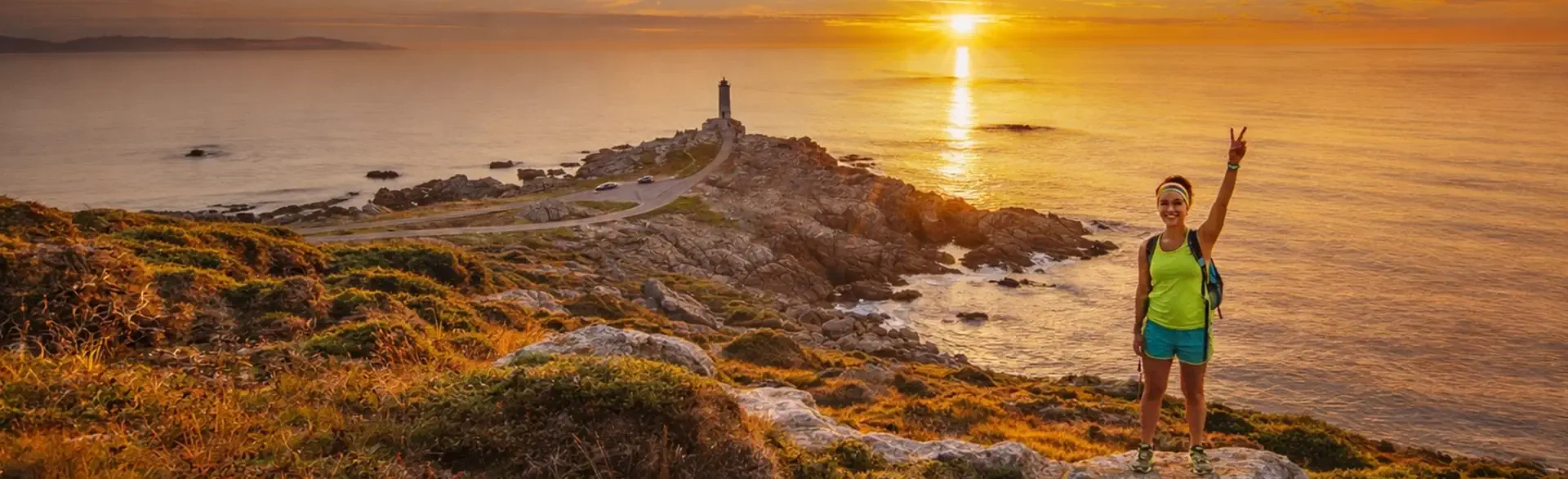
Camiño dos Faros
5 stages along the Costa da Morte from ◆Laxe to Fisterra◆ with luggage transfer between accommodations | Difficulty: ▲▲▲△△
Camiño dos Faros: Laxe ▸ Fisterra
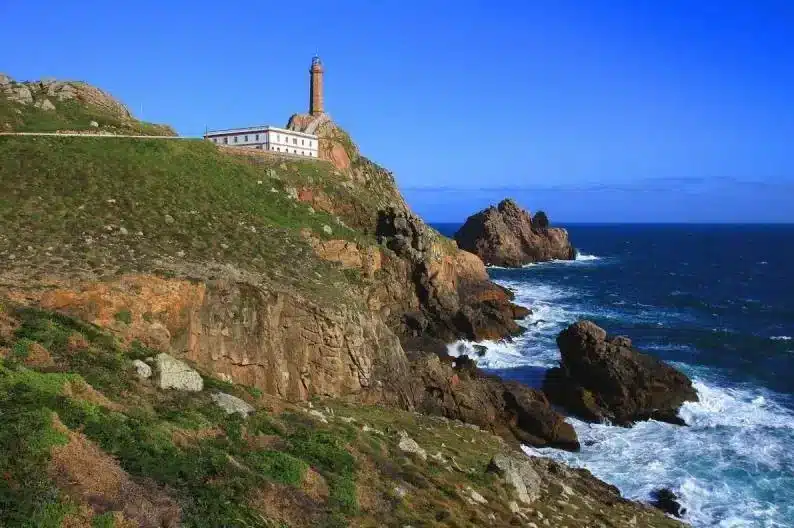
5 stages | 7 days
Camiño dos Faros
▸ Includes 6 nights’ accommodation in charming rural hotels in Galicia on a bed and breakfast basis.
▸ The 5 stages from Laxe to Fisterra, walking from point to point along the Camiño dos Faros.
breakfast included
with luggage transfers
stages of 18–29 km per day
from 1 April to 15 October

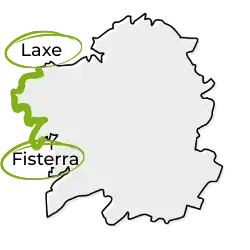
full itinerary: 126,2 Km
total ascent: △ 2526 mts
total descent: ▽ 2504 mts
Customised app
Offline GPS navigation
Relevant information
STAGES | ACCOMMODATION:
Arrival in Santiago de Compostela ↦ transfer to Laxe
Laxe ▸ Arou
Arou ▸ Camariñas
Camariñas ▸ Muxía
Muxía ▸ Lires
Lires ▸ Fisterra
Departure day ↦ optional transfer to Santiago or extended stay
EXTRA DAY: in Santiago de Compostela
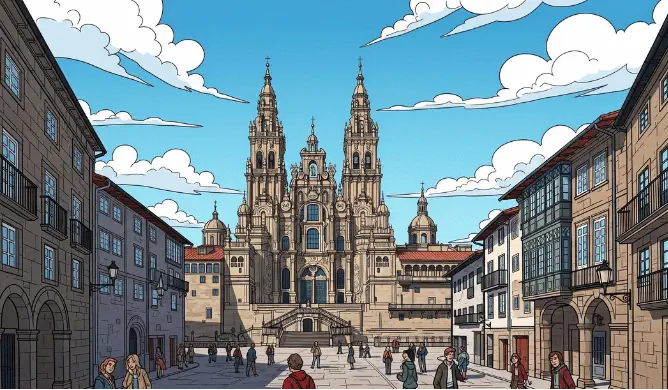
Make the most of the end of your trip by spending an extra day in Santiago de Compostela. A cosmopolitan city that exudes culture from every pore and is brimming with a great atmosphere. The ideal place to savour Galicia’s excellent cuisine after five days on the road.
- night in Santiago ▸ Hotel Lux (or similar)
DIFFICULTY LEVEL
This programme is for you if you are in excellent physical condition; if you can cover steep slopes and have no vertigo or health problems; if you regularly do long walks and consider yourself a good sportsman, love nature and are respectful of the environment. Some sections of the Camiño dos Faros may cause vertigo, but there are alternative routes to avoid them.
See more details at:
FREQUENTLY ASKED QUESTIONS
FLEXIBLE PROGRAMME: you can rearrange the stages in order to fit days off in between them. We adapt it to your wishes.
PLEASE NOTE: The multi-stage tour along the Camiño dos Faros requires a good level of fitness, steady footwork and lack of vertigo..
Marked trails & GPX files and app
luggage transfer from hotel to hotel
point-to-point routes

luggage transfers
We’ll transport your luggage from one accommodation to the next so you can travel light
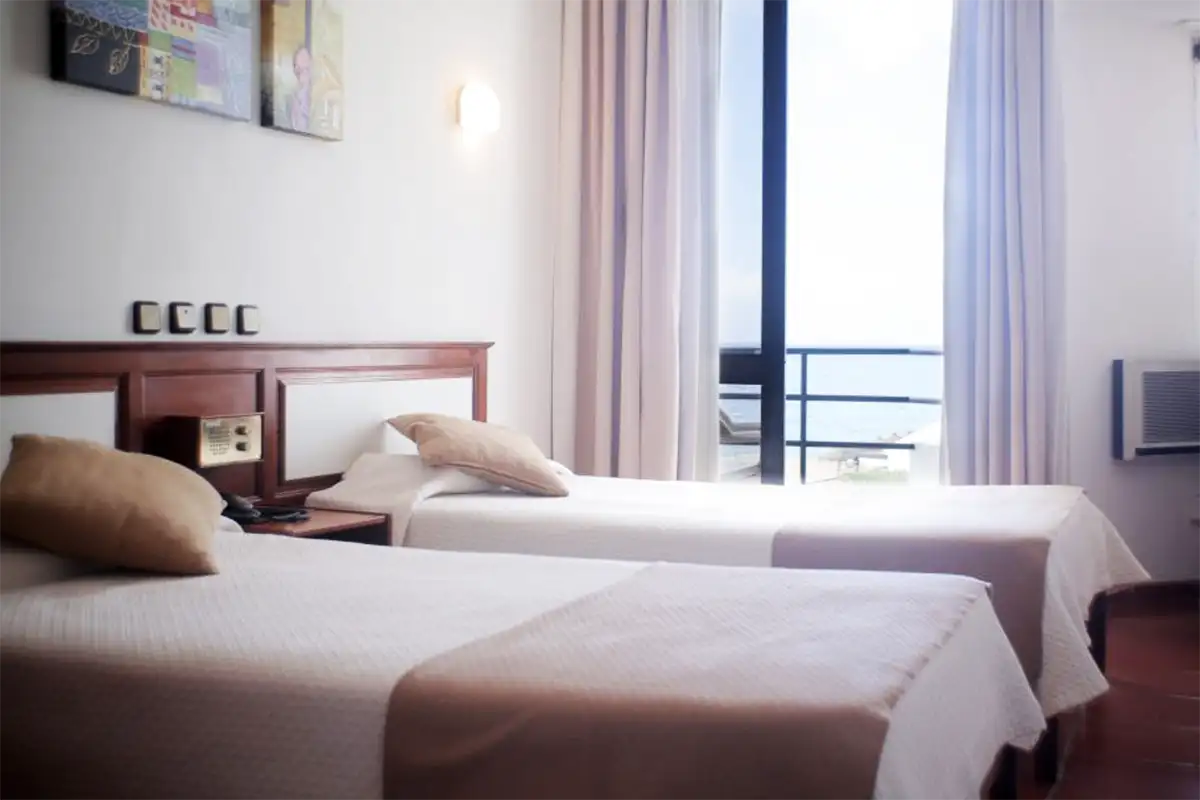
accommodation
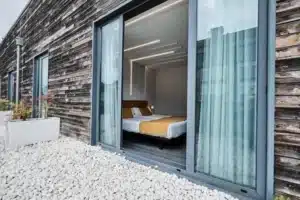
small, charming hotels and unique accommodation in prime locations, with breakfast included
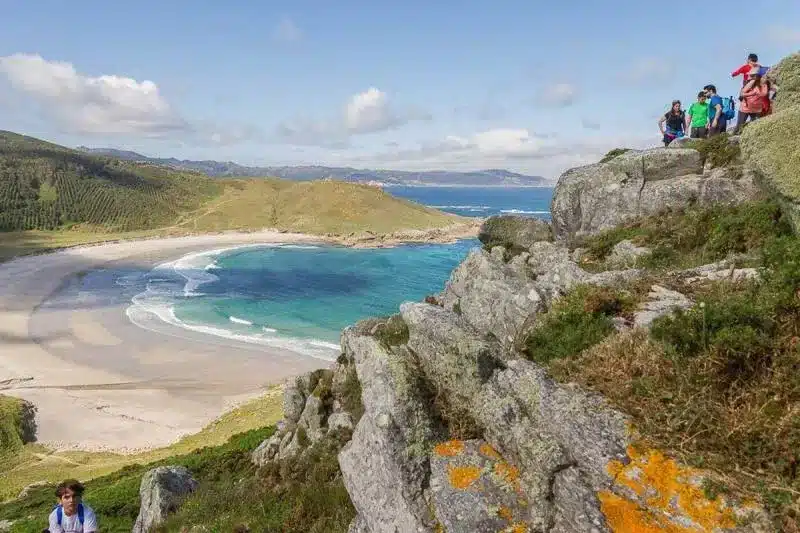
stages
5 stages, each between 18 and 29 km long, to explore the Galician Costa da Morte on foot
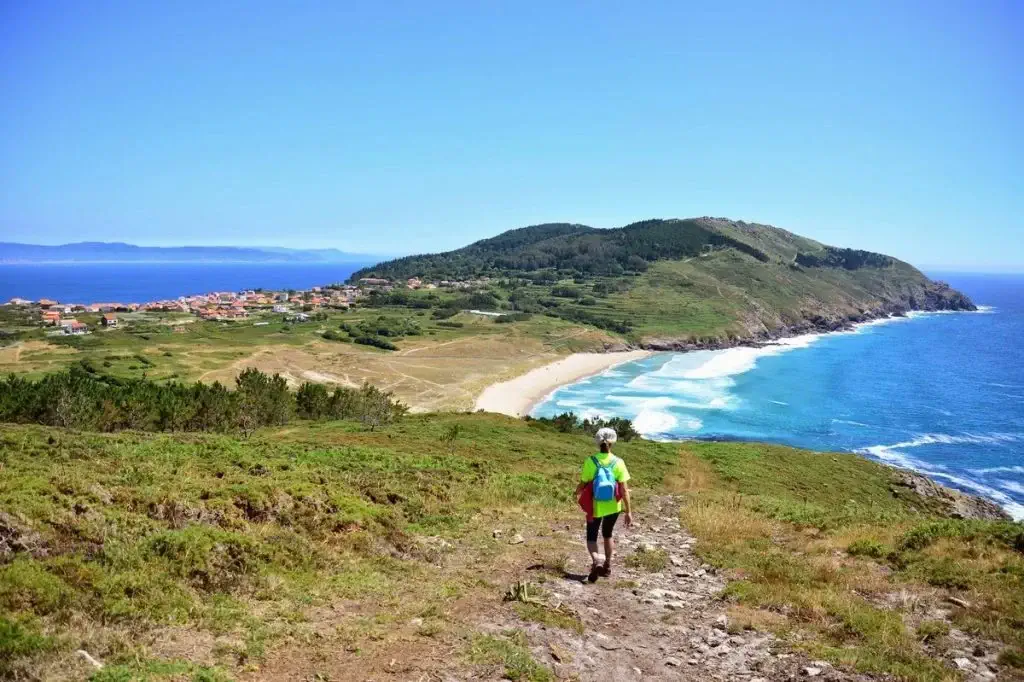

CAMIÑO DOS FAROS – WALKING FROM HOTEL TO HOTEL
There are paths that lead not to any sacred city, but to the very edge of the world. The Camiño dos Faros is one of them: two hundred kilometres of Atlantic coastline between Malpica de Bergantiños and Fisterra, where Galicia reveals its most primal soul. Here there is no cathedral awaiting the traveller, but something older than any stone carved by human hands — the eternal roar of the sea against the cliffs, the wind that carries the salt and wipes away thoughts, the light of the lighthouses flickering in the night like a solitary heartbeat.
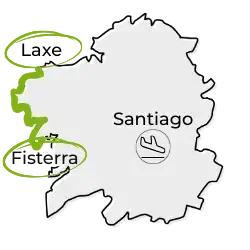
Our programme walks its most dramatic half: 121 kilometres in five stages, Laxe to Fisterra. And it is worth saying early, because the map deceives: coastal does not mean flat. There are 2,526 metres of ascent spread across five days that climb and drop without respite between clifftop and beach.
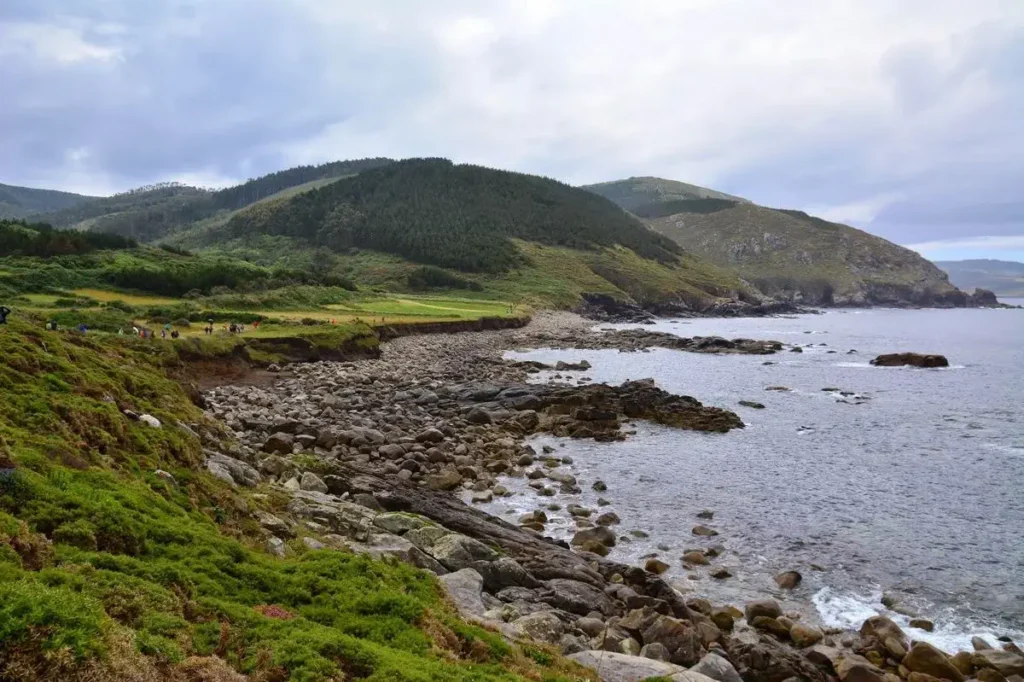
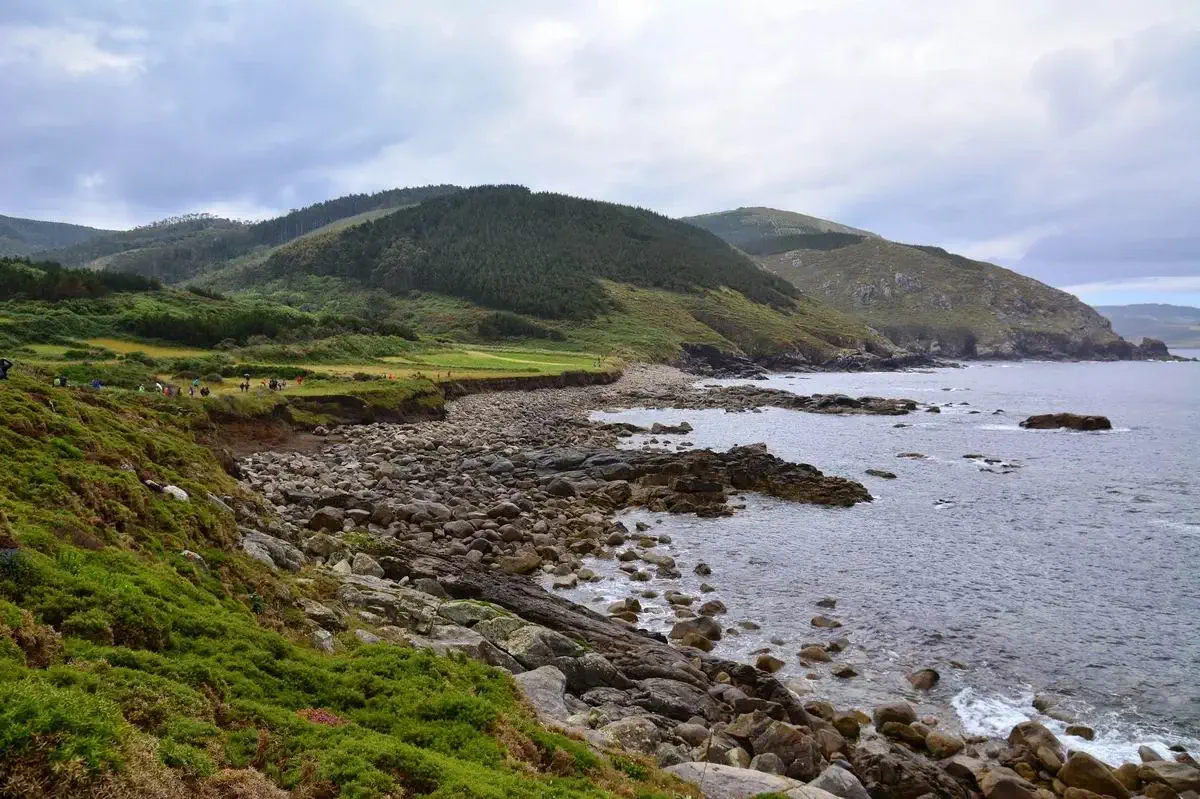
The Costa da Morte did not get its name by chance. For centuries, these reefs devoured ships and sailors with the sea’s haughty indifference. To walk along its paths is to tread upon the memory of shipwrecks, upon the silence of those who never returned. But death here is not dark: it is green, violent and wild, covered in flowering gorse and mosses that grow where nothing ought to grow.
The first stage, Laxe to Arou, is a gentle 18.5 kilometres that serves as an introduction. The third, Camariñas to Muxía, is the longest at 29 kilometres and around eight hours of walking, though the ascent gives you some respite. The last two are the ones your legs remember: Muxía to Lires packs 890 metres of climbing into just 25 kilometres, almost all of it on the way up Monte Cachelmo during the first ten; and Lires to Fisterra adds another 717 metres along the highest cliffs on the whole route.
Fishing villages appear and disappear like phantoms, and you sleep a night in each one: Laxe with its beach open to the north; Camariñas, with its bobbin lace drying in the sun; Muxía, with its sanctuary perched on the edge of the abyss; Lires, tucked away in its estuary; Fisterra, gazing out at the horizon as the ending it always was. The people who live here carry the sea in their eyes — that fixed, somewhat distant gaze of those who have learnt to respect what cannot be tamed.
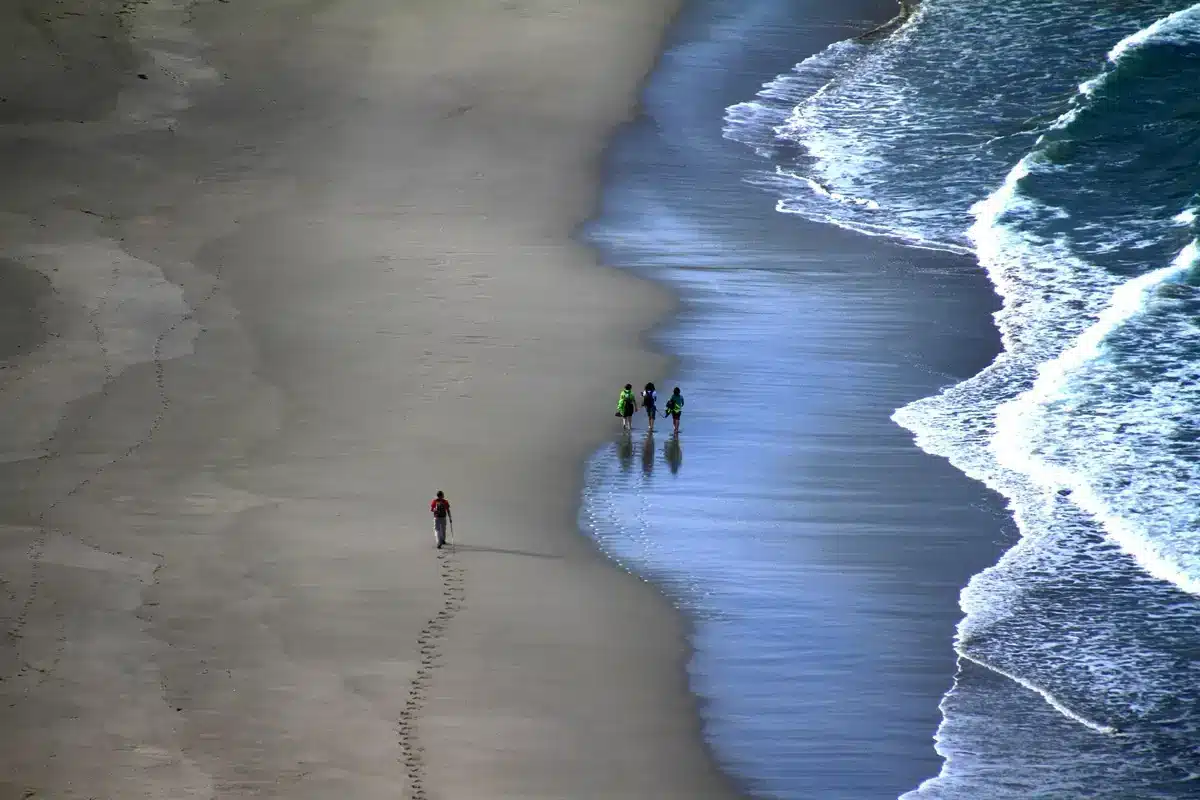
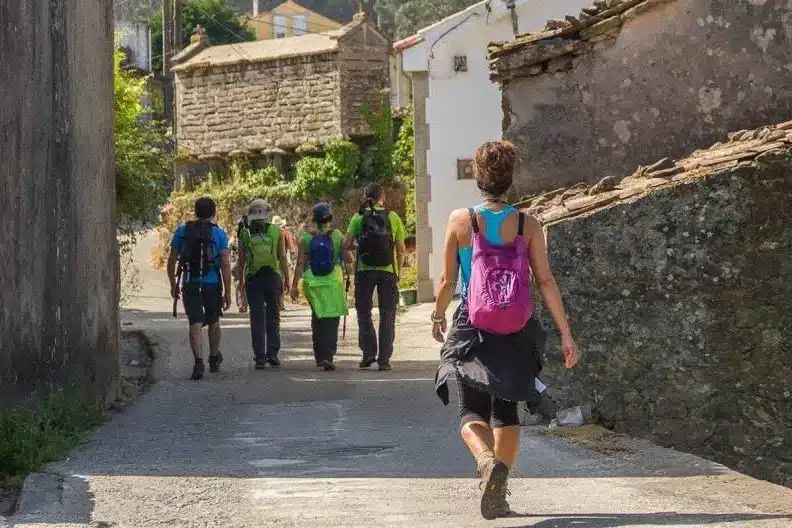
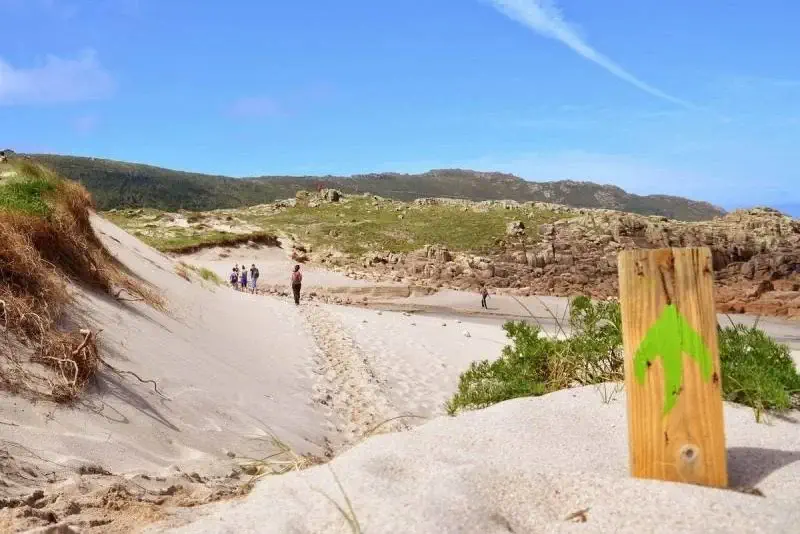
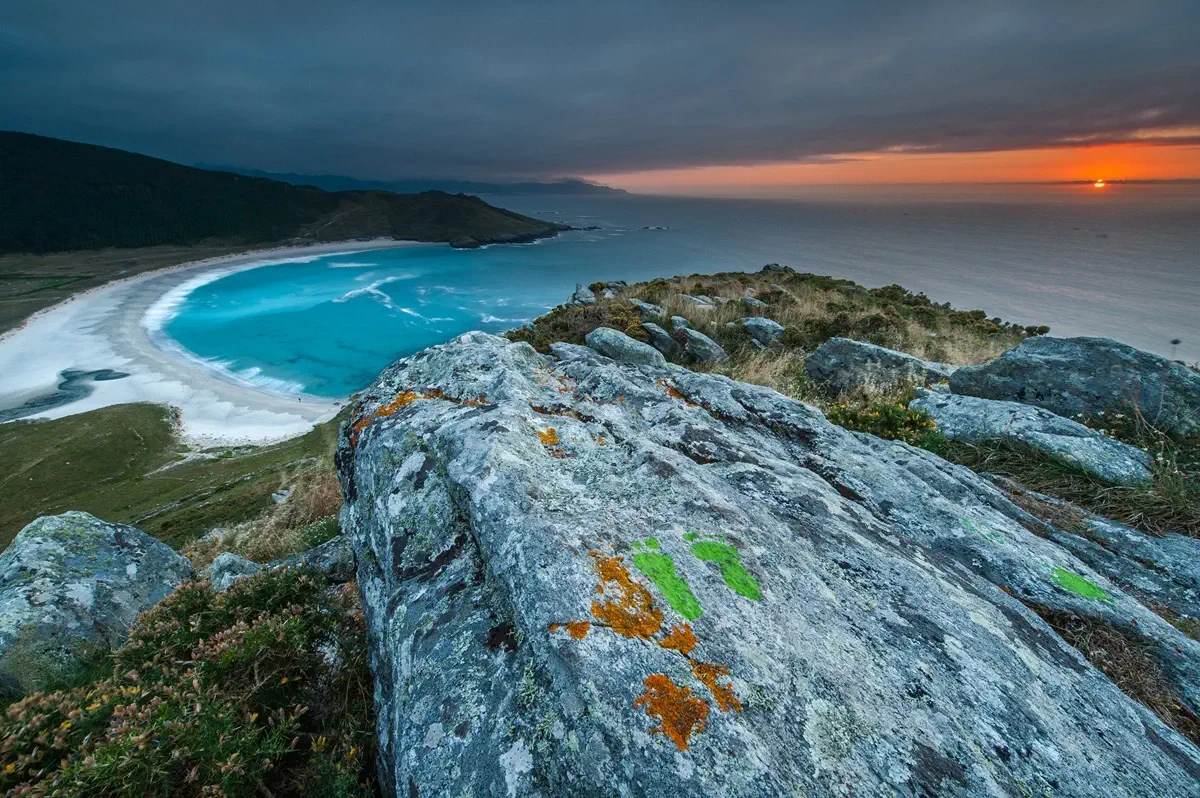
You walk point to point, with your luggage moved by road from one hotel to the next, so you carry only a daypack. The walker makes their way through the mist and the sunshine — for in Galicia the two coexist with astonishing naturalness — discovering deserted beaches with sand so fine it seems unreal, climbing up to headlands where the wind blows as it pleases, pausing before lighthouses that continue to fulfil their age-old promise: here ends the safe land, here begins the unknown. One of them is worth the five-kilometre detour it costs: the Touriñán lighthouse, the westernmost point of mainland Spain.
The season runs from 1 April to 15 October, and in any of those months the Atlantic writes the script for the day. Those who walk the Camiño dos Faros are not seeking the intercession of any apostle, but something harder to put into words: that feeling of having reached the edge of the map, the place where Europe dissolves into foam, and discovering that, precisely there, on that cold, windswept frontier, one feels — paradoxically — more whole than ever.
Highlights of the trip:
Camiño dos Faros: a walk along the ‘Costa da Morte’
Estuaries and fishing and shellfish-gathering villages
Stunning landscapes steeped in history and monumental lighthouses
Camiño dos Faros: the Path of Light
Some paths are walked, whilst others walk through you. The Camiño dos Faros falls into the latter category.
It is a 200-kilometre route that winds its way along the Costa da Morte from Malpica to Fisterra, following the age-old philosophy of those who do not wish to arrive, but simply to see. The path winds its way between cliffs and sandy beaches, through villages of grey stone and eucalyptus trees bent by the Atlantic wind, and every so often one of them appears: the lighthouses. White, solitary towers standing at the edge of the world, which for over a century have performed the most beautiful and saddest task there is: to illuminate what would otherwise kill.
The walker who sets out on this route does so, almost always, without fully knowing what they are looking for. Perhaps that is the most honest approach. The Camiño dos Faros lacks the religious solemnity of the Camino de Santiago and the sense of urgency felt by those fulfilling a promise. Instead, it has the slow, contemplative pace of someone who simply observes. Those who walk here soon learn that the landscape is not a backdrop but an interlocutor: the wind interrupts, the sea contradicts, the mist imposes silence when it deems that enough has already been said.
The stages pass through places with names that evoke the ancient world: Camariñas, Camelle, Arou, Touriñán. In each of them, coastal life retains something that cities lost long ago: the realisation that the environment is not merely decorative but real, and that its moods have consequences. The fishermen know this. The barnacle gatherers know this. And the walker, if they pay attention, begins to realise it too.
Every lighthouse that appears on the horizon is a question before it is an answer: how many shipwrecks did this light prevent? How many did it fail to reach in time? The Vilán lighthouse, with its history of storms and its unmistakable silhouette against the headland, seems to keep that impossible tally with an awe-inspiring dignity. It does not boast. It simply remains lit, night after night, with the perseverance of something that has learnt there is no alternative.
The Costa da Morte and its lighthouses share the same philosophy: not to promise that the sea will be calm, but to stand by those who dare to cross it. Not to offer safety, but a presence. Not to erase the danger, but to shine a light within it.
The walker arrives in Fisterra with tired feet and a slightly different look in their eyes. They have not conquered anything. For a few days, they have simply witnessed something that has been happening for centuries without needing an audience.
Other similar itineraries


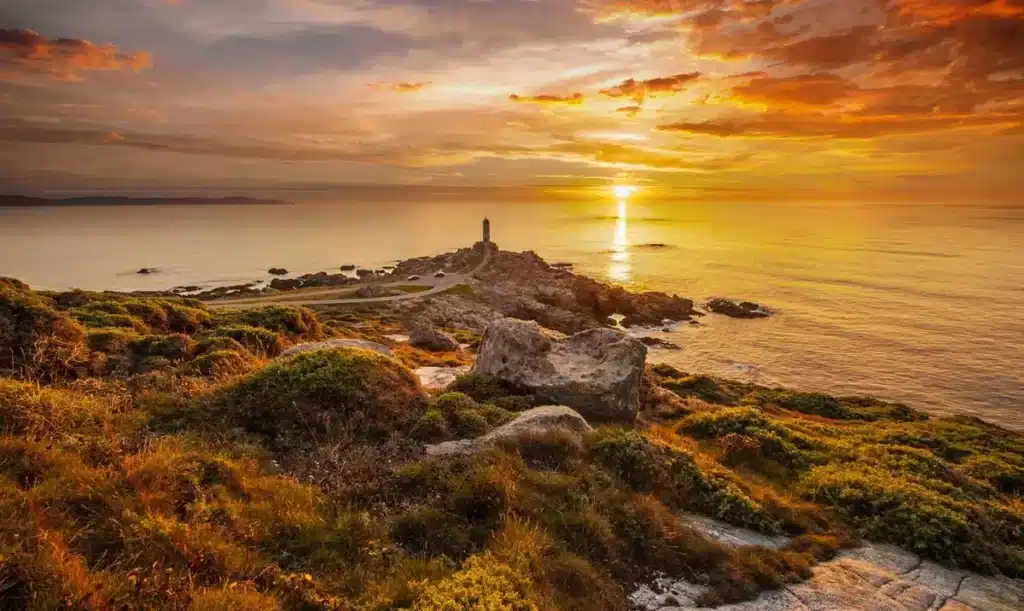
Along the Costa da Morte – a coastline steeped in history
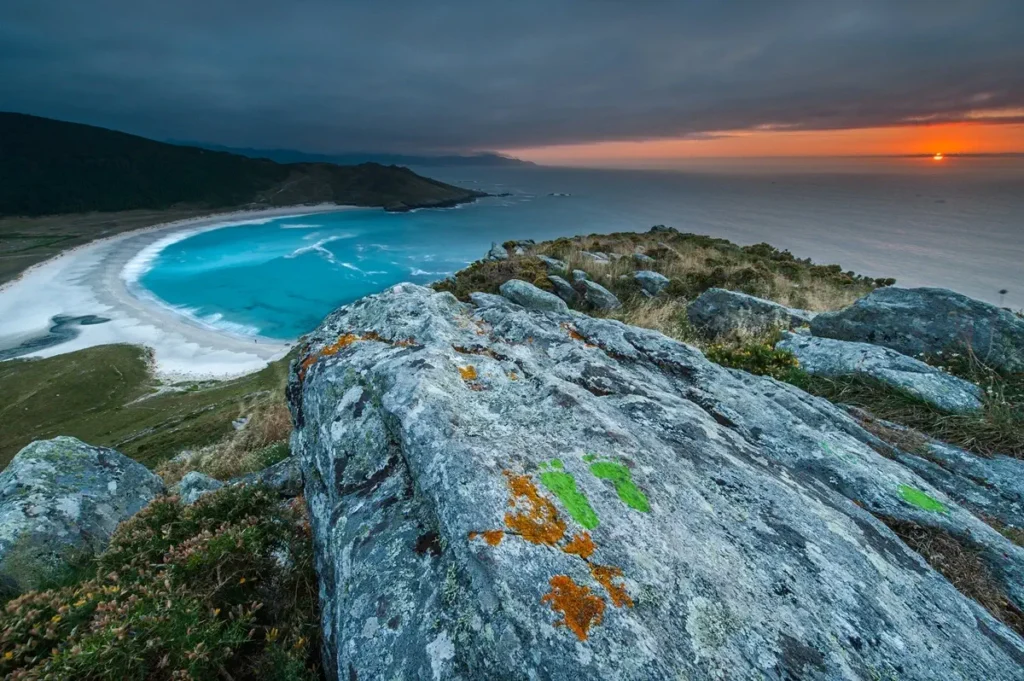
There are places on earth where the sea asks for no permission. Where the ocean arrives like an ancient god, without warning and without apology, and crashes against the rocks with the fury of one who has known he is right since before memory began. The Costa da Morte is one such place. A wild arc of granite and foam that opens up at the north-western tip of Galicia, where Europe truly ends—not at a road sign or a tourist viewpoint, but on a cliff that plunges into the Atlantic with the silent dignity of everything that has been falling for centuries without giving in.
The Romans called it Promontorium Nerium. The cape that marked the edge of the known world. Beyond it, they believed, there was neither land nor sky nor time: only the abyss where the sun drowned every night. For them, this corner of Galicia was the threshold between the human and the incomprehensible, and perhaps they were not so far wrong. For even today, when one stands at Cape Fisterra —Finis Terrae, the end of the earth— and looks westwards, one feels something for which there is no exact name in any modern language. A mixture of vertigo and freedom, of smallness and belonging. The horizon is not a line there: it is a promise that is never fulfilled.
For centuries, this coastline has been an enigma to sailors. Not for lack of nautical charts or ignorance of the winds, but because the sea here has a personality all of its own – capricious and unpredictable. The currents criss-cross like ancient whispers. The fog rolls in out of nowhere and swallows everything – the ship, the coast, all certainty. Rocks emerge where they shouldn’t, treacherous and silent, and the north-westerly winds punish without mercy those who do not know them well. It is estimated that on the seabed of this stretch of sea — from Malpica to Fisterra, just over a hundred kilometres of rugged coastline — lie the remains of more than six hundred documented shipwrecks. Six hundred. And as for the undocumented ones, no one can count them.
That is why they called it the Costa da Morte. Not for poetic reasons, but for historical ones. Because of the bodies the sea washed up onto the sand, or those it never returned. Because of the women who waited in the stone villages, gazing at the horizon with that expression the Galicians call morriña – which is neither exactly sadness nor exactly nostalgia, but something deeper: the pain of loving something that can take away what you cherish most.
The 20th century brought its own disasters to the Costa da Morte. The most memorable occurred in November 2002, when the oil tanker Prestige—an old ship flying the Bahamian flag and carrying 77,000 tonnes of heavy fuel oil—sprung a leak off the Galician coast. For six interminable days, the ship drifted while the authorities decided what to do with it, steering it away from the coast rather than taking it to port. Eventually, it broke in two and sank. And the black sea came.The tar—as the Galicians called it, using a word that captured exactly what it was: dark, sticky and deadly—covered hundreds of kilometres of coastline. The beaches of Carnota, among the longest and most beautiful in Europe, were black by dawn. The barnacles died. The mussels died. Birds lay on the sand with their wings stuck together, unable to fly, unable to die quickly. It was an ecological catastrophe and also an emotional wound for a region that had built its identity on that coastline for a thousand years.
But then something unexpected happened. Something that perhaps could only have happened here. Tens of thousands of volunteers arrived from all over Spain and other European countries. They donned white overalls and rubber gloves and went down to the beaches to clean up the oil with their bare hands, bucket by bucket, rock by rock. They were called los nunca máis —‘never again’— and their cry became the name of a citizens’ movement that demanded accountability and, above all, dignity. The Costa da Morte, which had survived centuries of shipwrecks, was not going to surrender to a ship mismanaged by men who had never seen the sea up close.It took years for them to recover. Some say there are still places where, beneath the rocks, traces of that dark winter remain. But the beaches turned white again. The barnacles grew back. And the sea remained the sea.
Ask us for a quote
Not exactly what you’re looking for?
We adapt to your requirements Tell us what you want and we’ll do a tailor-made plan for you.

We will get back to you as soon as possible.
Frequently Asked Questions
What exactly is the Camiño dos Faros?
It is a coastal walking route along the Costa da Morte in Galicia, running roughly 200 km between Malpica de Bergantiños and Fisterra, past cliffs, wild beaches and landmark lighthouses.
How many stages does the route have?
Our programme covers 5 stages, 121 kilometres from Laxe to Fisterra, with 2,526 metres of total ascent: the southern half of the Camiño dos Faros, whose full official route runs 200 km over 8 stages from Malpica. Days range from 18.5 to 29 kilometres: Laxe–Arou 18.5 km, Arou–Camariñas 22.8, Camariñas–Muxía 29, Muxía–Lires 25.7 and Lires–Fisterra 25.2.
What sort of hotels and guesthouses are used?
The accommodation is a hand-picked selection of rural hotels, guesthouses and small family-run inns, chosen for comfort, character and good local food.
Can I request a single room?
Yes, every property offers single rooms. There is a supplement for the whole trip, which you will find under Prices. It applies equally to a third person wanting a room of their own.
What if I need to cancel or change my booking?
The booking is secured with a per-person deposit, which is non-refundable, and the balance falls due 45 days before arrival. Refunds on the remaining amount decrease in bands depending on how close to the date you cancel — the full breakdown is under Prices. If you would rather move your dates than cancel, get in touch: there is usually room to reschedule, subject to availability.
How does the luggage transfer work between stages?
Your luggage is collected each morning at your accommodation before 10:00 and delivered to the next hotel ahead of your arrival, so you walk with nothing more than a light daypack.
Is there a pick-up service if I can't finish a stage?
Yes. We have a taxi or support van on call for injury, exhaustion or bad weather, at an additional cost.
How do I get to the starting point at Laxe?
Laxe is reachable from Santiago de Compostela by bus (the Arriva line, around 1 hr 15 min) or by car. The arrival transfer is included in the price: we provide it as a private taxi from Santiago airport or from the city itself to Laxe.
What level of fitness do I need?
A good level of fitness is recommended. It is worth having done walks of at least 15 km beforehand, as some sections are demanding because of the coastal ascents and uneven ground.
Are any stages particularly hard?
The longest is Camariñas–Muxía, at 29 km and around eight hours' walking, though its ascent is moderate. The toughest for climbing are Muxía–Lires, with 890 metres of ascent concentrated mostly in the first ten kilometres up Monte Cachelmo, and Lires–Fisterra, with 717 metres along the highest cliffs on the route.
When is the best time of year to walk it?
The programme runs from 1 April to 15 October. May, June and September give the best balance of temperature, daylight and quiet. July and August are the driest and also the busiest, so book well ahead. Galician weather turns quickly in any month: bring a waterproof whatever the season, especially out on the headlands.
What kit is essential?
Waterproof walking boots, a waterproof jacket, trekking poles, sun protection, technical layers, a basic first-aid kit and a daypack of 8 to 12 litres.
Is there anywhere to eat along the stages?
Most stages pass through villages and small towns with bars or restaurants. Some sections, however, have few services along the way, so it is always worth setting off with enough food and water.
What food is typical along the route?
The Costa da Morte is seafood country: percebes (goose barnacles), pulpo á feira, Galician empanada and tetilla cheese. In the harbours of Laxe, Camariñas, Muxía and Fisterra you eat fish landed that same morning. Lunches and dinners are not included, so you choose where to eat each day; all the accommodation sits in villages with a good local choice of places.
Are there any exposed sections?
Yes. Much of the Camiño dos Faros runs along the cliff edge, and there are points where the path narrows with a drop to the sea. For anyone who suffers badly from vertigo, some passages can feel uncomfortable. Escape routes exist to avoid them, and we point them out during the briefing call on your first day and in the app.
What exactly is included when I book this trip with NATOUR?
NATOUR builds your trip on three essential services that let you walk with complete confidence:
Full logistics: confirmed bookings at every stage, always in a private en-suite room with breakfast included; daily luggage transfer between accommodation; people transfers whenever needed.
Technology at hand: our own app with downloadable maps, GPS that works offline and descriptions of key points along your route.
Continuous support: a helpline available 24 hours a day, 7 days a week, for any query or emergency.
If you have any further questions that haven’t been covered here, please have a look at the general FAQs section or get in touch with our team. We have extensive knowledge of the Galician Coast and the many opportunities they offer for hiking at your own pace.






Camiño dos Faros Galicia
5 stages of the Camiño dos Faros with accommodation and luggage transfers. A walk from Laxe to Fisterra along the wildest cliffs of Spain's Costa da Morte and the loneliest lighthouses on the Atlantic
Product Currency: EUR
Product Price: 690
Product In-Stock: InStock
-
Destination
Our gallery
Pictures from the stages
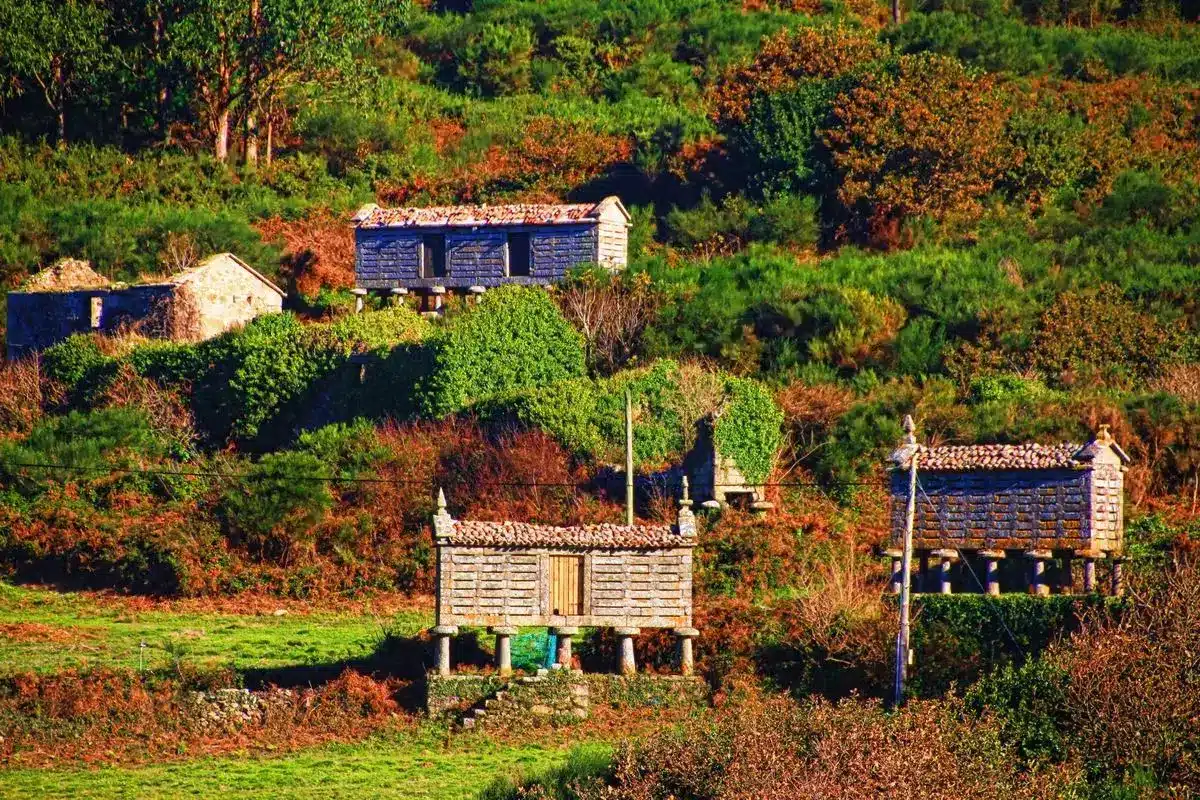
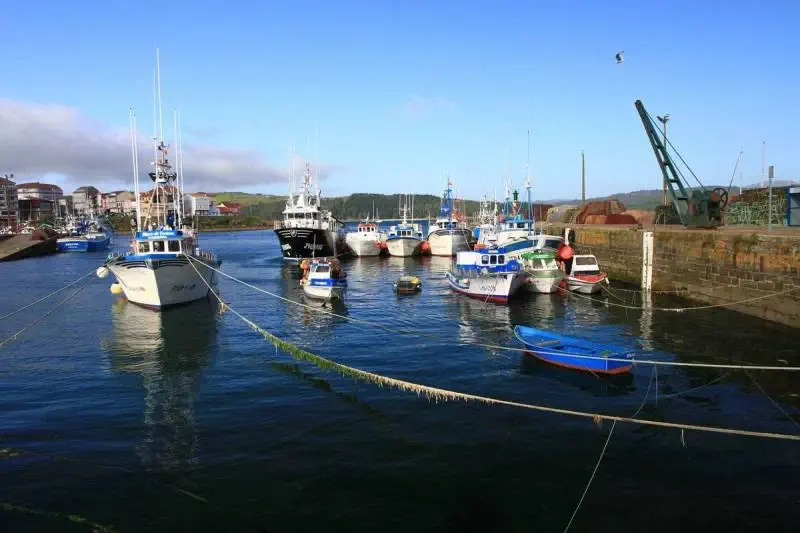
Day 1
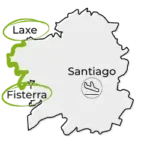 Arrival in Santiago de Compostela
Private transfer to Laxe, from Santiago or from the airport.
Day 2
1st stage: Laxe ▸ Arou
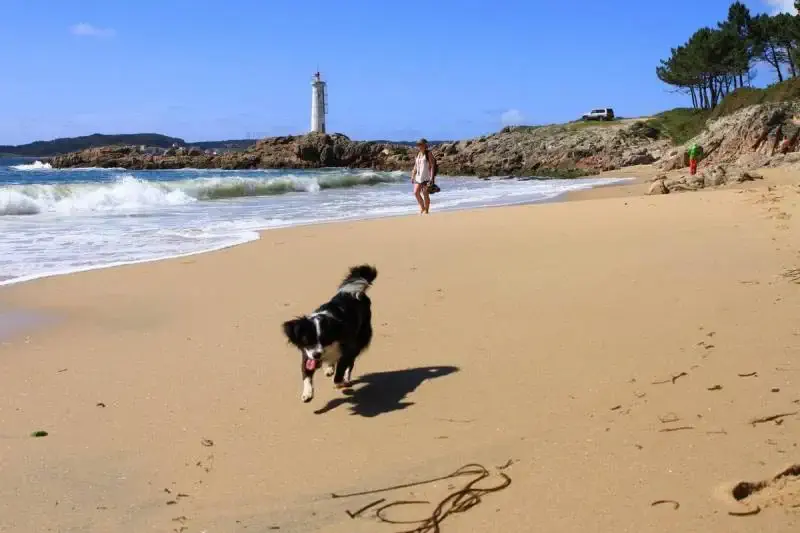
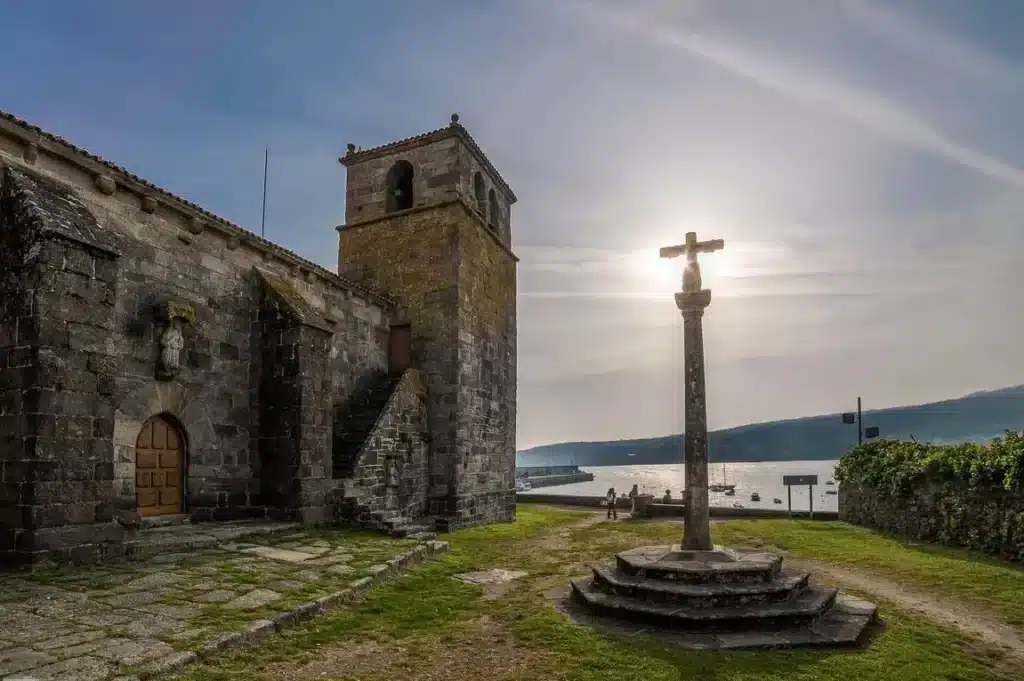
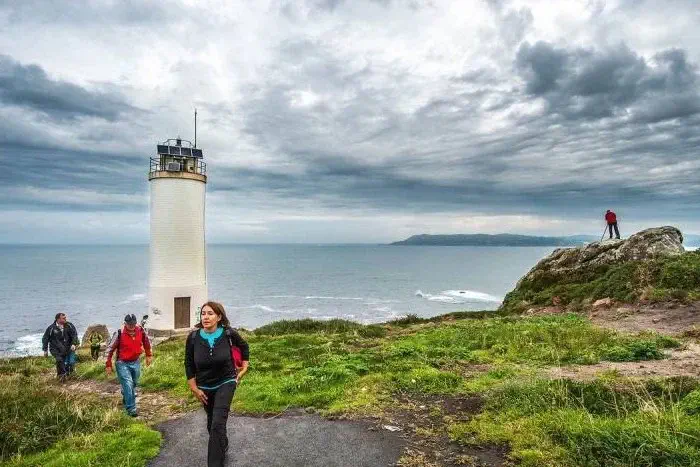
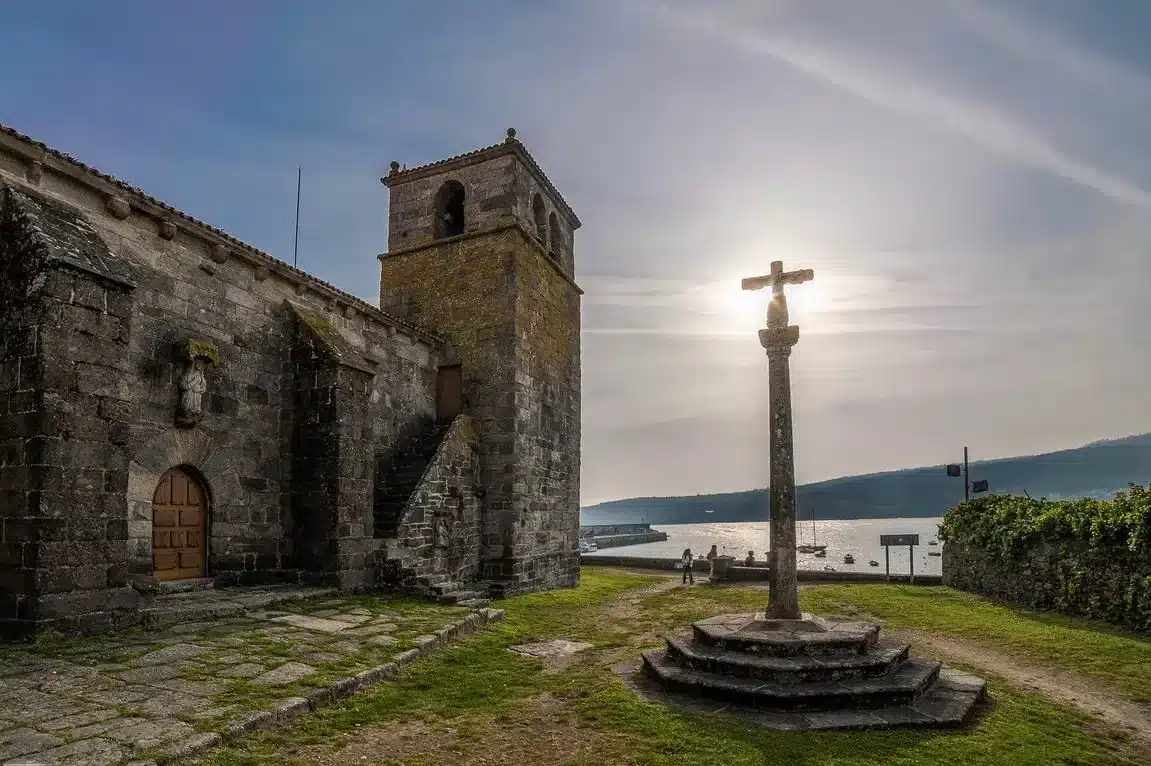
Today’s stage takes us to the heart of the Costa da Morte. We set off from Laxe, visiting its harbour and the Church of Santa María da Atalaya, before heading towards the lighthouse along the Ruta da Insua, from where there is a sweeping panoramic view of the Ría de Corme and Laxe.
 18,5 km | ↗ 264 m | ↘ 269 m
Day 3
2nd stage: Arou ▸ Camariñas
The Camiño dos Faros from Arou to Camariñas runs along a rugged coastline steeped in history. It is a route that is sure to leave you speechless. The stretch from Arou to Cabo Vilán is where the name Costa da Morte originates: it was here that the Serpent sank in the late 19th century, claiming the lives of hundreds of English passengers.
22,8 km | ↗ 235 m | ↘ 236 m
Day 4
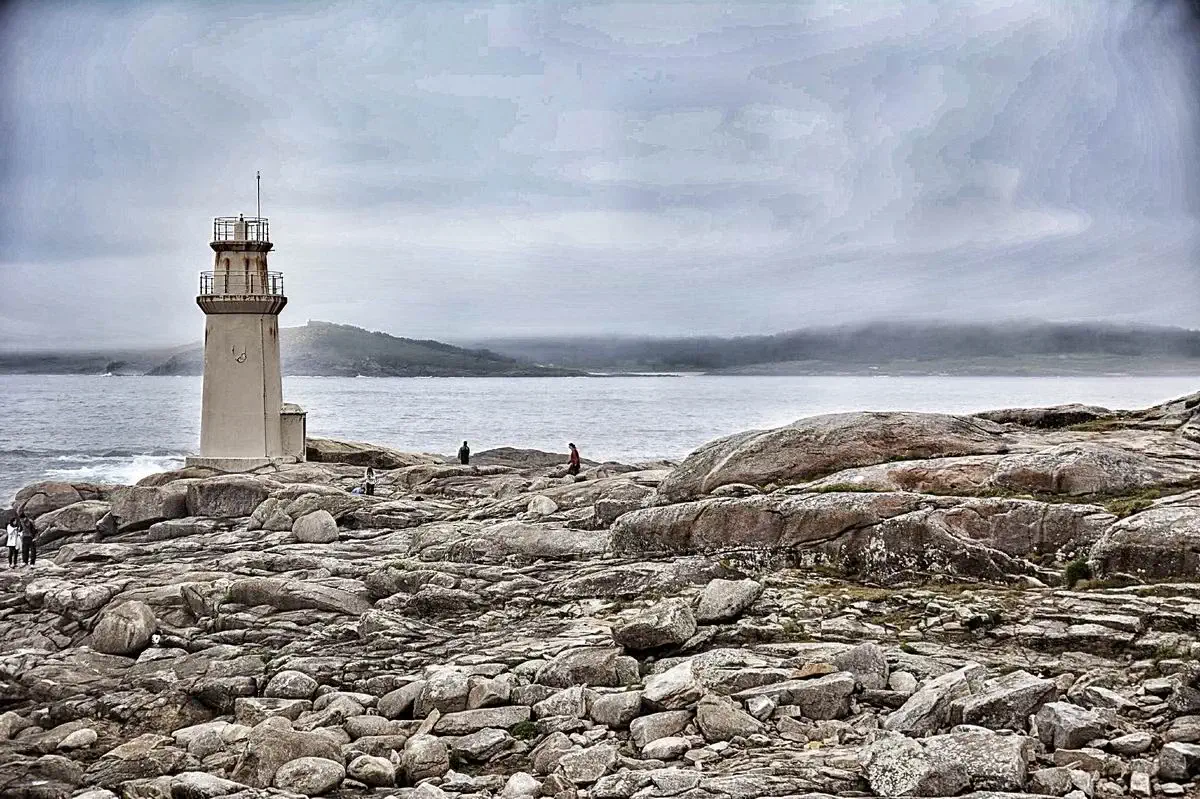 3rd stage: Camariñas ▸ Muxía
The longest stage of the Camiño dos Faros, a walk of around eight hours that takes us away from the open sea and into the Ría do Porto. The Ensenada da Basa treats us to some exquisite scenery, with shellfish gatherers and birds, before we follow the Río Grande towards the rural villages of Tasaraño, Dor and Allo.
 29 km | ↗ 420 m | ↘ 416 m
Day 5
4th stage: Muxía ▸ Lires
The penultimate stage is one of the most demanding, particularly the first ten kilometres. Leaving Muxía via O Coido and Lourido beach, we’ll face a tough climb up Monte Cachelmo, with spectacular views of Muxía and Punta Buitra.
25,7 km + 5 Km optionals | ↗ 890 m | ↘ 867 m
Day 6
 5th stage: Lires ▸ Fisterra
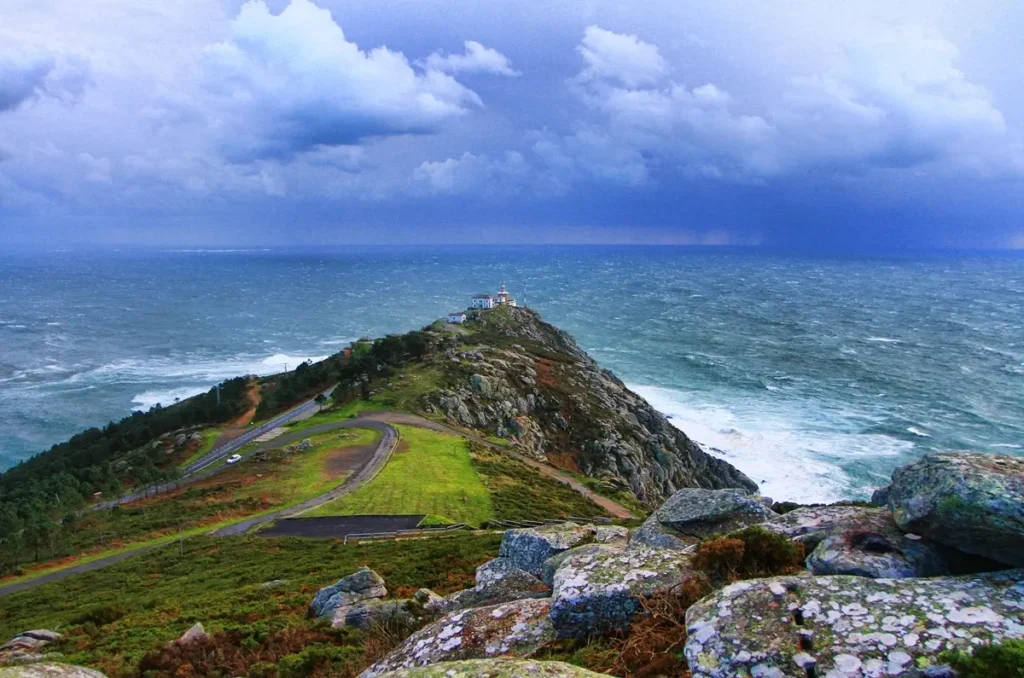
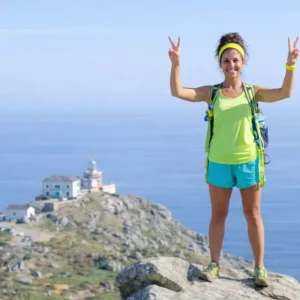
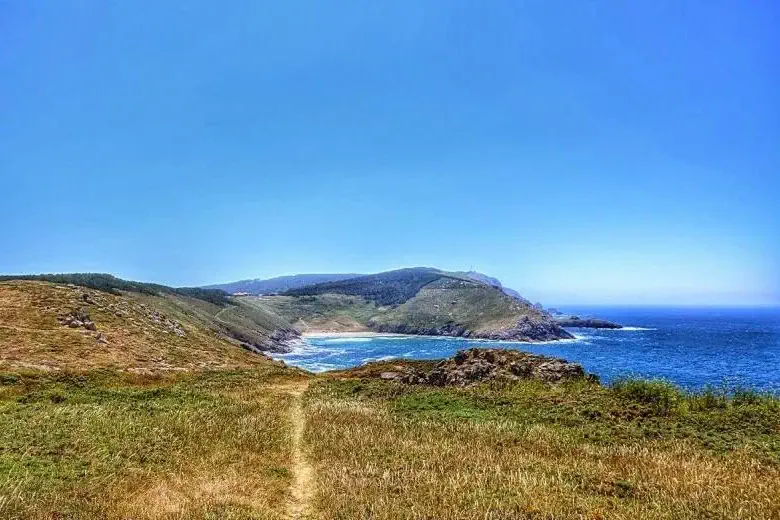
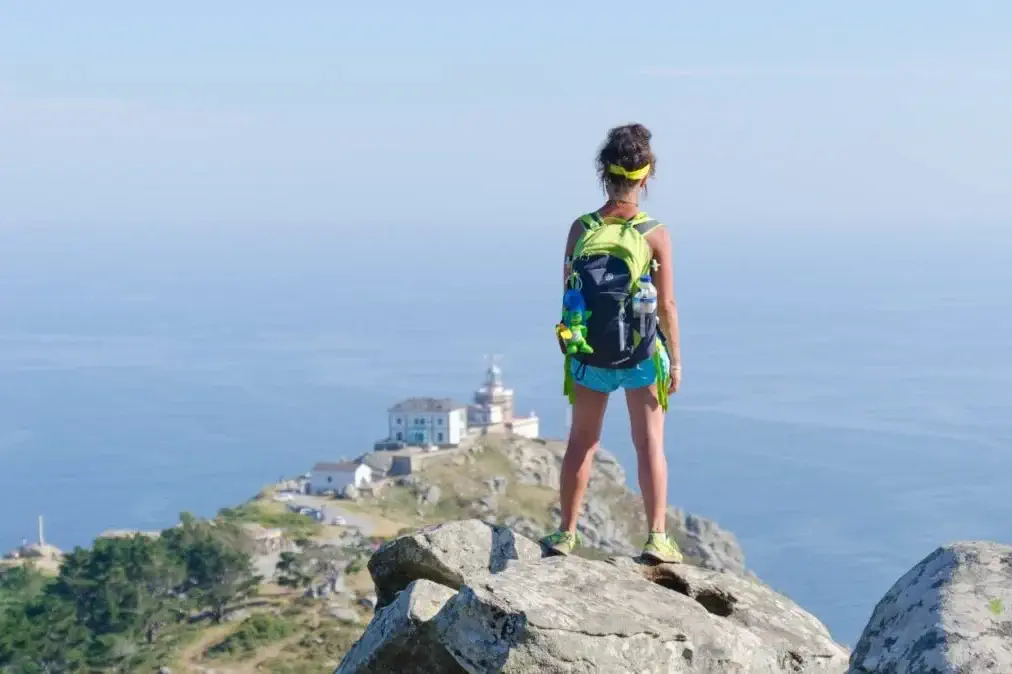
Setting off from Lires, the final stage will take us to the Fisterra Lighthouse (the Finisterre of Roman times) along the cliffs of Punta Besugueira and La Mexadoira, through some of the most breathtaking scenery on the route.
25,2 km | ↗ 717 m | ↘ 716 m
Day 7: Departure or extension | Day: 7 (OPTIONAL)
TOUR LOCATION
Walk the Costa da Morte along the Camiño dos Faros: 5 stages | 7 days
ACCOMMODATION - Subject to availability:
LAXE ▸ Hotel Vida Mar de Laxe (or similar)
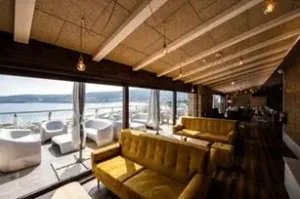
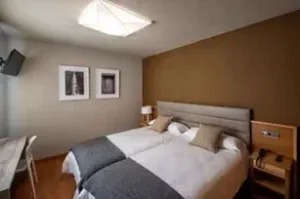
LAXE ▸ Hotel Vida Mar de Laxe (or similar)
CAMARIÑAS ▸ Hostal Playa de Camariñas (or similar)
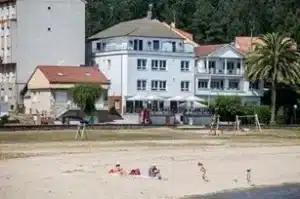
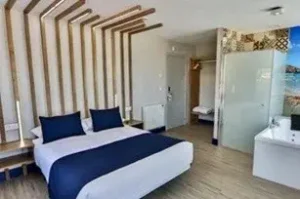
MUXÍA ▸ Hostal A de Loló (or similar)


HOTEL AS EIRAS ▸ Lires (or similar)
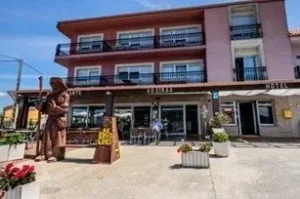

FISTERRA ▸ Hotel do Banco Azul (or similar)
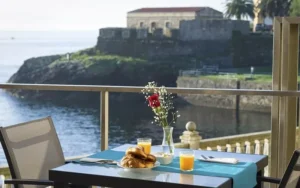
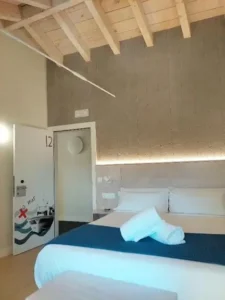
SANTIAGO ▸ Hotel Lux (or similar)

Additional overnights
It is also possible to book some additional days, before or after the hiking week, or an additional week to relax.
Difficulty
To successfully achieve the 5 stages it is necessary a good physical condition, steady walk and lack of vertigo. According to the year season, temperatures can be extreme (hot and/or cold). Therefore, it is necessary to have suitable warm clothes permanently, to be removed as layers if necessary. Some parts of this trail include passages with slippery loose stone. Although most of this trail is roomy enough, certain sections are quite aerial and require caution. Using hiking poles is highly recommended.
Trails
The Camiño dos Faros is a network of well-signposted trails. We will provide you with access to our app, which includes GPS navigation, descriptions of each stage and a briefing.
We recommend
Appropriate hiking clothing and sturdy footwear. During the tours, it is necessary to have food and drink enough, as well as sun protection, a cap, wind jacket and, in the winter months, warm clothing.
Luggage transfer
We move your luggage from one accommodation to next, so on your hikes you should only carry a backpack with the essentials of the day. For the whole trip, it is recommendable to use a single suitcase, not bigger than 20 kg.
Bookings are only possible:
from April to October
FLY TOor FROM
SANTIAGO DE COMPOSTELA


... search directly among the airlines



Alberto
Operations Manager
Do you have any questions? I am happy to help you. I will answer any questions you may have!

Book early !! ...and get a 6% discount for bookings done more than 90 days in advance.
PRICES:
735 € ▸ 690 € per person | double/twin room (2 persons)
| Single Suplement (room for single use)
(......and 3rd person): + 250 €
◊ ADDITIONAL:
7th additional night in Santiago de Compostela:
departure transfer: Fisterra - Santiago or Santiago airport, 130 €
(taxi for up to 4 passengers)
165 € per person | double/twin room (2 persons)
 Any arrival date is possible (*) - You decide your travel dates and when to start. However, we must first request availability to the accommodations. (*) NOT AVAILABLE from November to April.
 Booking: With an initial payment of 150 € (per person), book now and guarantee your trip. We will confirm your reserve within 24 hours. But in the case of accommodations unavailability, we will refund the paid amount or propose alternative dates.
What does this programme include?
 Accommodations - 6 nights stay in different charming accommodations, B&B basis.
 Informations - personalised information on your arrival day.
 Access to our app - with descriptions and GPS navigation for each stage, with tracking via your mobile device
 +
+  Private transfers - all necessary luggage & person transfers for each stage, except on departure day.
 Support 24h - we keep permanently in touch with you throughout your stay to solve any problem or enquiry you may have.

What is NOT included?
Cancellation Policy
call us on +34 922 433 001