30 May Multi-day hiking tour of Lanzarote: How it works
Anyone planning a multi-day hiking trip on Lanzarote quickly realises that this island works differently from most classic walking destinations. It’s not about shady alpine valleys or lush mid-range forest trails, but about open space, volcanic forms, wind, light and paths that often fascinate precisely because of their stark simplicity. That’s exactly what makes Lanzarote so compelling for stage walking — and equally a destination that deserves careful planning.
Why Lanzarote is well suited to a multi-day hiking trip
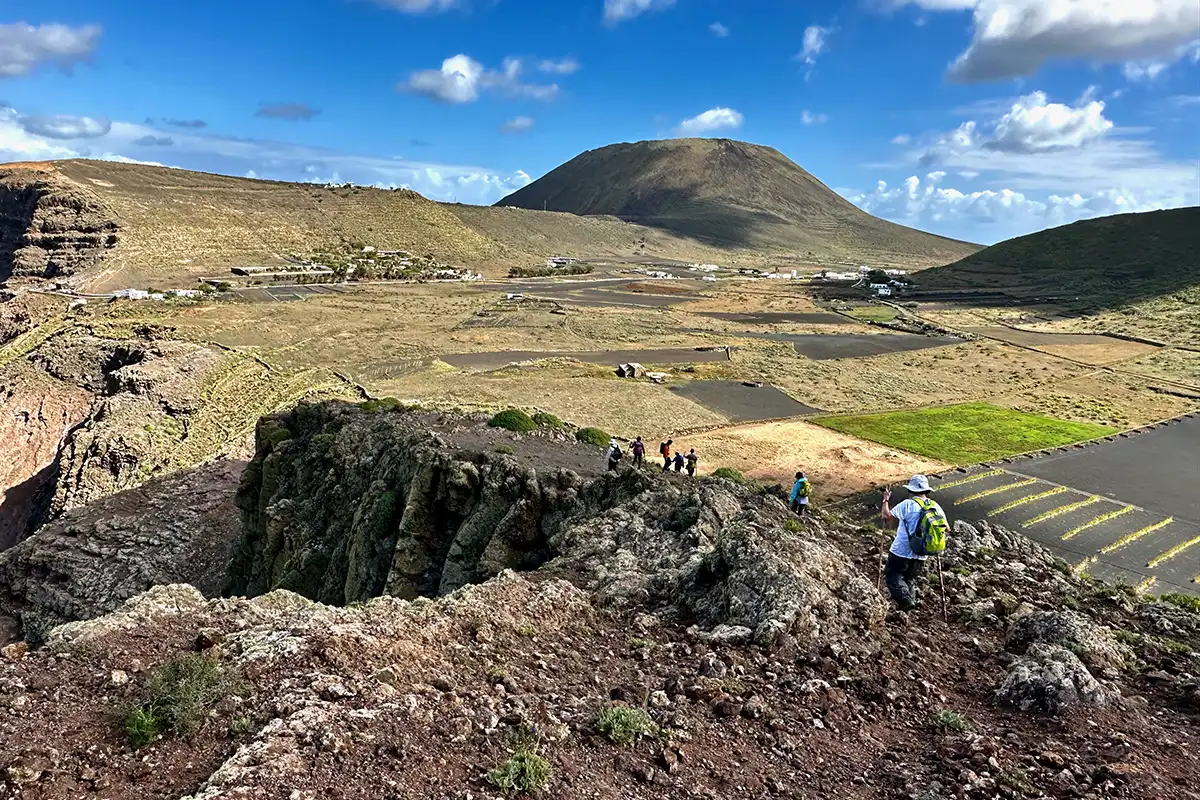 Lanzarote is made for multi-day walking if you appreciate open landscapes, clean lines and ever-changing coastal stretches. Distances on the island are manageable, yet the landscape contrasts are surprisingly large. Between black lava rock, whitewashed villages, lonely coastal paths and the wine-growing terrain of La Geria, several days on the trail build into a coherent and rewarding whole.
The great advantage lies in the combination of natural experience and logistical feasibility. Many stages can be linked so that each day brings a new landscape, without the need to constantly organise long transfers. For independent travellers this is ideal: out walking during the day, arriving at a pre-arranged accommodation in the evening and setting off again the next morning.
Then there’s the climate. Lanzarote is not a destination for just two perfect summer months — it’s an island that offers good conditions for walking holidays throughout most of the year. Autumn, winter and spring are when it really shows its strengths. The light is clear, temperatures are usually pleasant and the trails are far more appealing than in many northern European walking regions.
Multi-day hiking on Lanzarote — what to expect
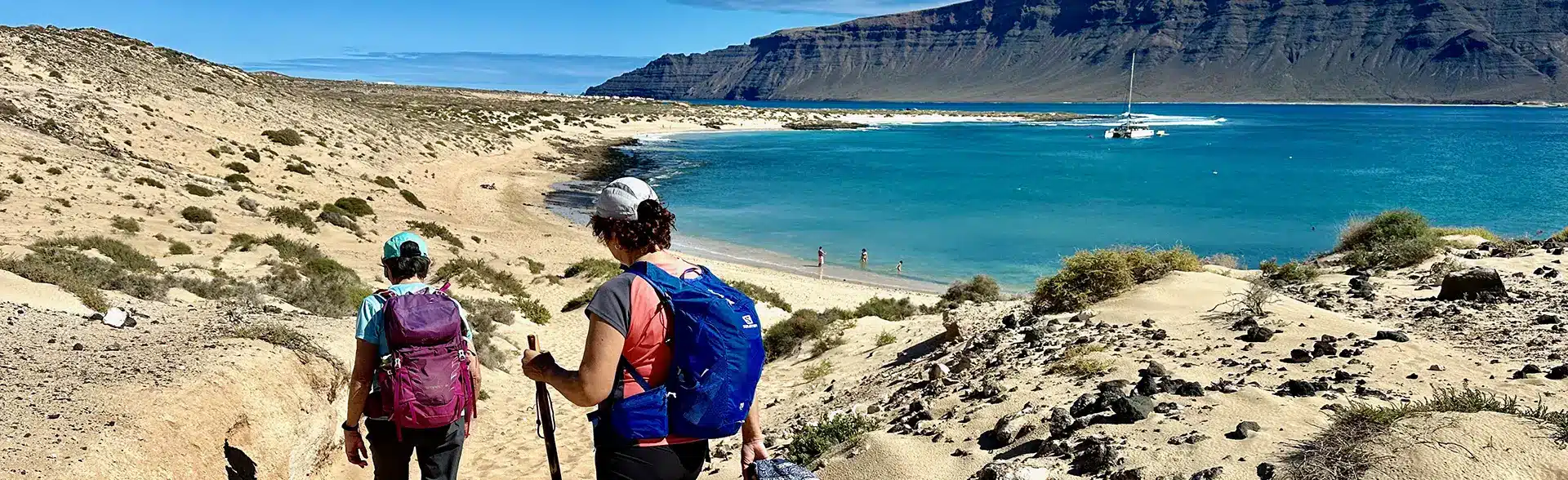
Those who spend several days walking on Lanzarote won’t find a long-distance trail in the classic alpine sense. The appeal lies rather in the sequence of different stages and in the intensity of the landscape. A well-planned tour typically combines volcanic plateaus, quiet coastal paths, agricultural stretches and characterful villages in the island’s interior.
Daily stages tend to be in the moderate range. Depending on the route, fitness level and desired comfort, most walking days cover around 12 to 20 kilometres. The paths are rarely technically extreme, but the terrain demands attention. Lava fields, stony tracks and open stretches with little shade take their toll, even where there are few long climbs.
This is an important point: Lanzarote is frequently underestimated. The elevation figures look modest on paper, but wind, sun and walking on volcanic ground all slow the pace. Those who enjoy relaxed walking and stopping to take photographs are better off not planning too tight. A multi-day tour should leave room for breaks, viewpoints and spontaneous stops.
Which stages work well together
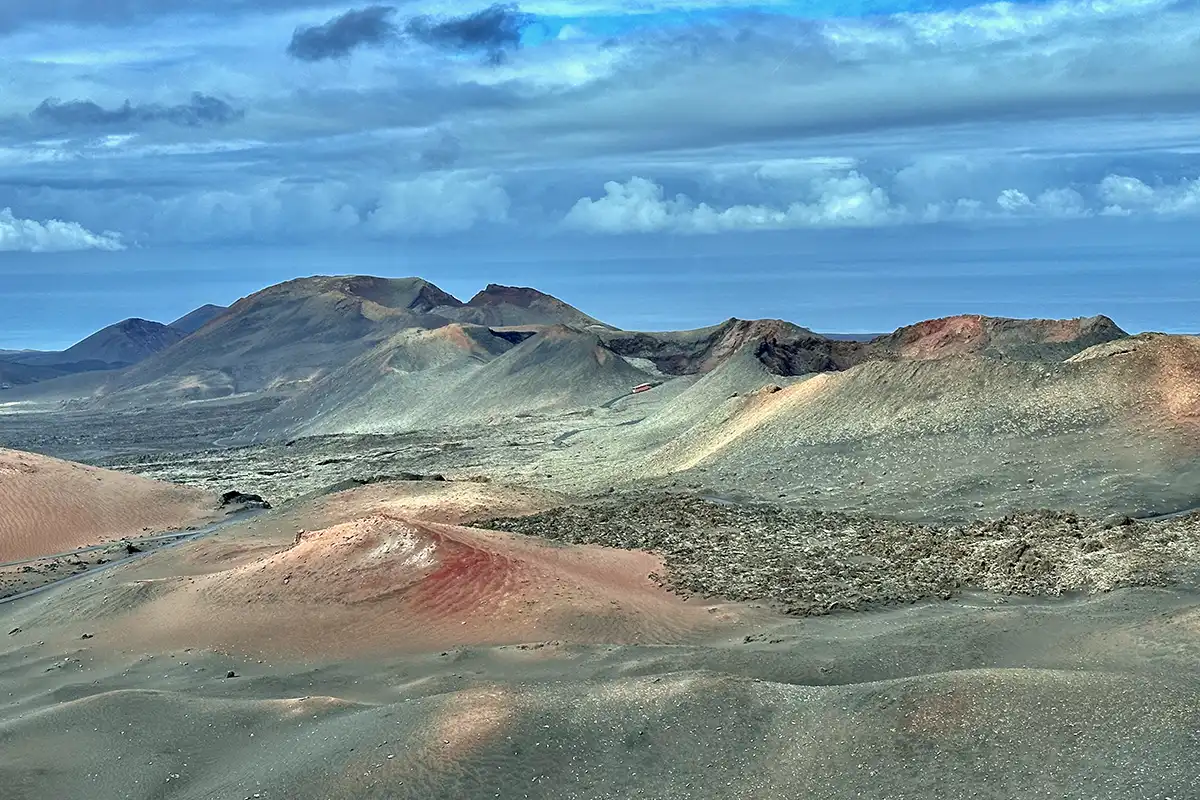 The most rewarding multi-day tours are those that don’t simply accumulate kilometres but make the island legible in meaningful sections. In the north, stages around the Famara massif, Haría and the panoramic ridgelines are particularly good. Here Lanzarote reveals a greener, more varied side that surprises many first-time visitors.
In the central part of the island the character changes. Around Teguise, San Bartolomé or the wine landscapes of La Geria, the island becomes wider, quieter and more culturally tangible. Dry-stone walls, small fields and the typical architecture create a different walking rhythm. Here it’s less about dramatic sea cliffs and more about the interplay between natural landscape and centuries of adaptation to volcanic conditions.
The south brings fresh contrast. Coastal paths, open terrain and views over the Papagayo region or towards Los Ajaches make for a particularly rewarding end to many tours. When a route connects these three faces of the island, a series of walks becomes a genuine journey.
Who is stage walking on Lanzarote ideal for
Lanzarote suits travellers who want to move independently but don’t want to organise every accommodation, transfer and daily logistic themselves. Those who enjoy structured self-guided travel will find a destination that offers plenty of freedom while rewarding good preparation.
The island works well for experienced leisure walkers and active holidaymakers with a solid base fitness. It’s less ideal for those seeking dense forests, mountain-hut romance or exposed summit crossings. Lanzarote is more stripped back, more open and more visually unconventional. For many, that’s precisely the appeal.
It can also work well for couples or friends with slightly different walking paces. Stages are often easy to plan ahead, the route-finding is reliable with well-prepared navigation materials and the daily destinations are usually easily accessible. That takes pressure off the trip.
Best time of year for multi-day hiking on Lanzarote
The most comfortable months for a multi-day tour generally fall between October and May. During this period temperatures are usually walker-friendly and the island makes full use of its advantage as a year-round outdoor destination. Particularly in the winter months, Lanzarote is a highly convincing alternative for active travellers from colder parts of central Europe.
Summer is not out of the question, but requires a realistic assessment. Starting early, carrying enough water and not underestimating the heat become essentials rather than suggestions. For those who enjoy longer stages, the cooler season is almost always the better choice.
Wind is another factor. It’s part of Lanzarote and shapes the experience of the landscape strongly. Some days it’s welcome; others it’s demanding. For multi-day tours this means the right clothing and a little flexibility in pace and daily rhythm make a significant difference.
Comfort over luggage — why organisation makes the difference
Lanzarote shows clearly just how valuable a well-organised walking holiday can be. The island isn’t large, but a multi-day tour quickly becomes tiring if you’re dealing daily with luggage, transfers or sourcing suitable accommodation. Walking with a light daypack instead makes each stage noticeably more enjoyable.
A professionally prepared arrangement ideally includes carefully selected accommodation, a logical stage itinerary, detailed route descriptions and reliable GPS data. Depending on the tour, transfers or a hire car may also be sensibly integrated. This keeps the feel of the trip personal and independent, without organisational questions constantly intruding.
For many of our guests, this is the decisive difference between simply walking and a genuinely successful stage journey. NATOUR builds these programmes on exactly that balance of independence and behind-the-scenes support.
What to keep in mind when planning
The first question isn’t how many kilometres are possible, but how you want to experience Lanzarote. Are you looking to cover ground efficiently and connect several different landscapes? Or would you rather walk at a pace that leaves time for coastal stops, small villages and longer lunch breaks? Both are achievable, but the stages should match your intentions.
It’s also worth being honest about the terrain. Volcanic paths are visually stunning but not always comfortable underfoot. Solid walking boots with a reliable sole are far more suitable on Lanzarote than light leisure shoes. Sun protection, wind protection and sufficient water capacity are equally important.
On accommodation, it’s worth thinking about the character of the trip. Some people prefer a base with day walks; others want to genuinely move from place to place. For a multi-day tour with a true stage-by-stage feel, the second option tends to be more immersive because it creates real forward momentum. At the same time, a certain level of evening comfort matters particularly on Lanzarote — a good shower, a quiet room and a relaxed breakfast the next morning are a tangible part of the experience here.
How demanding is a multi-day hiking tour on Lanzarote, really?
The honest answer is: moderate, but with an asterisk. Not because of extreme altitude or technical scrambling, but because of the accumulation of small factors. Sun, wind, stony ground and the open topography demand more than many people initially expect.
If you walk regularly and are comfortable with days of four to six hours on the trail, you’ll generally manage well on Lanzarote. If you rarely walk longer distances, a more compact tour with moderate stages is the better choice. The best part of a walking holiday isn’t ticking off the route — it’s staying genuinely open and receptive to what’s around you.
What sets Lanzarote apart from other islands
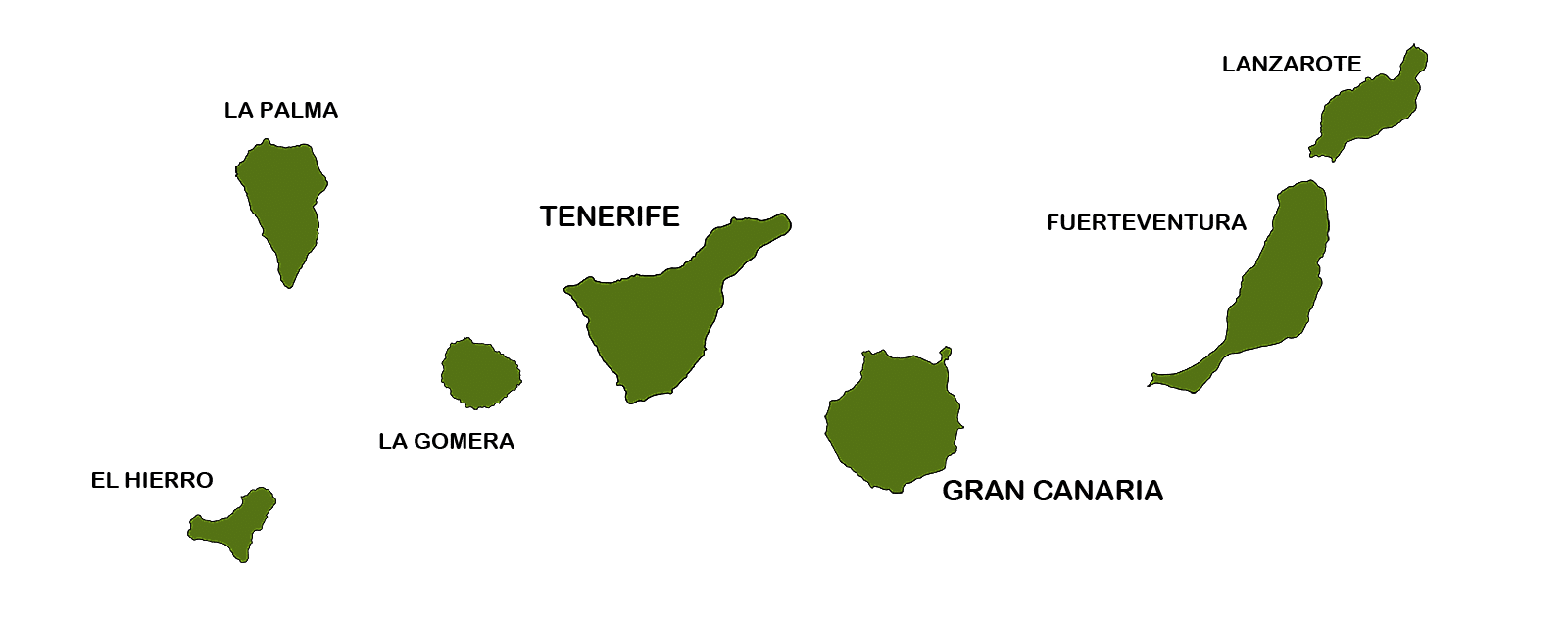
Many islands across the Canaries offer spectacular walking. Lanzarote still stands clearly apart. The landscape feels reduced, graphic and often almost otherworldly. Colour doesn’t come from dense vegetation but from the contrast between lava, sand, rock, sea and sky. That makes the island visually powerful — and on a multi-day tour particularly striking, because this picture shifts and changes from one day to the next.
Then there’s the cultural imprint. The whitewashed houses, the restrained architecture and the island’s adaptation to wind and aridity give each stage a calm, clear quality. For walkers who also like to read the character of a landscape as they move through it, Lanzarote offers a great deal of substance.
If you’re not simply looking for any island trip, but for a stage walk with genuine character, Lanzarote is an excellent choice. It rewards those who don’t just want to cover distance but are willing to engage with its open, volcanic nature on its own terms. When that happens, several days of walking become exactly what a good journey should be: intense, lightly organised and long remembered.
 You might also be interested in:
 86,2 km ·
  6 Stages ·
  8 Days