12 Jul Multi-Day Hike Mallorca Made Easy – Stages, Route & Tips
Planning a multi-day hike Mallorca style is easier than many people think — if you know what matters. In much of Europe the island is still associated mainly with beach holidays. Yet along its north-west coast runs one of the most beautiful mountain landscapes of the Mediterranean: the Serra de Tramuntana, a UNESCO World Heritage Site since 2011. Those who walk here for several days from village to village experience a Mallorca that has little to do with the island’s clichés.
Why a multi-day hike Mallorca is worth it
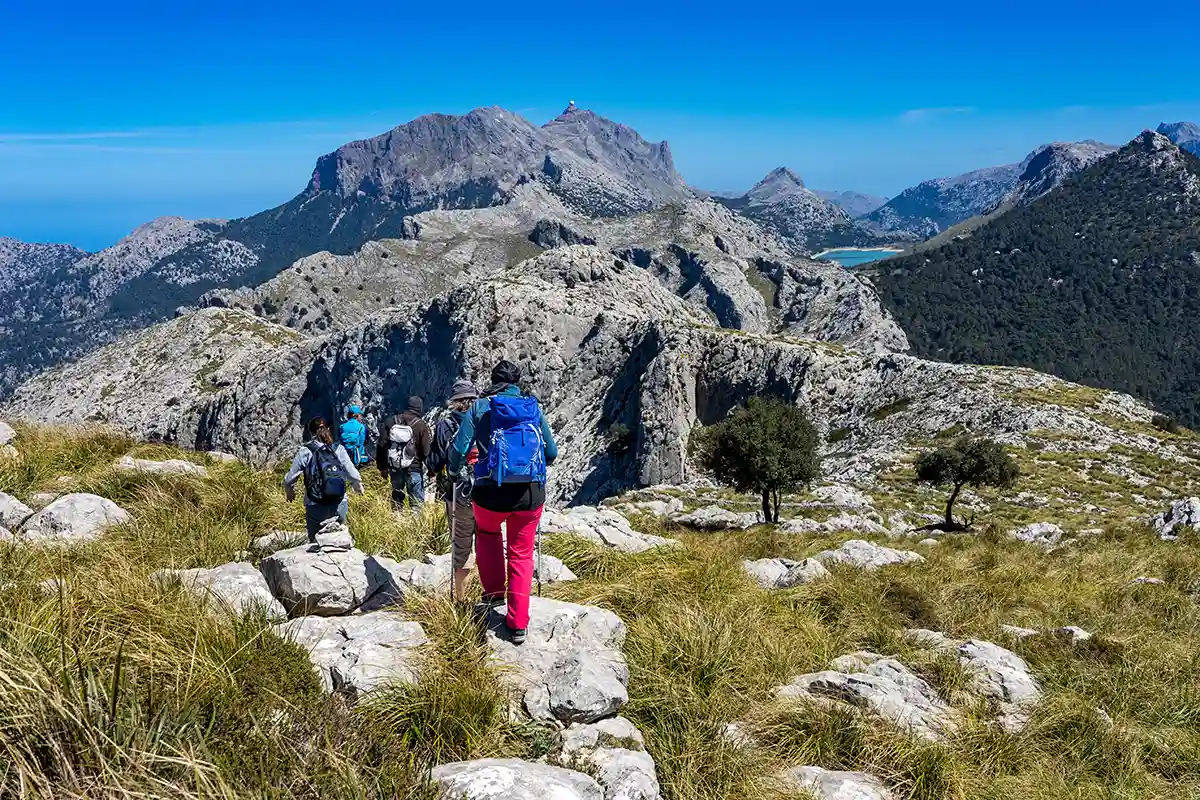
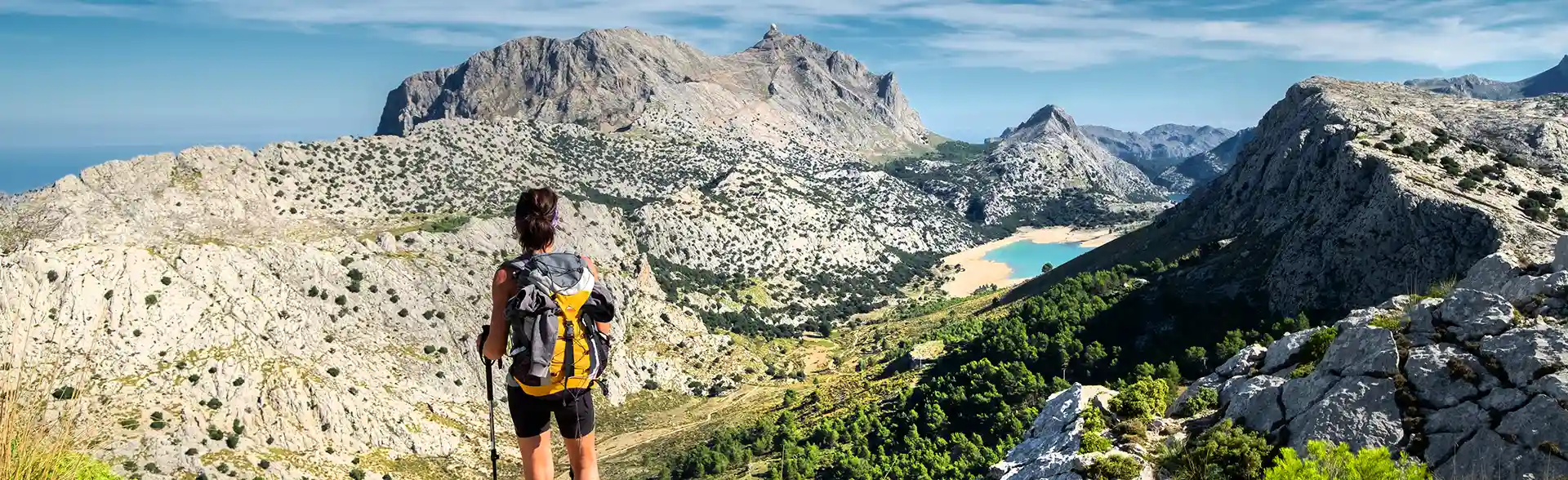
A multi-day hike Mallorca offers something day walks cannot: the feeling of genuinely crossing a landscape. The Serra de Tramuntana stretches for around 90 kilometres along the north-west coast — with peaks above 1,400 metres, historic cobbled paths, dry-stone walls, olive groves and constantly surprising views of the sea.
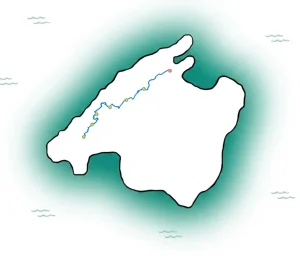
The central route is the GR 221, also known as the Ruta de Pedra en Sec — the Dry Stone Route. Over 86 kilometres in 6 stages it connects the most beautiful sections of the mountain range and passes through villages like Valldemossa, Deià, Sóller and Pollença, which are among the most charming on the island.
What makes Mallorca special as a hiking destination is the combination: genuine mountains with demanding ascents, yet a short journey to get there, excellent infrastructure and stage villages with good gastronomy and comfortable accommodation. Anyone who arrives in a historic mountain village after a long stage and dines on a terrace overlooking the mountains quickly understands why so many hikers return year after year.
The route: the GR 221 through the Serra de Tramuntana
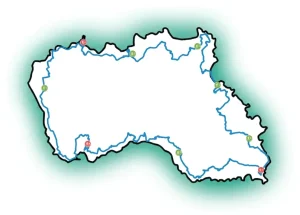
The NATOUR version of the multi-day hike Mallorca follows the GR 221 from Esporles in the south-west to Pollença in the north-east — 86.2 km in 6 stages over 8 days, including arrival and departure. The route focuses on the most beautiful and best-preserved sections of the Ruta de Pedra en Sec:
Stage 1 – Esporles to Valldemossa: A gentle start along old connecting paths and through holm oak forests, past historic charcoal kilns and lime ovens that tell of traditional life in the Tramuntana. Valldemossa with its Carthusian monastery is one of the best-known villages on the island — and noticeably quieter in the evening once the day-trippers have left.
Stage 2 – Valldemossa to Deià: One of the most spectacular stages: the ascent along the famous Camí de s’Arxiduc, the historic high-level path of Archduke Ludwig Salvator, with panoramic views between coast and mountains. The descent leads to the artists’ village of Deià with its stone houses.
Stage 3 – Deià to Sóller: The classic coastal path between olive groves and holm oaks, with constant sea views. The trail follows centuries-old connecting paths down into Sóller’s valley of oranges.
Stage 4 – Sóller to Cúber/Tossals Verds: Ascent through the Barranc de Biniaraix, one of the most impressive landscape monuments of the Tramuntana — a cobbled serpentine path between dry-stone walls and watercourses. Over the Coll de l’Ofre with views of the Cúber reservoir and Puig Major, Mallorca’s highest mountain.
Stage 5 – Tossals Verds to Lluc: Through the heart of the mountains to the Monastery of Lluc, the spiritual centre of Mallorca. Alpine landscapes, holm oak forests and the highest passages of the week.
Stage 6 – Lluc to Pollença: The final stage leads through shady holm oak forests and over two small passes at the foot of Puig Tomir (1,104 m). The path descends over the north-eastern foothills of the Tramuntana, along the Torrent de la Vall d’en Marc, into the historic old town of Pollença — the perfect end to the hiking week.
Best time of year for a multi-day hike Mallorca
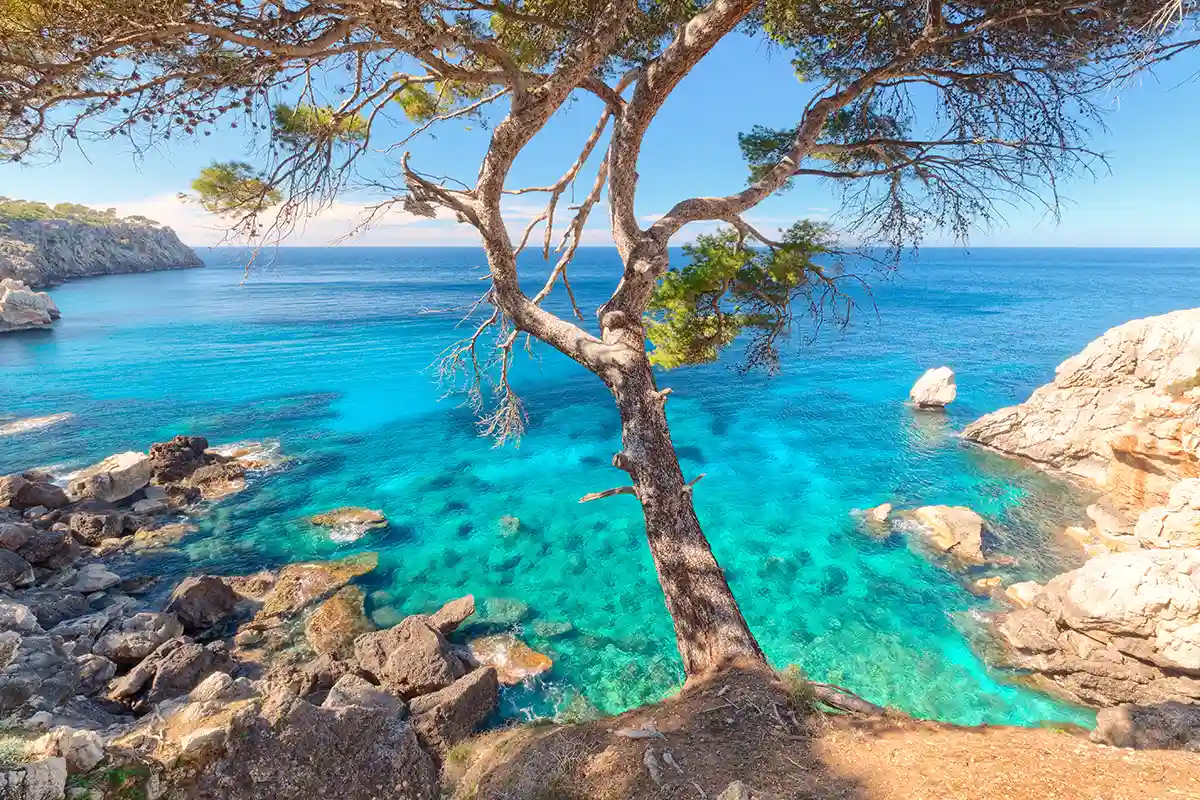
The best time for a multi-day hike Mallorca is in spring (March to May) and autumn (September to November). In spring the island is in bloom, temperatures are ideal for walking and the days are long enough for relaxed stages. Autumn offers stable conditions, a warm sea and quieter villages.
Winter is also an underrated season: mild, green and still. At higher elevations it can be cool and changeable, but December to February in particular show the Tramuntana at its most unspoilt. High summer, on the other hand, is only partially suitable for long stages — heat and little shade make the ascents considerably more demanding.
Difficulty level and fitness
The GR 221 is rated moderate. Stages range between 12 and 20 kilometres, with daily ascents sometimes exceeding 800 metres. The paths are well marked and not technically difficult, but stony cobbled trails and long climbs require solid basic fitness and well broken-in hiking boots.
A multi-day hike Mallorca does not require alpine experience — but it does require the willingness to be on the trail for 5 to 7 hours several days in a row. Regular hikers will find the week challenging but very manageable.
Luggage transfer and organisation: the key to a relaxed week
The biggest difference between an improvised and a well-planned multi-day hike Mallorca lies in the logistics. The Tramuntana villages are popular, and good accommodation in Valldemossa, Deià or Sóller is often booked out months in advance. Those who travel spontaneously quickly end up in impractical fallback options away from the route.
Then there is the luggage. The stages of the GR 221 are considerably more strenuous with a full backpack — especially the long ascents of the queen stages towards Lluc. With luggage transfer you walk with only a day pack while your suitcase is transported from accommodation to accommodation.
NATOUR organises the multi-day hike Mallorca on the GR 221 as a self-guided trip: pre-booked accommodation along the route, daily luggage transfer, GPS data and detailed route descriptions. You hike independently and at your own pace — the logistics run in the background.
What to pack
For a multi-day hike Mallorca with luggage transfer, a light day pack with the essentials is enough: at least 1.5 litres of water per person, sun protection, a wind or rain jacket, snacks, blister plasters and your phone with the GPS tracks. In the shoulder seasons a light warm layer belongs in the pack too — at higher elevations of the Tramuntana it can be fresh even in sunshine.
As for footwear: well broken-in hiking boots with a good sole are essential. The cobbled paths of the Tramuntana are beautiful, but hard and slippery in places. Trail running shoes work for experienced hikers; classic hiking boots give more support on the stony descents.
Frequently asked questions about a multi-day hike Mallorca
How many days do you need for a multi-day hike on Mallorca?
The classic route on the GR 221 comprises 6 walking stages and takes 8 days including arrival and departure. Shorter variants with 4 to 5 stages are possible if less time is available — in that case it is best to focus on the section between Valldemossa and Lluc.
How hard is the GR 221 on Mallorca?
The GR 221 is rated moderate. Stages range between 12 and 20 km with ascents of over 800 metres on some days. The trail is not technically difficult, but solid fitness and good footwear are required.
When is the best time of year for the GR 221?
Spring (March to May) and autumn (September to November) offer the best conditions. Winter is mild and quiet, though changeable at higher elevations. High summer is only partially suitable due to heat and lack of shade.
Can you plan a multi-day hike Mallorca without a tour operator?
In principle, yes. The challenge lies in the accommodation: good places in the stage villages are often booked out months in advance, and coordinating stages, luggage transfer and transfers takes time. An organised self-guided trip takes exactly this work off your hands without limiting your independence on the trail.
Is there luggage transfer on the GR 221?
Yes. On organised trips like those from NATOUR, the main luggage is transported daily from accommodation to accommodation. You walk with only a light day pack — a considerable comfort gain, especially on the long ascents of the queen stages.
Which village is the most beautiful base on the route?
For many, Sóller is the heart of the route — the valley with its orange groves, the historic tram to the port and its location in the middle of the mountains make it special. Valldemossa and Deià are the best-known cultural stops, while Pollença is the most atmospheric finish.
 You might also be interested in:
 86,2 km ·
  6 Stages ·
  8 Days