
05 Jul Luggage Transfer Hiking – How It Works on Self-Guided Stage Trips
Luggage transfer hiking trips means setting off in the morning with just a day pack, walking coastal paths, volcanic slopes or ancient pilgrimage routes — and arriving in the evening to find your suitcase already waiting at the next accommodation.
How does luggage transfer on hiking trips work in practice?

With luggage transfer, your main baggage is transported between accommodations while you walk the daily stage with only the essentials in your day pack. You leave your luggage at the accommodation in the morning or make it available at an agreed time. While you are on the trail, a driver or local transfer partner handles the transport to the next stop.
When you arrive there in the afternoon or evening, your luggage is usually already waiting for you. That sounds unremarkable — and that is exactly a good sign. A well-functioning luggage transfer is noticeable above all by the fact that you do not have to think about it.
Especially on multi-day tours along island routes and coastal paths, this makes a real difference. Anyone walking on changing terrain, expecting longer ascents or hiking in warmer regions feels every extra kilo. Without heavy luggage, stages become lighter, more rhythmic and often more enjoyable.
The typical flow from stage to stage
In practice the day usually begins with a simple, clear ritual. You have breakfast, pack everything you will not need until the evening into your suitcase or travel bag and keep only water, weather protection, valuables, snacks and personal items in your day pack. The luggage is then left at an agreed point in the accommodation.
The timing is almost always important. Many guesthouses and transfer partners work with fixed collection windows, usually in the morning. Those who start late or dawdle risk delays. That is why on well-organised hiking trips you receive precise instructions about when the luggage must be ready and how it should be labelled.
The transport itself runs in parallel with your walk. You follow your route, take breaks, navigate by waymarks or GPS tracks — and do not need to coordinate any shuttle or think about your luggage along the way. At the next accommodation it is either left at reception or brought directly to your room, depending on the property and your arrival time.
Especially on self-guided hiking trips, this relief is a major advantage. You keep your freedom on the trail but have a structure in the background that reliably supports the day-to-day experience.
What luggage is transported?

Usually it is one suitcase, travel bag or larger trekking bag per person. Weight limits often apply, typically between 15 and 20 kilograms. This has less to do with strictness than with practical transport logistics — especially when small vehicles, remote accommodations or multiple stops are involved.
Hard-shell suitcases are generally possible, but soft travel bags are easier to handle on many routes. This is particularly true where accommodations are smaller or luggage needs to be shifted at short notice. Very bulky or unusual items are usually not covered.
What stays in the day pack?
Everything you might definitely need during the day: water, food, sun or rain protection, phone, maps or GPS, travel documents, medication and a light extra layer. Those who pack too sparingly save weight but make the stage unnecessarily complicated.
The mistake happens most often at the start: sun cream in the suitcase, rain jacket in the transfer bag, blister plasters at the very bottom of the bag. After the first walking day, most people’s packing routine improves significantly.
What makes luggage transfer on hiking trips so pleasant — and where its limits lie
The biggest advantage is obvious: you hike lighter. That means not just more comfort but often more safety too. On rocky descents, exposed coastal sections or long elevation gains, a light back is a genuine asset.
There is also a psychological effect. Many guests enjoy stage hikes precisely because the day does not feel like a carrying exercise. You look around more, walk more relaxed, plan breaks more freely and arrive with more energy. On trips lasting several days, this adds up noticeably.
That said, luggage transfer is not magic. It works best where accommodations are sensibly accessible and stages have been arranged in a logical sequence. On very remote mountain routes, hut-to-hut walks without road access or extremely short transitions between hard-to-reach places, it is not always possible.
Which hiking trips benefit most from luggage transfer?
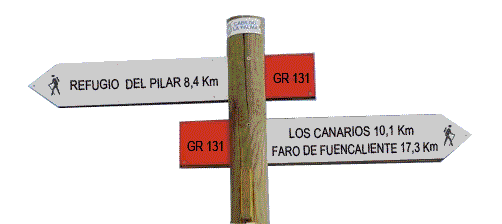
Luggage transfer hiking is most useful on classic stage hikes from
accommodation to accommodation — wherever you are travelling for several days but do not want to be in alpine self-sufficiency mode. Coastal paths, island crossings, pilgrimage routes and long-distance trails with good infrastructure are perfectly suited.
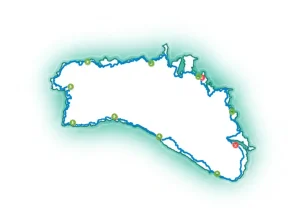
On routes like the GR 131 in the Canaries, the Cami de Cavalls on Menorca or the Rota Vicentina in Portugal, the advantage is particularly clear. The landscapes are expansive, often wind-exposed and occasionally demanding — which is exactly why they are ideal for light hiking. Those travelling with only a day pack get far more out of the trail.
For couples and groups of friends the service is also appealing because not everyone needs to carry their full kit day after day. And experienced hikers use luggage transfer willingly too — not because they could not manage otherwise, but because they prefer to invest their energy in distance, nature and enjoyment.
What to look for before booking
Not all luggage transfer is the same. What matters is how precisely the service is described. Is luggage transported every day or only on certain days? Are there fixed weight limits? Are all accommodations included? And how does the transfer work when a stage involves a taxi, bus or hire car?
For island and coastal hikes in particular, it is worth looking at the details. Some regions have narrow roads, remote rural hotels or varied accommodation types. In those cases it is important to know whether the operator genuinely knows the route or is simply assembling individual services.
A reliable package is recognisable not just from the mention of luggage transfer but from the overall logic of the trip: appropriate stage lengths, realistic difficulty ratings, coordinated transfers and clear information about the daily schedule. That is exactly where improvised logistics diverges from good travel planning. NATOUR plans luggage transfer as a fixed component of every self-guided hiking trip — so that on the trail you only need to focus on one thing: the next step.
Practical tips for a smooth experience
Pack so that nothing is loose in the morning. A clearly organised suitcase saves time and prevents important items from ending up in the wrong bag. A small reserve in the day pack is also useful: a dry shirt, a light warm layer and the basics for minor weather changes.
Label your luggage clearly, even if tags are already provided. This helps particularly in accommodations where several hikers arrive at the same time. And stick to the stated handover times — not just out of courtesy, but because the entire route is timed around them.
If you have medication, electronic devices or valuables with you, these do not belong in the transfer luggage. Everything you might need immediately during the day or in an exceptional situation stays with you.
Those travelling with luggage transfer for the first time often plan to bring too much. In practice, on a well-organised hiking trip you need surprisingly little with you on the trail. That is exactly the appeal: carry less, walk more freely, arrive more fully.
Frequently asked questions about luggage transfer on hiking trips
How exactly does luggage transfer on hiking trips work?
You leave your main luggage at the accommodation in the morning. While you walk your daily stage, a local partner transports the luggage to the next accommodation. It is waiting for you when you arrive — at reception or directly in your room.
By when does luggage need to be handed over for transfer?
Most providers work with fixed collection windows, usually by 9 or 10 in the morning. On well-organised hiking trips you receive precise instructions about the handover time and how the luggage should be labelled.
What goes in the transfer luggage and what stays in the day pack?
Transfer luggage contains everything you will not need during the day: clothing, toiletries, books, equipment you are not using. The day pack holds water, food, weather protection, phone, GPS, travel documents, medication and valuables.
Are there weight limits for luggage transfer on hiking trips?
Yes, usually between 15 and 20 kilograms per person. These limits exist for practical reasons: small vehicles, narrow access to remote accommodations or multiple stops on a route require manageable baggage pieces.
Which routes are best suited for luggage transfer on hiking trips?
Stage trails with solid infrastructure are particularly well suited: coastal paths like the Rota Vicentina in Portugal, island routes like the GR 131 in the Canaries or the Cami de Cavalls on Menorca — anywhere you hike for several consecutive days and the accommodations are sensibly reachable.
Is luggage transfer on hiking trips also worthwhile for experienced hikers?
Yes. Many experienced hikers use luggage transfer deliberately — not because they could not carry the weight, but because they prefer to invest their energy in distance, landscape and enjoyment. On multi-day stage trips the effect adds up considerably.
 You might also be interested in:
 86,2 km ·
  6 Stages ·
  8 Days