01 Jun Hiking across La Palma: What matters
Hiking the La Palma island traverse – what makes the route so special
La Palma is small enough for a clear stage concept yet large enough for a genuine long-distance feel. That is precisely its appeal. Those who cross the island on foot experience not just individual highlights, but the geological and climatic contrasts of the entire island in motion.
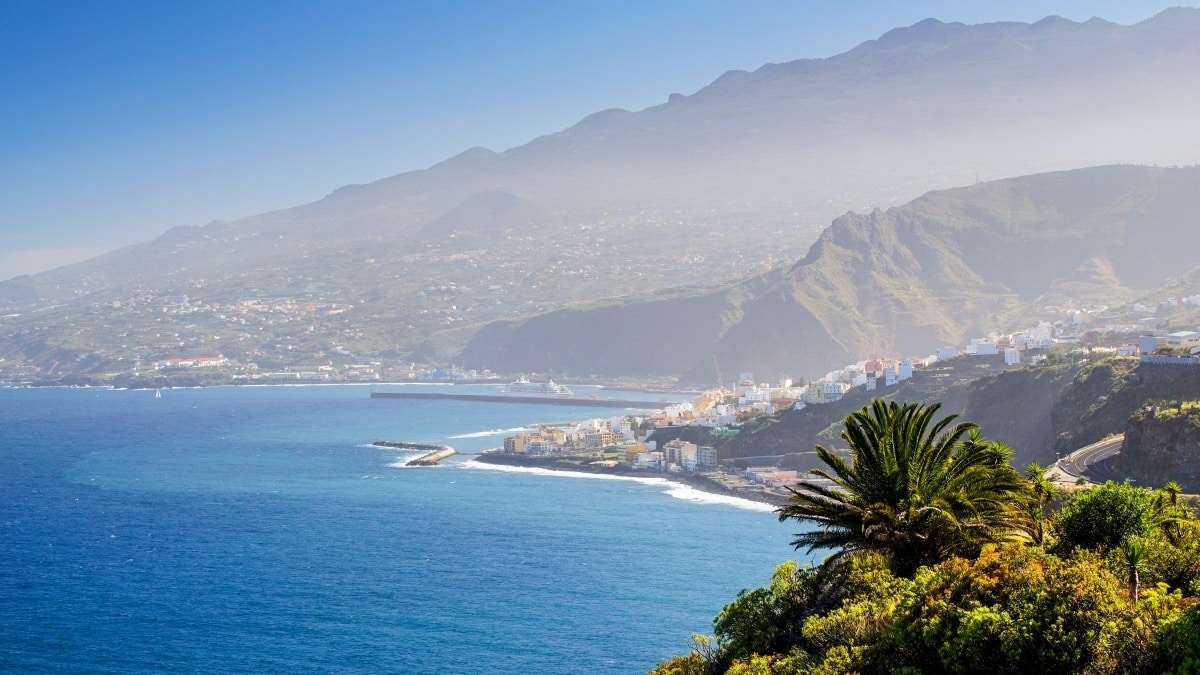
Particularly striking is the route along the GR 131, which on La Palma ranks among the most impressive long-distance trails in the Canary Islands. Many stages follow ridge lines and panoramic passages that, in clear weather, offer sweeping views over the Caldera de Taburiente, the young volcanic landscapes in the south and out to the Atlantic. It is spectacular, but also demanding. The paths are often well laid out, yet elevation gain accumulates quickly.
For many hikers this blend is precisely what matters: being active and challenged during the day, but not having to improvise in the evening. A well-planned island traverse therefore depends not only on the route itself, but also on sensibly chosen stage villages, reliable transfers and accommodation that truly suits you after long ascents and descents.
Who the La Palma island traverse is suited for
 The tour is best suited to hiking travellers with a solid basic fitness level and a love of multi-day point-to-point walks. Alpine experience is usually not strictly necessary on the classic routes, but sure-footedness and stamina certainly are. Above all, the long ascents and descents will determine how enjoyable the journey feels.
Those who regularly hike in low mountain ranges or on comparable multi-day tours will find a very rewarding challenge on La Palma. The island traverse is less suitable for anyone primarily seeking flat, leisurely walks or who likes to go wherever the mood takes them each day. The terrain is too demanding and the logistics too specific for that approach.
That does not mean the trip is only for high-performance athletes. On the contrary. With realistically planned stages, luggage transfers and good route notes, a sporty route becomes a very manageable hiking holiday. It is precisely this organised freedom that many guests appreciate most.
Typical stage progression on the island crossing
A classic island traverse is usually spread over several hiking days, linking the central high zones with the southern volcanic areas or following a north-to-south route. Depending on the variant, the emphasis falls more heavily on the great ridgelines or on a more balanced mix of mountain passages and inhabited sections.
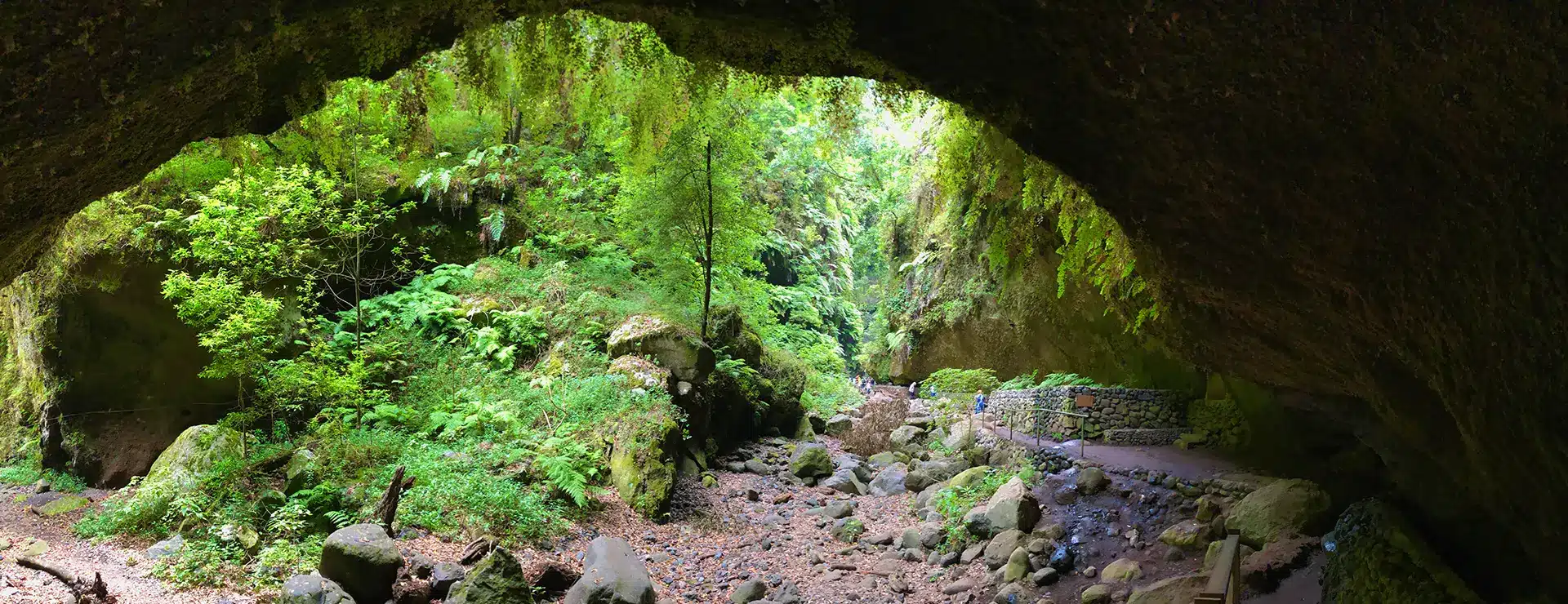
The tour frequently begins at mid-altitude and works its way up to the panoramic crests. There La Palma reveals early on what makes it special: space, light, wind and terrain that seems constantly in motion. What follows are stages that rarely let up in their drama. Sometimes pine forests and volcanic ash paths dominate; at other times open ridges and black lava fields take over.
The southern part of the island in particular tends to stay with people longest. The younger volcanic landscapes look raw, stripped back and intense. Those travelling through here experience less the classic image of a green hiking island and more an archaic scene of ash, craters and Atlantic views. It is a different kind of magic from the north – drier, wider and quieter.
How many stages are ideal depends strongly on personal style. Fit hikers manage well with compact programmes. Anyone wanting more time for viewpoints, village stops and relaxed afternoons should plan an extra overnight stay. On La Palma a realistic pace almost always pays off.
Difficulty, elevation gain and the most common misjudgement
The greatest misjudgement on a La Palma island traverse often stems from the island setting itself. Because La Palma is not a classic high-mountain environment, the tour can look moderate at first glance. In practice, however, the stages are often considerably more strenuous than the bare kilometre figures suggest.
What matters most is the elevation gain and the underfoot conditions. Volcanic ash, rocky passages and long descents take their toll on legs and concentration alike. Add to that the fact that weather and exposure can transform the experience entirely. A sunny ridge walk with clear visibility feels completely different from the same section in wind, cloud or on wet ground.
It is therefore worth taking a sober look at the daily profiles. Those who prefer to hike with something in reserve rather than at their limit generally get more out of the trip. This is precisely where the value of good tour planning becomes clear: stages should not only be attractive, but should also match your personal level.
How hard is the tour really?
By conventional standards, a La Palma island traverse sits in the moderate to challenging range. Technically, many paths are perfectly walkable; physically, however, they can be demanding. Individual days with long ascents or very lengthy descents are not the exception.
If you already have experience of multi-day hiking trips with five to seven hours of walking per day, La Palma is a logical next step. If not, it may be worth choosing a slightly gentler long-distance route first, or booking a variant on La Palma with shorter stages.
Best time of year for the La Palma island traverse
 The island is essentially an attractive hiking destination almost year-round, yet not every season feels the same. Spring and autumn are particularly popular. Temperatures tend to be pleasant, long-range visibility is often good and conditions for longer stages are very well balanced.
Winter is also interesting, especially for visitors from German-speaking countries looking to escape the cold. At higher elevations it can, however, become noticeably cooler, and changeable weather is possible. Atmospheric cloud effects are very much part of the La Palma landscape experience too.
In late spring the island often looks its most colourful, while autumn scores with clear air and stable hiking weather. Summer can become hot in lower-lying and southern areas. Anyone sensitive to heat should plan very carefully for that period or consider travelling at a different time of year.
Without luggage stress the tour becomes significantly better
A multi-day traverse stands or falls with its logistics. On La Palma this is especially true, because start and end points do not always coincide with where the right accommodation is located directly on the route. Add to that transfers, varying elevations and the question of how much you actually want to carry yourself over several days.
Those travelling with a light daypack hike more comfortably, more safely and usually with greater enjoyment. Luggage transfer is therefore not a luxury detail but often the difference between sporting pleasure and a daily battle with your own load. Equally important are good route descriptions and GPS data, because even on marked routes clear materials help you approach the day calmly.
It is precisely for this type of traveller that carefully prepared hiking packages make sense. Providers like NATOUR combine stage planning, accommodation, transfers and navigation so that you can concentrate on the walking without surrendering control of the trip. This suits particularly well those who want to travel independently but have no desire for organisational gaps.
What you really need for La Palma
When it comes to kit, less is often more – as long as the essentials are right. Good hiking boots with reliable grip matter more on volcanic terrain than ultra-light minimal luggage. Sun and wind protection are equally important, because on the ridgelines conditions can change quickly compared to the valley below.
A light extra layer belongs in the bag even in milder seasons. Sufficient water, a functional daypack and poles for long descents are also highly recommended. Anyone with sensitive knees will feel the difference clearly on La Palma.
Less useful is packing too much for every conceivable eventuality. Especially on a stage walk with luggage transfer, a considered, not overloaded setup counts for a great deal. It makes the daily stages noticeably more enjoyable.
Is it worth doing the island traverse independently?
That depends on your travel style. Those with plenty of experience planning self-organised trekking trips can in principle put La Palma together themselves. You should, however, allow sufficient time for route research, accommodation logistics and transfer coordination. Improvising on the spot does not always work well on island traverses.
For many people an organised individual trip is therefore the more relaxed solution. You keep your freedom on the trail, but do not have to deal with every logistical interface of the journey. On a route that is this strong scenically and this demanding physically, that is a genuine advantage.
La Palma is not an island you simply tick off a list. Those who cross it on foot experience it intensely – step by step – and often carry it in their minds long after returning home. If you are looking for a multi-day tour that combines landscape grandeur with a clear sense of progression, then this island is exactly the right place to focus once again on what truly matters: walking, looking, arriving.
 You might also be interested in:
 86,2 km ·
  6 Stages ·
  8 Days