26 Jun Hiking or Cycling – Which Suits You Better? NATOUR Comparison
Hiking or cycling — this is the question many active travellers ask themselves when planning an island or coastal trip. Both offer intense experiences of nature, a real rhythm, physical movement and the feeling of truly understanding a landscape. But they do so in very different ways. Those who make the right choice come home with the best experience. Those who make the wrong one remember exhaustion rather than scenery.
This guide helps you decide between hiking and cycling — with concrete routes, distances and honest assessments from our experience on both sides of the handlebars and the trail.
Hiking or cycling – the fundamental difference
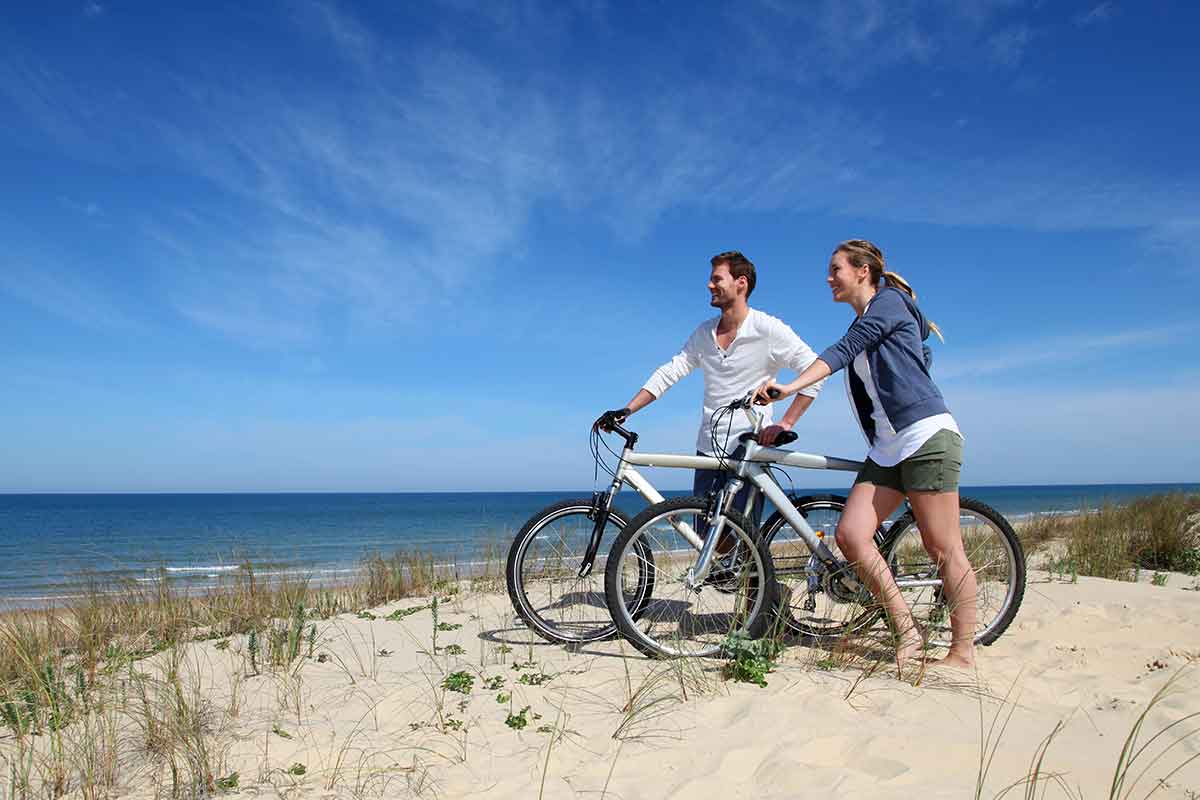 When hiking, you set the pace entirely yourself. You stop when you want, step off the path, notice details, climb hills without gears and arrive each evening at a place you reached entirely under your own steam. It is a very direct, very physical form of travel.
When cycling — especially on an e-bike trip — you cover more ground, connect more places and experience a different relationship between time and space. The landscape flows past rather than opening up step by step. That is not a disadvantage; it is simply different. For many people it is actually more liberating.
Neither hiking nor cycling is universally better. What matters is what you expect from an active trip.
When hiking is the better choice
Hiking is the right choice when you want to truly penetrate a landscape. Narrow coastal paths, volcanic ravines and laurel forests are often not accessible by bike. That is exactly where the special experience is created.
Hiking is particularly recommended for:
Island routes with extreme relief — La Palma, La Gomera, El Hierro and Gran Canaria offer trails that are not accessible by bike. Deep barrancos, steep ridge paths and untouched natural trails can only be explored on foot.
Multi-day tours with intense natural experience — If you want to feel each evening that you have genuinely moved through terrain rather than just clocking up kilometres, you should hike.
When luggage transfer and comfort matter — Self-guided hiking trips with pre-arranged accommodation, GPS data and luggage transfer allow real freedom without logistical stress.
NATOUR hiking routes at a glance
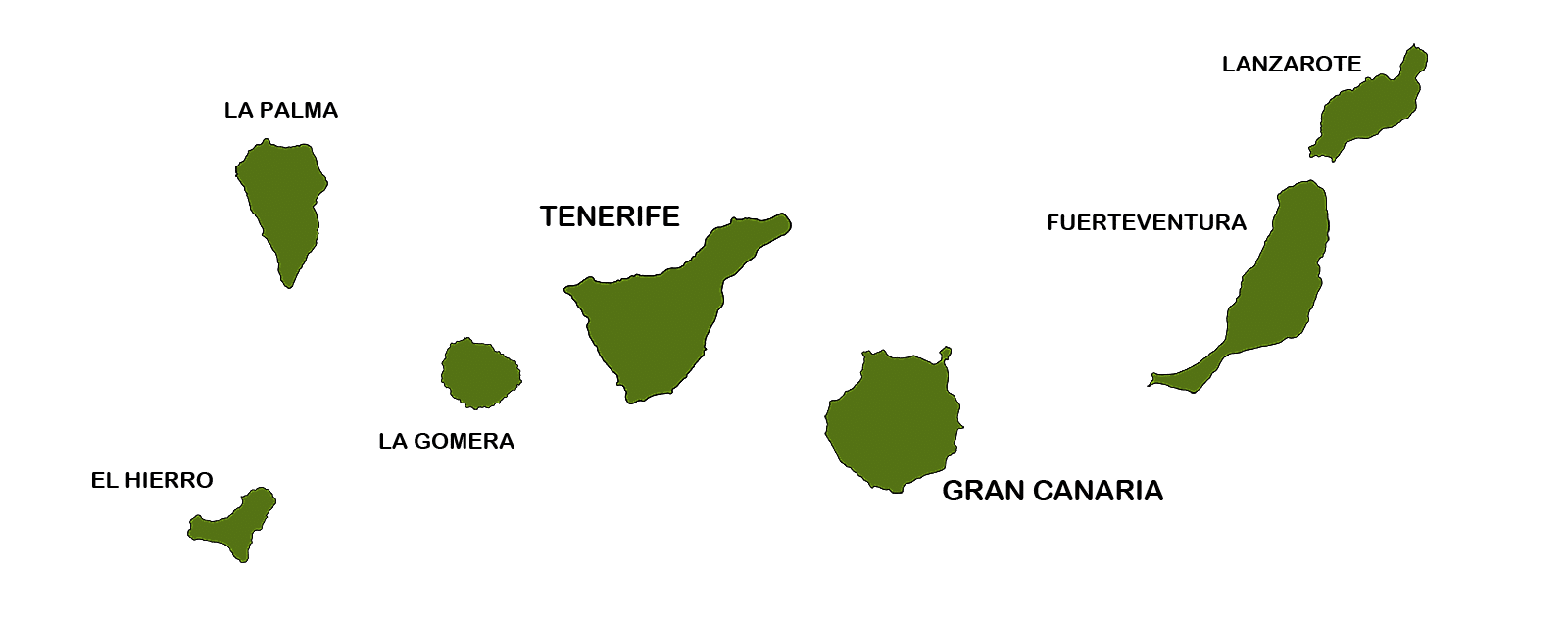
GR 131 – Camino del Guanche (Canary Islands)
The great inter-island long-distance trail of the Canaries. Approximately 75 to 102 km per island in 6 stages, around 8 days each. Available on La Palma, La Gomera, Tenerife, Gran Canaria, El Hierro, Fuerteventura and Lanzarote. Varied terrain from coast to volcanic summit — one of the most impressive island walks in Europe.
→ More about the Camino del Guanche
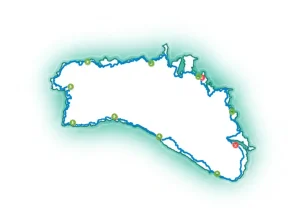
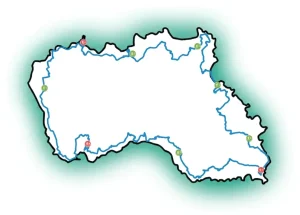
Cami de Cavalls – Menorca
180 km in 10 stages, around 12 days. The historic coastal hiking trail circles the entire island on ancient military paths. Menorca at its most unspoilt: coves, cliffs, lighthouses.
→ More about the Cami de Cavalls
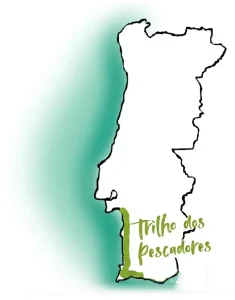
Fishermen’s Trail Portugal – Rota Vicentina
187 km in 10 stages, around 12 days. Wild Atlantic, cliffs and quiet coastal sections on Portugal’s south-west coast. One of the most beautiful coastal walking routes in Europe.
→ More about the Fishermen’s Trail Portugal
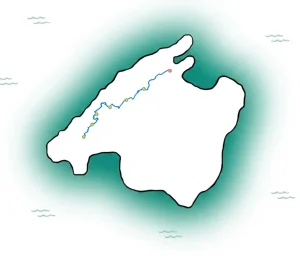
Serra de Tramuntana GR 221 – Mallorca
86 km in 6 stages, around 8 days. The long-distance trail through the UNESCO-protected Serra de Tramuntana. Historic paths, dry-stone walls and sea views.
→ More about the GR 221 Mallorca
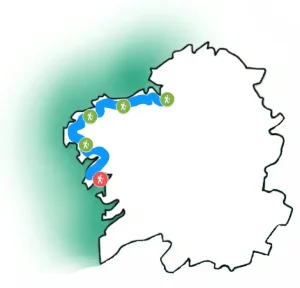
Camiño dos Faros – Galicia
126 km in 5 stages, around 7 days. The lighthouse trail along the wild Galician Atlantic coast.
→ More about the Camiño dos Faros
When cycling is the better choice
 Cycling is the right choice when you want more distance, more places and more variety in fewer days. With an e-bike, gradients that would take a full day on foot become manageable — and you still arrive actively at your destination.
Cycling is particularly recommended for:
Flatter coastal and river routes — Well-developed cycle paths, Vías Verdes and former railway lines are ideal to explore on two wheels. The Camino Portugués network is a perfect example.
More places in less time — If you want to see more landscape on a week’s trip, on a bike you can comfortably cover twice the distance of a walking tour.
When comfort and enjoyment come first — E-bikes take away the physical strain without losing the active experience. Ideal for those who want to travel actively but prefer not to spend hours on foot climbing steep gradients.
NATOUR Bike cycling tours at a glance
Camino Portugués – Porto to Santiago de Compostela
280 km in 5 stages. From Porto along the Atlantic coast and through green valleys to the cathedral of Santiago. Ancient Roman roads, fishing villages and an emotional finale in Compostela. Includes e-bike, accommodation, GPS and luggage transfer.
→ More about the Camino Portugués by bike
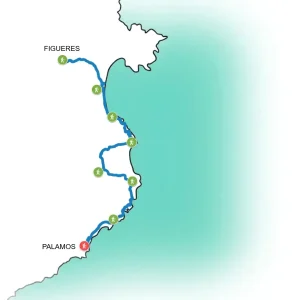
Costa Brava – Olot to Figueres
225 km in 5 stages. Along the Vías Verdes of the old Carrilet railway through the volcanic landscape of the Garrotxa, dense forests and down to the Mediterranean. Hidden coves, medieval villages and finally Figueres — birthplace of Dalí.
→ More about the Costa Brava by bike
Menorca by bike – island circuit
189 km in 5 stages. Cycling the entire island: wild north coast, crystal-clear coves along the south coast and baroque Ciutadella as the highlight. Menorca as very few know it.
→ More about the Menorca cycling trip
Direct comparison: hiking vs cycling
Distance per day
Hiking: 15–24 km · Cycling: 40–60 km
Physical demand
Hiking: consistently high, legs and endurance · Cycling: variable, very controllable with e-bike
Terrain accessibility
Hiking: all paths, including narrow and steep ones · Cycling: tracks and roads, usually well-developed
Depth of experience
Hiking: very high, slow discovery · Cycling: high, more places in less time
Who it suits
Hiking: anyone with stamina and a love of long daily stages · Cycling: ideal also for those who prefer more ground covered with less exhaustion
Best routes at NATOUR
Hiking: GR 131 Canaries, Cami de Cavalls, Rota Vicentina · Cycling: Camino Portugués, Costa Brava, Menorca
The same region experienced twice: Menorca as a case study
Menorca is the perfect case for understanding the difference. Both travel forms cover the whole island — but in completely different ways.
The Cami de Cavalls on foot (180 km, 10 stages) follows historic coastal paths through coves, over cliffs and through maquis scrubland. Every bay is discovered on foot, every climb earned. That is the most intense island experience.
The Menorca cycling trip (189 km, 5 stages) circles the island in half the number of days, connecting north and south coast with more place changes and a different pace. Ideal for those who have a week and really want to see the whole island.
Same island, same distance, completely different experience. Both are right — depending on what you are looking for.
Hiking or cycling – our honest recommendation
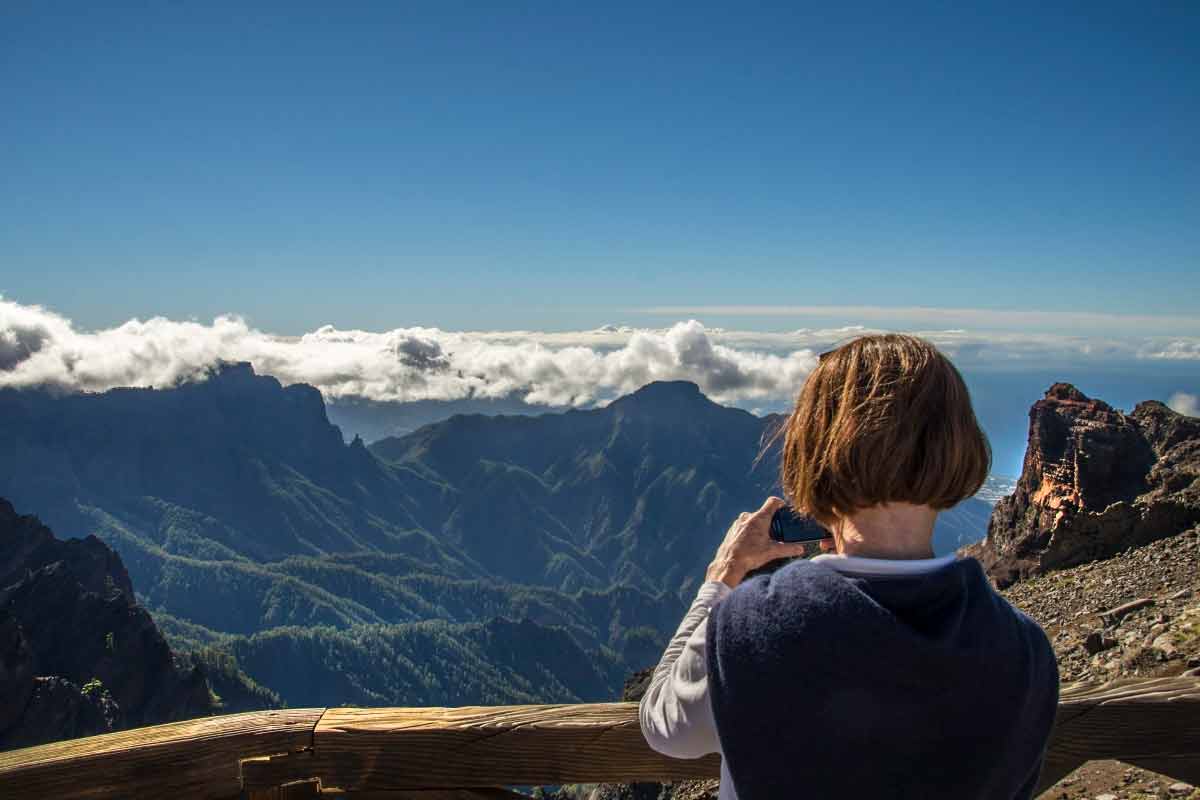 Choose hiking if:
You want to explore inaccessible island paths, depth of experience matters more than distance, you have several weeks and want to cross islands one by one, or if you want to experience the GR 131 in the Canaries as a genuine long-distance trail.
Choose cycling if:
You want to experience more landscape in less time, a week is enough and you still want the feeling of having really arrived somewhere, you prefer pedalling to fighting through sandy sections on foot, or if the Camino Portugués is on your bucket list.
Choose both if:
You plan to travel more than once — first hike, then cycle. Many of our guests experience Menorca first on foot and then come back by bike. Or they walk the GR 131 in the Canaries and then explore the Costa Brava by e-bike. That is not a contradiction; it is the most complete way of knowing a region.
What NATOUR offers for both travel forms
Whether you want to hike or cycle, NATOUR prepares both in the same way. Carefully selected accommodation along the route, luggage transfer from stage to stage, GPS data for every section, transfers to start and end points and a contact person if anything needs sorting out along the way.
The only difference lies in the pace and the terrain. The principle — travelling independently but professionally prepared — remains the same.
→ All hiking trips: natour.travel
→ All cycling trips: natour.bike
Frequently asked questions: hiking or cycling?
Can hiking and cycling be combined on the same trip?
As a rule, not on the same tour, because routes, accommodation and logistics are each designed for one form of travel. But many travellers combine both on different trips: first the GR 131 on foot, then the Camino Portugués by e-bike. That is the most complete way of experiencing different destinations.
Is cycling physically easier than hiking?
With an e-bike, yes — gradients are motorally assisted and the physical demand is much more controllable. Classic cycling without motor support can also be very demanding on hilly routes. Hiking engages the legs and endurance consistently throughout the entire day.
Which NATOUR routes are suitable for beginners in active travel?
For hiking beginners: the Cami de Cavalls on Menorca or the GR 221 on Mallorca. For cycling beginners: the Menorca cycling trip or the Costa Brava, both with well-developed paths and e-bike support.
How do distances compare between hiking and cycling at NATOUR?
Hiking tours cover 15–24 km per day. Cycling tours cover 40–60 km per day. Total route lengths are similar (180–280 km), but cycling tours complete that in fewer stages. The Camino Portugués (280 km) is cycled in 5 stages; the Cami de Cavalls (180 km) is walked in 10 daily stages.
Which route does NATOUR recommend for a first active island trip?
For hikers: La Gomera GR 131 — compact, impressive and logistically ideal for a first trip. For cyclists: Menorca by e-bike — manageable distances, beautiful scenery, no extreme relief.
Are the e-bikes included in the price at NATOUR Bike?
Yes. All cycling trips at NATOUR Bike include e-bike, accommodation, GPS data and luggage transfer. Details of each travel package can be found at natour.bike.
 You might also be interested in:
 86,2 km ·
  6 Stages ·
  8 Days