15 Jun Hiking in the Canary Islands – How to Plan Your Multi-Stage Trek
Planning Canary Islands Hiking – What Matters First
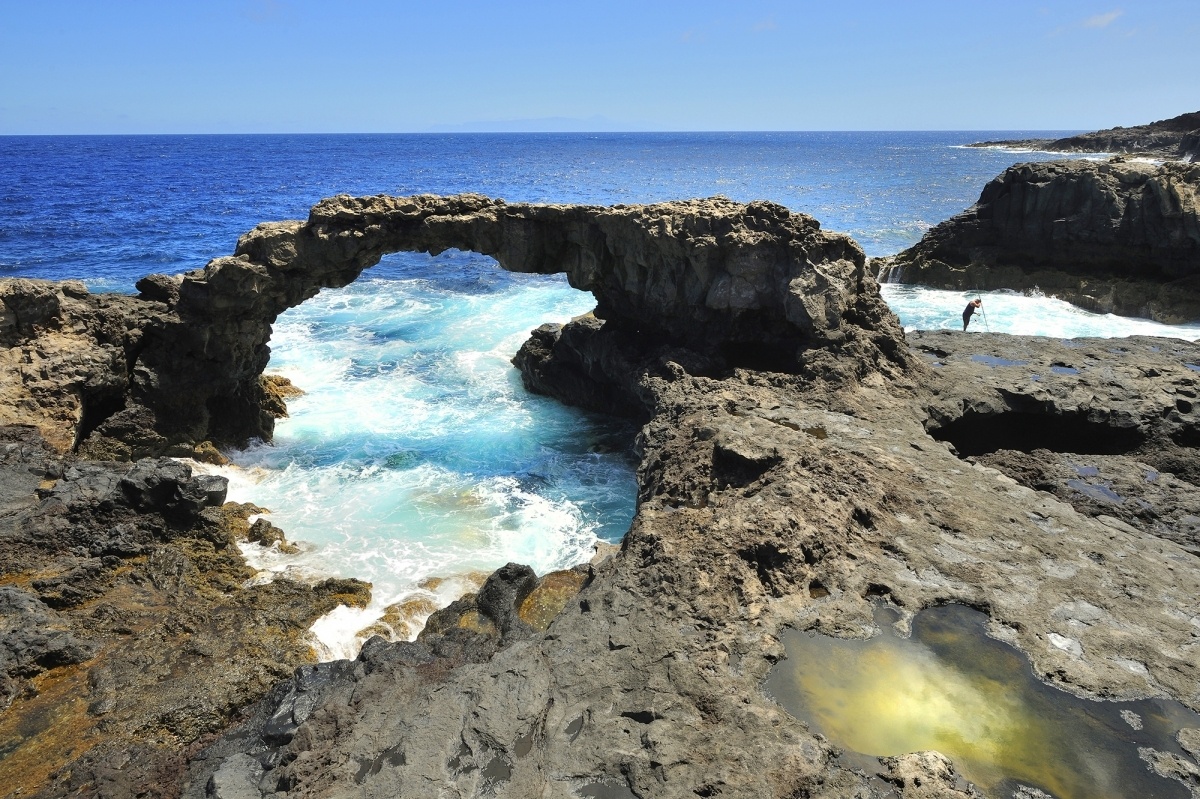 The most important question isn’t: which island is the most beautiful? More useful is: which island suits your style of walking? The Canary Islands often pack completely different landscapes and climate zones into a small area. A tour can start mild at the coast and become genuinely demanding in alpine terrain just two hours later.
Three things therefore work together for planning: your personal fitness level, the daily structure you want, and the level of comfort you expect along the way. Do you want challenging elevation gain with long panoramic ridges? Or well-paced stages with time for villages, cafés and sea views? Both are possible when hiking in the Canary Islands, but rarely on the same route.
Especially on multi-day tours, logistics quickly become more important than many people initially expect. A good route is only truly relaxing when accommodation is sensibly placed, transfers work and stage lengths match the terrain. What looks short on the map can be considerably more demanding than expected on volcanic paths or steep coastal trails.
Which Canary Island Suits Your Multi-Stage Hike?
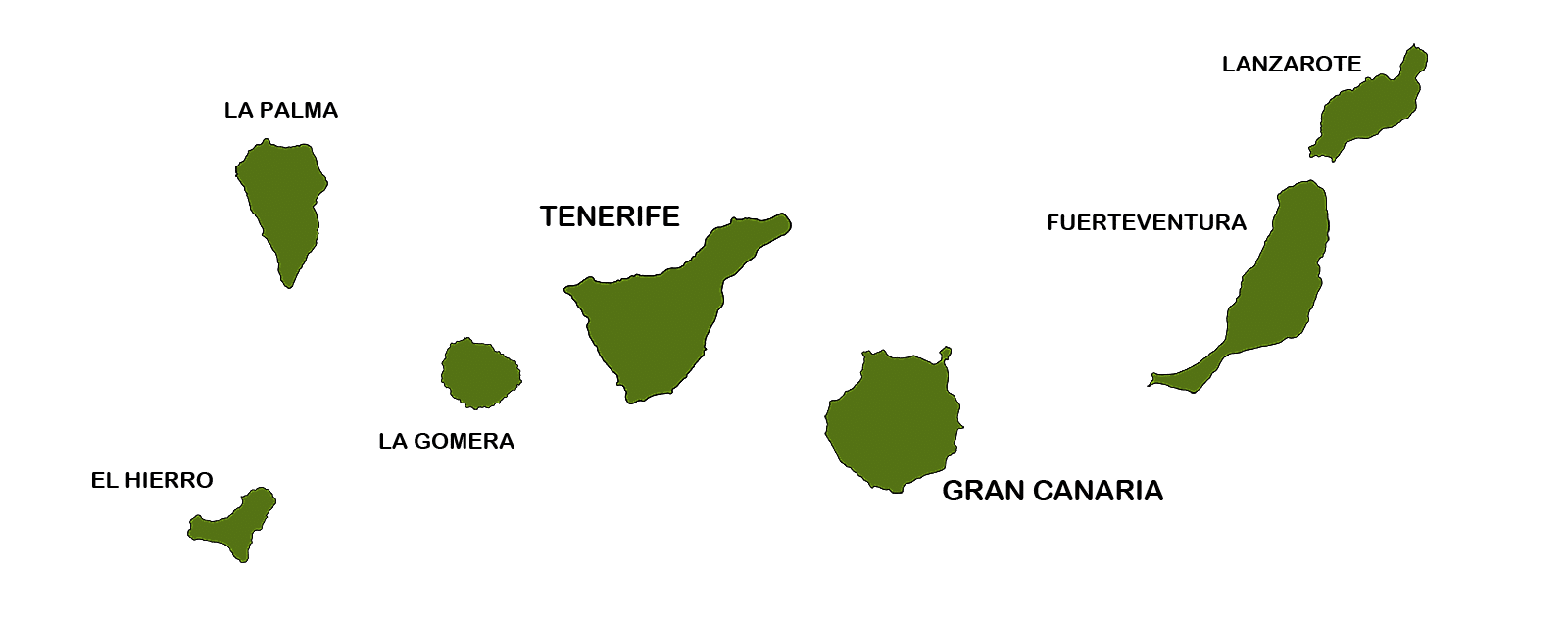
La Gomera is for many the most classic introduction to Canary Islands hiking. The paths are varied, distances easy to combine and the landscape shifts impressively between laurel forest, barrancos and coastal sections. Those who enjoy walking ancient connecting routes and want a compact island with plenty of character are usually well placed here. La Gomera can still be demanding though — short stages don’t automatically mean few metres of elevation gain.
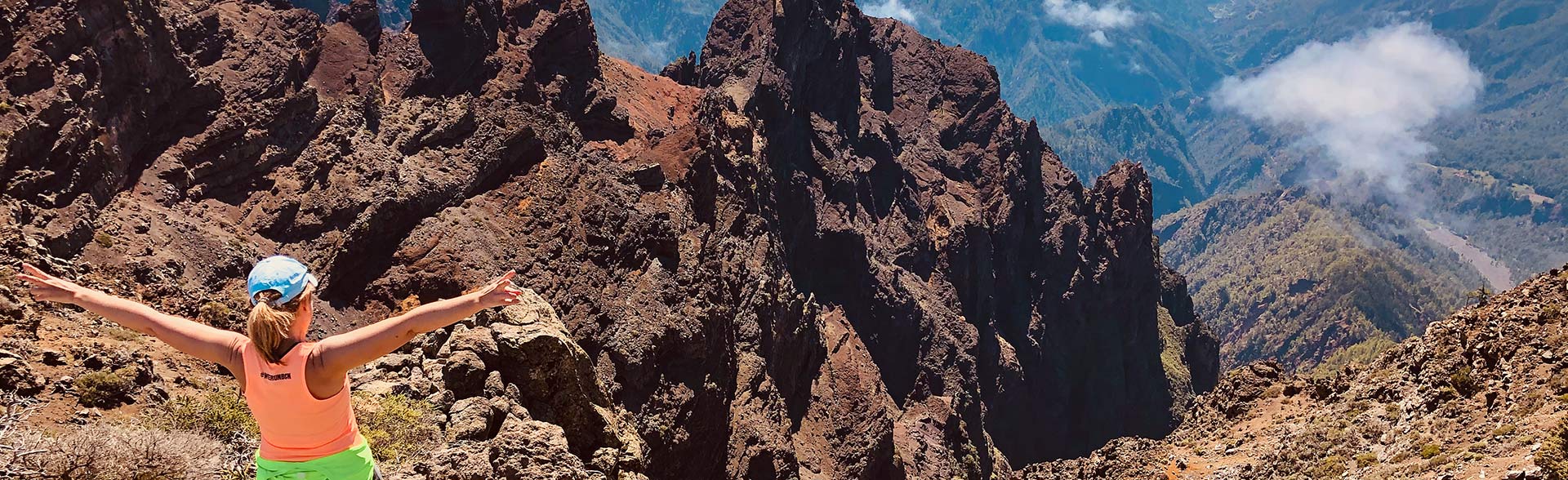
La Palma appeals to hikers looking for striking mountain landscapes and a somewhat larger stage. The island offers spectacular ridge paths, deep erosion landscapes and dense forest zones. Many stages feel wilder and more exposed here. For experienced walkers, hiking in the Canary Islands on La Palma is outstanding. Those with a fear of heights or uneasy in unstable weather should align their route choices more carefully.
Tenerife is ideal if you enjoy contrasts when hiking in the Canary Islands. Between the volcanic plateau, pine forests, proximity to the Teide and lush northern slopes, the hiking experience is highly varied. At the same time, the island is large, which can make organisation more complex. Multi-stage walks work particularly well here when transfers and accommodation changes are cleanly planned.
Gran Canaria surprises many when it comes to Canary Islands hiking. The island is far more than coast and beach — in the interior, deep ravines, rocky landscapes and extensive mountain ranges await. Those who enjoy walking in the mountains and arriving in smaller villages or rural accommodation in the evening will find very attractive routes here. The terrain is often tougher, however, than the island’s tourist reputation suggests.
Lanzarote and Fuerteventura are better suited for hikers who appreciate open landscapes, wide spaces and dry climates. The stages differ from those on the green western islands — less forest, less shade, but plenty of volcanic formations, coastline and a very distinctive quality of light. Here wind, sun and water supply are often more decisive than steep ascents.
The Best Time for Canary Islands Hiking Depends on Route and Altitude
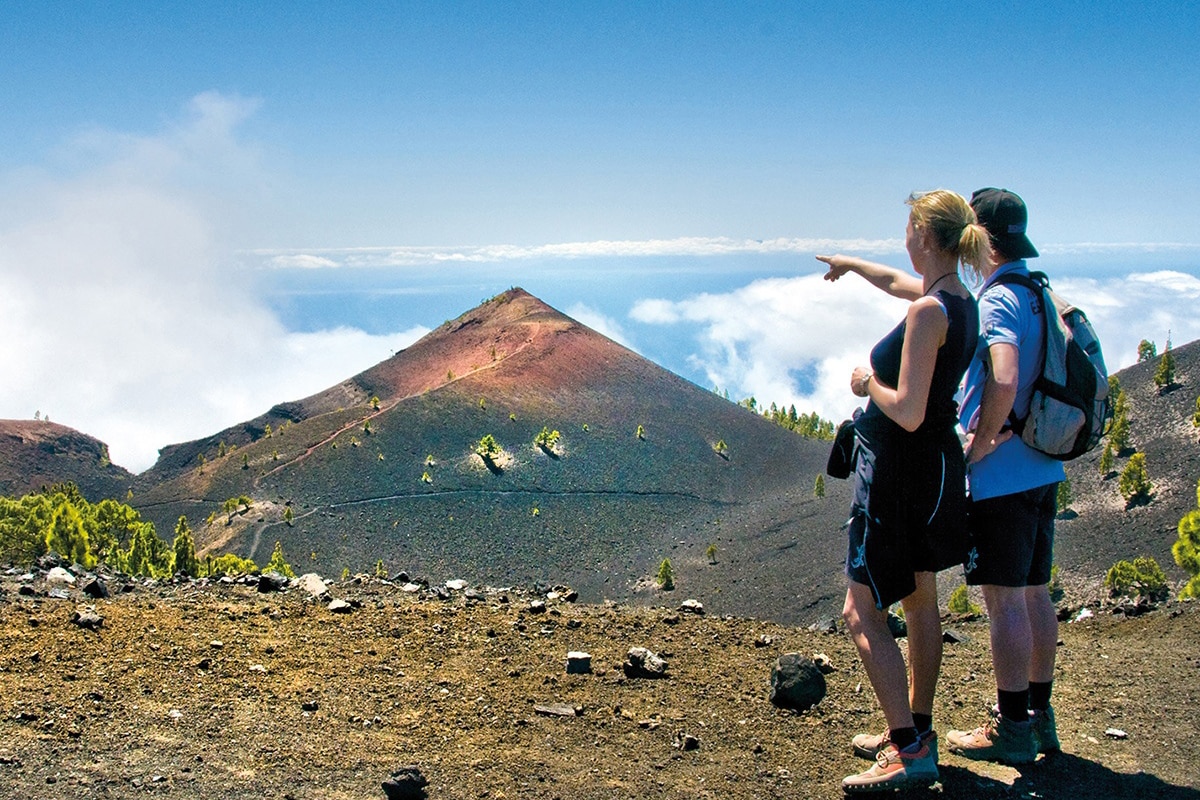 The Canary Islands are considered a year-round destination. That’s broadly true, but for multi-stage hiking it’s only half the story. What matters is which island you’re walking on, what altitude the route follows, and how well you cope with heat, wind or changeable weather.
Autumn, winter and spring are the strongest months for many multi-day tours. Temperatures on most islands are pleasant for walking, long-range visibility is often clear and conditions at mid-altitude are very attractive. At the same time, winter months in the mountains can be cool, wet or misty. Especially on La Palma and Tenerife, altitude should not be confused with coastal weather when planning Canary Islands hiking.
Spring often brings particularly green landscapes and a beautiful flowering season when hiking in the Canary Islands, especially on the western islands. In high summer, some routes are very manageable, but others are only partially suitable due to heat, drought and lack of shade. Those travelling in summer should choose stages carefully and start early.
How to Choose the Right Stage Length for Canary Islands Hiking
Many travellers start by looking at kilometres. For Canary Islands hiking, that’s too narrow a view. Twelve kilometres here can be a relaxed walking day — or a demanding mountain stage. The elevation profile, trail conditions and the length of ascents and descents are often more important than the raw distance.
A good guideline for leisure-oriented walkers is stages that provide enough movement without pushing to the limit every day. Especially on island routes, a buffer is worthwhile. Viewpoints, weather changes or simply a longer lunch in a mountain village are all part of Canary Islands hiking and shouldn’t be cut from time pressure.
If you’re hiking in the Canary Islands for several consecutive days for the first time, plan moderately rather than ambitiously. Three to five harmoniously set stages often feel more satisfying than an overly sporting plan that falls apart on day two. Those who are very fit can choose longer or more alpine variants — but should still factor in rest days, transfers and the exertion of the journey out.
Canary Islands Hiking – With or Without Luggage?
This is where a spontaneous travel idea separates from a relaxed hiking holiday. Of course a multi-stage walk in the Canary Islands can be organised independently. In practice, however, finding accommodation, coordinating routes, managing luggage logistics and planning transfers on islands often takes more time than many expect. Added to this, not every beautiful route is automatically well suited to daily changes of accommodation.
With luggage transfer, you walk lighter, more consistently and usually more enjoyably in the Canary Islands. This makes a big difference especially on steep Canary stages. Those travelling with little weight over several days can enjoy sure-footedness and scenery far more than with a full trekking rucksack.
Preparation also pays off when it comes to navigation. Good route descriptions and GPS data provide security when hiking in the Canary Islands, especially when paths fork, fog rolls in or waymarking isn’t consistently clear. For many travellers, exactly this blend of individual freedom and professionally prepared organisation is the most enjoyable approach. NATOUR works precisely along these lines — with detailed stages, appropriate logistics and realistic assessments of the character of each route.
What Is Often Underestimated about Accommodation and Transfers
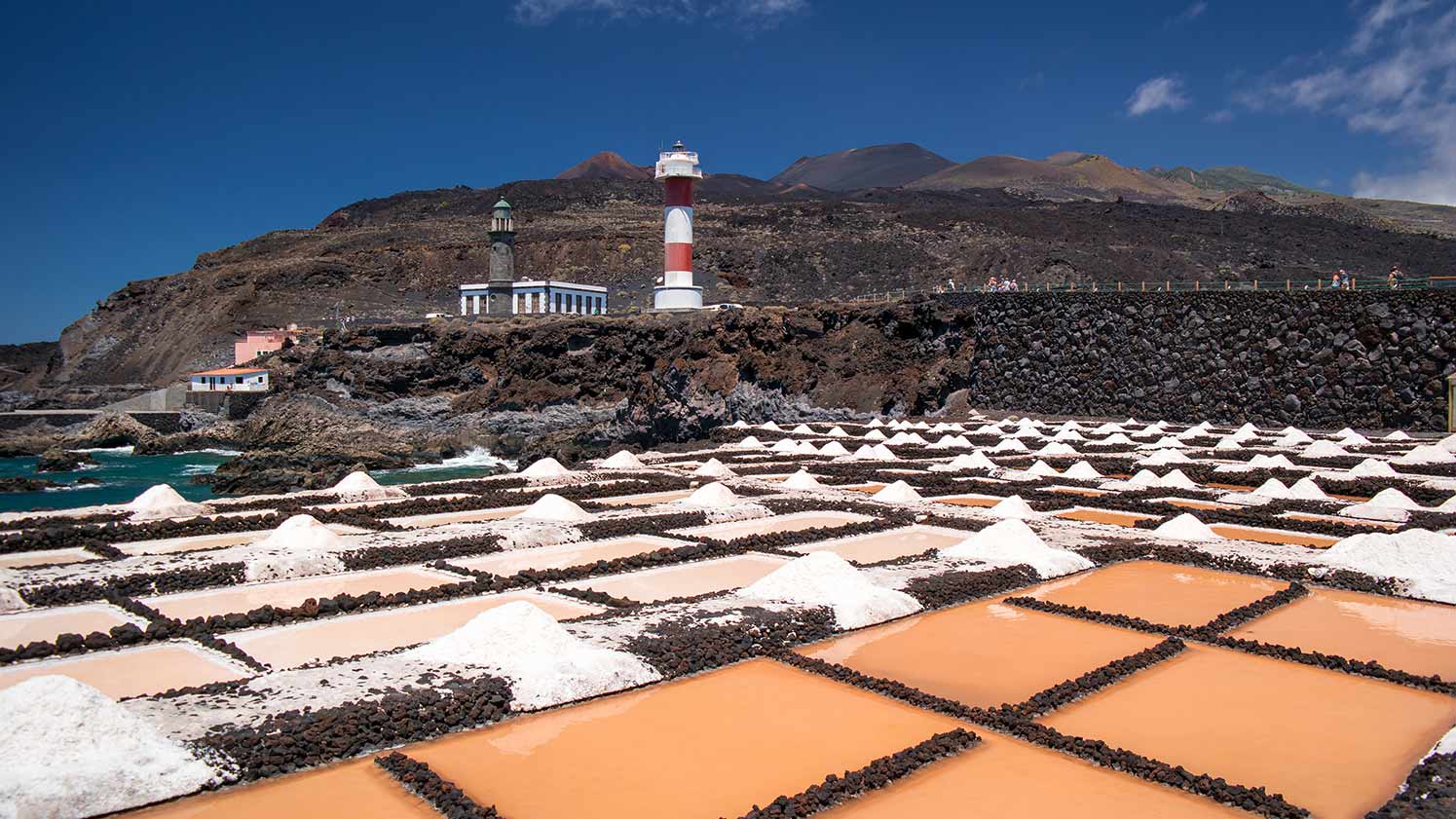 In the Canary Islands, attractive hiking regions don’t always sit directly next to a dense network of suitable accommodation. This means: a beautiful line on the map doesn’t automatically make a good multi-stage hike. Sometimes the location of a single piece of accommodation determines whether a route works harmoniously or tips into unnecessary detours.
It therefore pays, when planning Canary Islands hiking, to think not just in walking stages but in travel days. Where does the first overnight stay begin? How do you get back after the final stage? Is a rental car sensible, or are organised transfers the better choice? On smaller islands this can be straightforward; on larger ones with different hiking regions it can be considerably more complex.
Those who want to travel comfortably should also pay attention to the type of accommodation. Rustic charm can be wonderful, but it doesn’t suit every travel style. Some prefer small country hotels; others prefer consistent hotel standards or accommodation with good breakfast logistics for early starts.
Typical Mistakes When Hiking in the Canary Islands
The most common mistake is treating the islands as climatically uniform. Coastal weather says little about conditions in the mountains. Also widespread is an overly optimistic self-assessment. Those who walk a lot in daily life or are familiar with day hikes are not automatically ready for several consecutive days of steep ascents and descents in the Canary Islands.
The order of stages is also frequently underestimated. A trip improves when exertion, scenic highlights and transfers are sensibly distributed. Not every spectacular showpiece stage belongs at the start. Sometimes when hiking in the Canary Islands it’s wiser to arrive first, adjust to the terrain and climate, and then schedule the more demanding days.
Finally, many people plan too sparingly for equipment and water. Especially on drier islands or on sun-exposed high-altitude paths this can become unpleasant. Light clothing alone is not enough — sun protection, wind protection and a realistic assessment of water points and supply options are essential.
How a Desire to Explore Becomes the Right Hiking Trip in the Canary Islands
When planning your Canary Islands hiking trip, it’s worth searching not for the most spectacular route, but for the route that challenges you in the right measure, offers strong scenery and works well organisationally. Then a good idea becomes a trip where you don’t constantly need to readjust.
The Canary Islands reward this care. Those who bring island, season, stage profile and logistics into alignment experience not only outstanding hiking days, but also that rare travel moment when everything is clear in the morning: boots on, pack on, set off — and everything else is already well prepared.
Frequently Asked Questions about Hiking in the Canary Islands
Which Canary Island is best for hiking?
It depends on your walking style. La Gomera is ideal for compact, varied multi-stage hikes. La Palma offers spectacular ridge paths for experienced walkers. Tenerife impresses with strong contrasts and Gran Canaria with wild ravines in the interior. Lanzarote and Fuerteventura suit open volcanic landscapes with little shade.
When is the best time for hiking in the Canary Islands?
Autumn, winter and spring are usually the most convincing seasons for multi-stage hiking in the Canary Islands. Temperatures are pleasant, long-range visibility is often clear and conditions at mid-altitude are very good. In high summer, heat and lack of shade are a real factor on some routes.
Do you need to be very fit for Canary Islands hiking?
Not necessarily, if the route is chosen to match your level. Those who hike regularly and manage daily stages of 4 to 6 hours comfortably will find suitable routes on all islands. For alpine routes such as parts of La Palma or the high elevations of Tenerife, more experience with elevation gain is advisable.
Is luggage transfer worth it for hiking in the Canary Islands?
Absolutely. Walking with a light day pack is considerably more enjoyable on the often steep Canary paths. Organised luggage transfer between stage towns is one of the most effective ways to make a hiking trip in the Canary Islands more comfortable.
How many days should you plan for Canary Islands hiking?
Three to five harmoniously set stages are a good starting point. Those with more time can combine two islands or choose longer variants. The key is not to plan too ambitiously: better moderate and enjoyable than pushing to the limit every day.
 You might also be interested in:
 86,2 km ·
  6 Stages ·
  8 Days