01 Aug Sustainable Hiking Trips 2026 – Complete Guide to Conscious Travel
Planning sustainable hiking trips 2026 doesn’t mean sacrificing experience – quite the opposite. Those who travel consciously often hike more intensively, more slowly, and closer to the landscape. The good news: the elements that make a hiking trip more sustainable are almost the same ones that make it more beautiful. Less rush, more region, real stages instead of scheduled highlights. This guide shows what really matters in 2026.
What makes a hiking trip sustainable?
Sustainability in travel is often reduced to a single factor – usually the journey itself. In reality, it’s an interplay of several levels: how you travel, where you stay, how you move around locally, and which economy you support with your money. A hiking trip has a structural advantage here: the core experience – walking – produces no emissions and no resource consumption.
The key lever therefore lies less in the hiking itself than in the surrounding conditions. Thoughtful travel, regional accommodations, local gastronomy, and respectful treatment of nature transform an ordinary hiking tour into a sustainable trip. And precisely these elements also create a more authentic experience.
Sustainable hiking trips 2026, therefore, mean not sacrifice, but conscious decisions in the right places.
The journey: the biggest lever
On most trips, the largest part of the ecological footprint occurs on the way to the destination – not at the destination itself. Those planning sustainable hiking trips 2026 should therefore start with the journey.
For destinations in Central Europe, it’s worth looking at the train. Many hiking regions in the Alps, Pyrenees, or along European long-distance trails are excellently accessible by train. The journey itself becomes part of the trip – unhurried and without airport stress.
For destinations requiring air travel – such as island routes in the Atlantic or Mediterranean – a different principle applies: travel less frequently, but longer and more consciously. An eight-day stage hike on an island has a significantly better carbon footprint per travel day than several short weekend trips. Those who fly should extend their stay and really explore the region on foot, rather than just passing through.
Long-distance hiking instead of day trips: why stage hikes are more sustainable
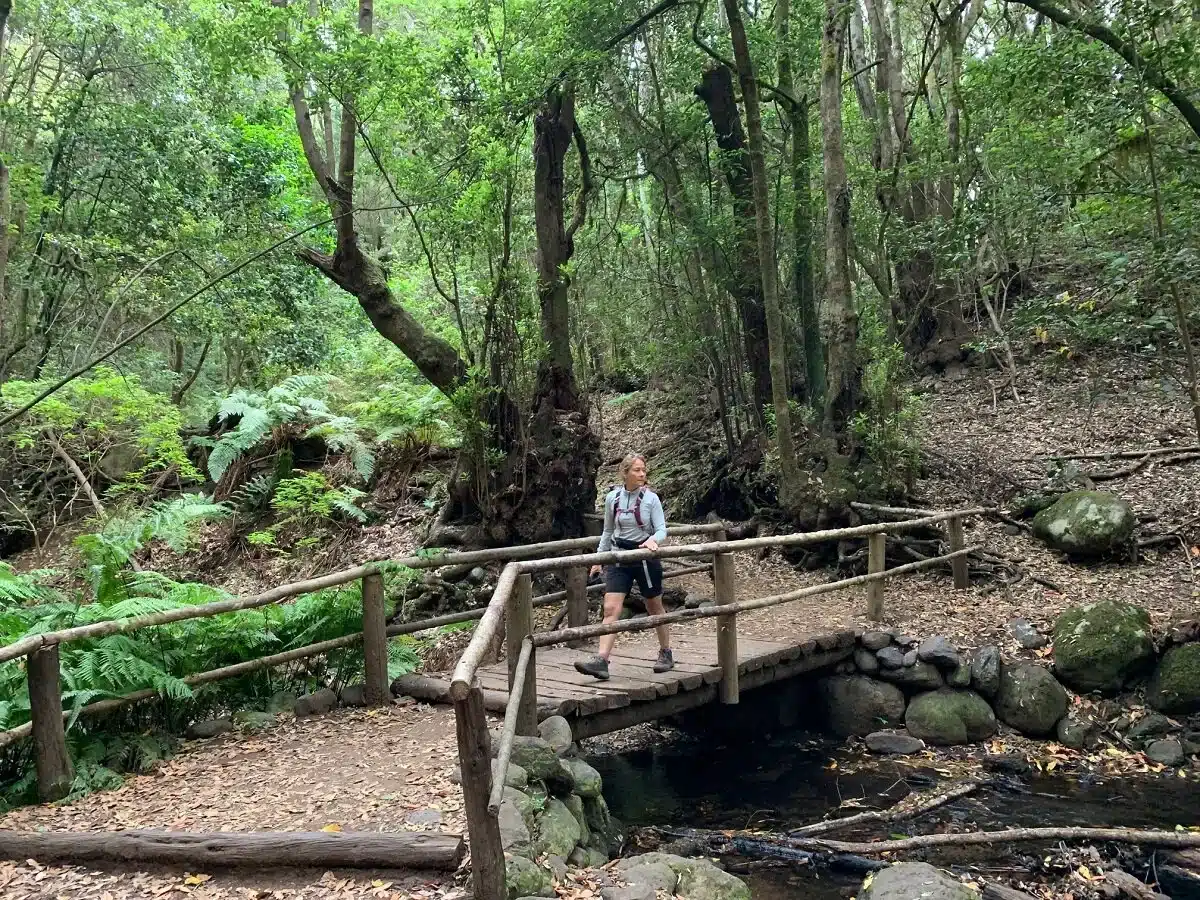
An often overlooked aspect for sustainable hiking trips 2026: long-distance hiking is inherently more sustainable than star hiking with daily car drives. Those who hike a route from place to place move exclusively under their own power through the landscape. There are no daily commutes to and from different starting points, as is common with base-camp hiking vacations.
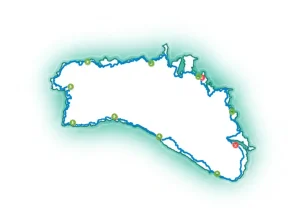
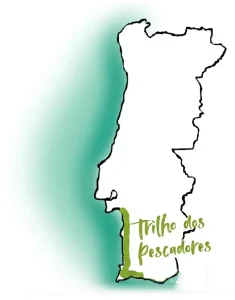
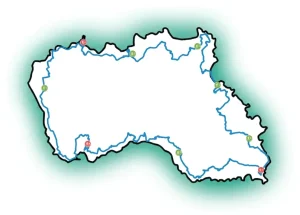
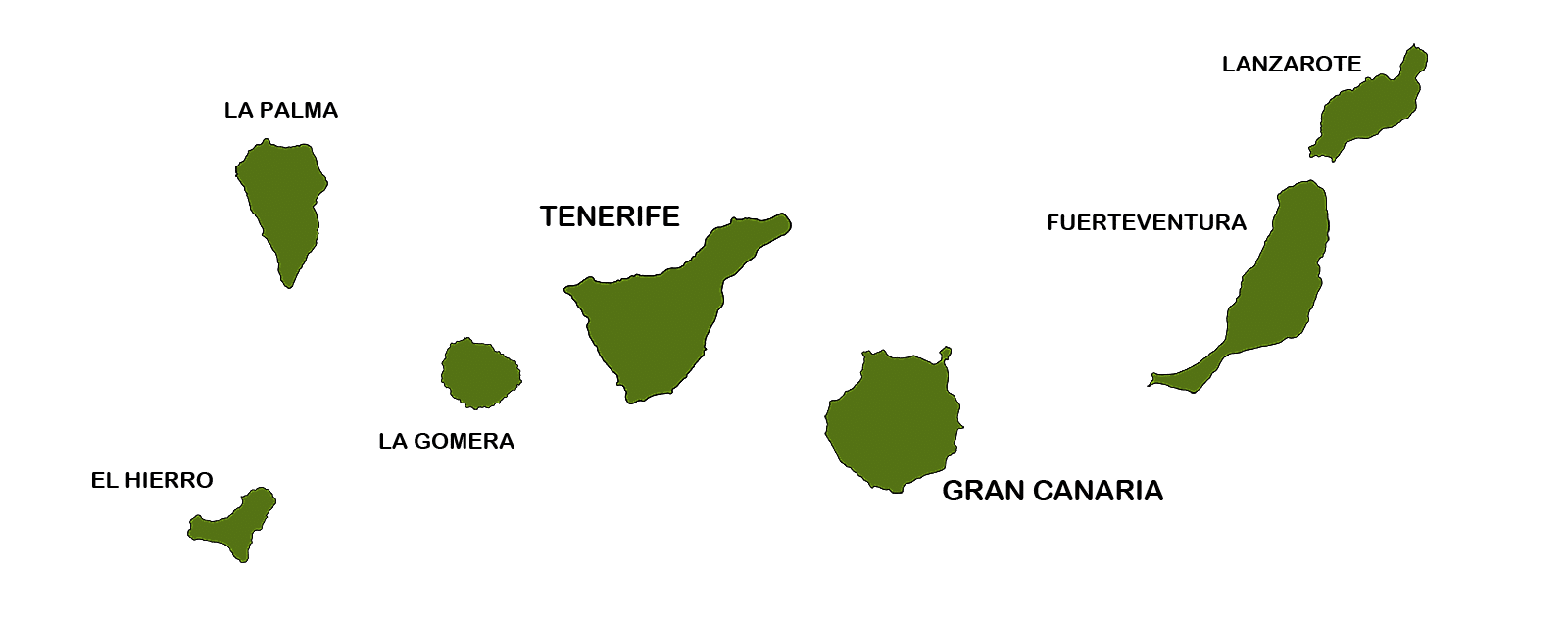
A long-distance trail like the GR 131 in the Canaries, the Fishermen’s Trail in Portugal, or the Cami de Cavalls on Menorca works exactly on this principle: you start in the morning and walk to the next accommodation on foot. No rental car, no daily transfers, no searching for parking at overcrowded trailheads.
There’s also a social effect: because stage hikers stay and eat in different towns, value creation spreads across many small businesses along the route – rather than concentrating at a single hotspot.
Regional accommodations and local economy
Where you stay determines who benefits from your trip. Small, family-run country hotels, guesthouses, and rural accommodations keep value creation in the region and often preserve traditional buildings and cultural landscapes.
Sustainable hiking trips 2026 therefore deliberately focus on accommodations along the route rather than large international chains. This also has practical advantages: you experience regional cuisine, meet locals, and often stay in homes with character and history.
Those planning their own trips can deliberately search for small, locally-run establishments. For organized trips, it’s worth asking whether the operator works with regional partners. NATOUR deliberately selects accommodations along routes from local, usually family-run businesses – a structural contribution to the regional economy that is also reflected in the travel experience.
Responsible travel: nature and trail conservation
Respectful treatment of nature is the most visible part of sustainable hiking – and the one everyone can directly influence. The basic rules are simple, but are frequently ignored, especially on popular routes.
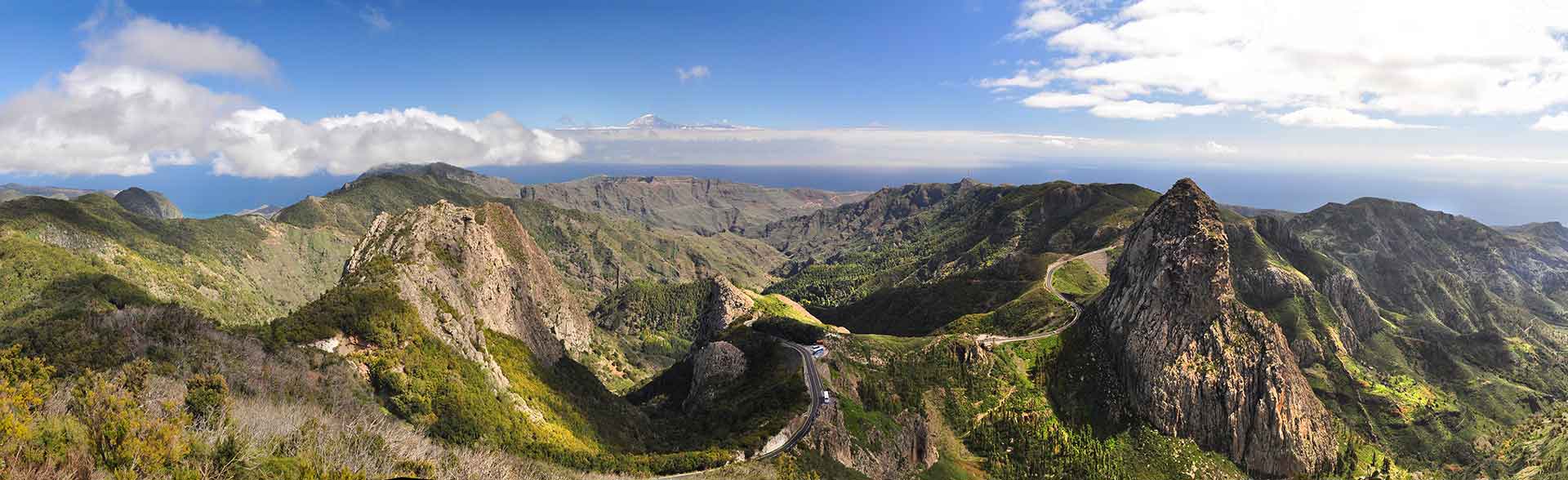
Staying on marked trails protects sensitive vegetation and prevents erosion, especially in sensitive ecosystems like the laurel forests of the Canaries or coastal dune landscapes. Trash must be taken back in your backpack without exception – including organic waste like fruit peels, which decompose much more slowly in dry climates than expected. Wildlife and livestock should not be disturbed, and gates should be closed behind you.
In national parks and protected areas, additional rules often apply – from wild camping bans to mandatory trails. Informing yourself beforehand means not only hiking legally, but also with a clear conscience. This consideration is not a limitation, but part of a conscious nature experience.
The right season: low season as an opportunity
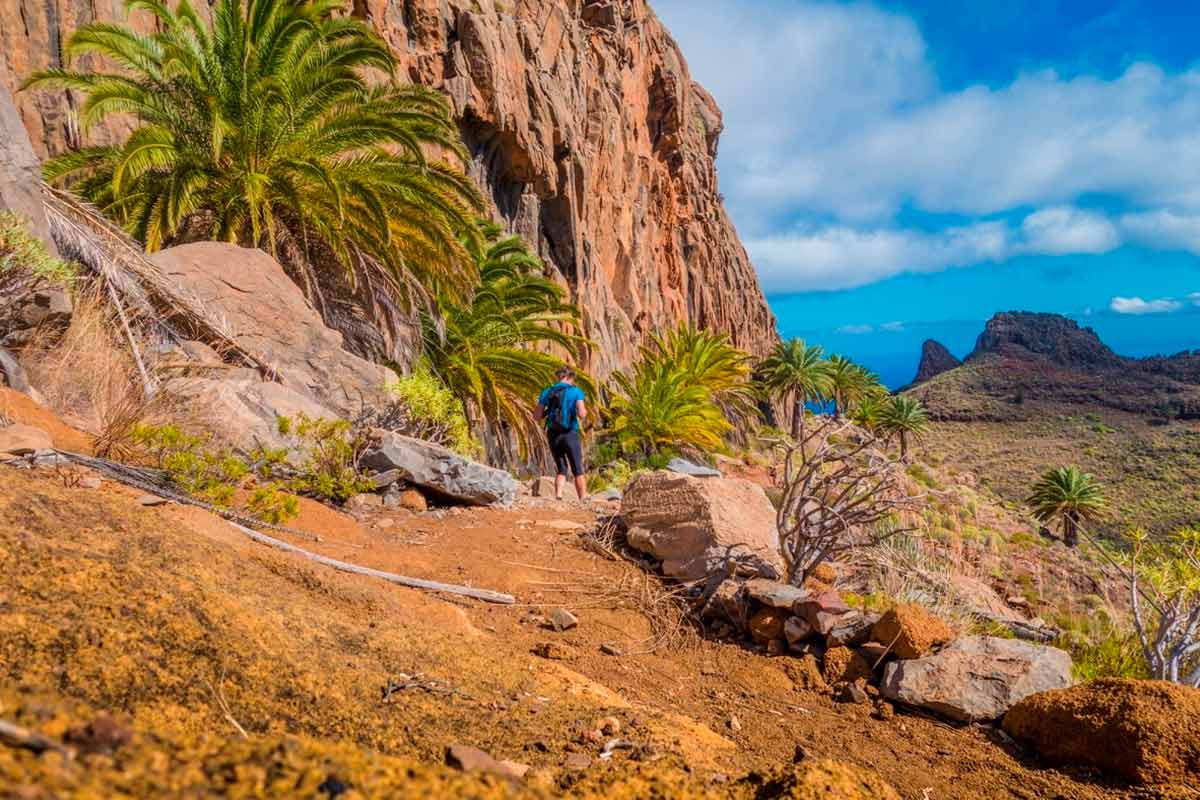
An underrated factor in sustainable travel is timing. Those who hike in low season relieve overcrowded regions, find quieter trails, and help ensure that tourism infrastructure is utilized year-round – an important factor for the economic stability of small towns.
For many hiking destinations, low season is actually the most beautiful time. The Canaries, for example, are ideal for hiking in the winter months, while they become hot in midsummer. Mallorca and Mediterranean islands show themselves at their best in spring and fall – mild, green, and much quieter than in July and August. Consciously chosen travel times are therefore a double benefit: for the region and for your own experience.
Packing and equipment sustainably
Equipment also plays a role. Durable, repairable hiking gear is more sustainable than cheap products that need to be replaced quickly. Good hiking boots, a solid rain jacket, and a comfortable backpack can accompany you for many years and trips.
When packing, less is more. Those who travel light not only save energy on the stages but also reduce the weight being transported – especially relevant where luggage transfer is involved. A refillable water bottle instead of single-use plastic, solid soap instead of travel bottles, and a small container for supplies avoid unnecessary waste on the trail.
What NATOUR offers for sustainable hiking trips
Many principles of sustainable travel are already built into thoughtfully planned stage hikes. NATOUR organizes self-guided hiking trips based on exactly these foundations: routes from place to place that can be managed under your own power, regional and usually family-run accommodations, luggage transfer instead of individual drives, and the opportunity to travel specifically in low season.
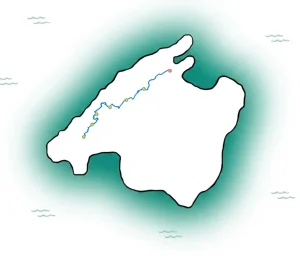
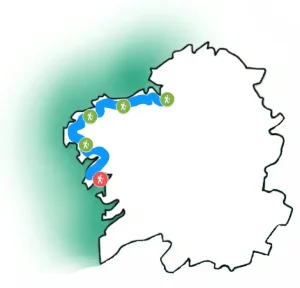
Those planning sustainable hiking trips 2026 will find in stage routes like the GR 131 in the Canaries, the Rota Vicentina in Portugal, or the GR 221 on Mallorca destinations that naturally combine conscious travel with intense nature experiences. An overview of all routes can be found under self-guided hiking trips.
Frequently asked questions about sustainable hiking trips 2026
What makes a hiking trip sustainable?
Decisive is the interplay of travel, accommodation, local movement, and local value creation. Hiking itself is emission-free – the biggest difference comes from conscious travel, regional accommodations, and choosing stage routes instead of car-based day trips.
Is long-distance hiking more sustainable than a base-camp hiking vacation?
Usually yes. On stage hikes from place to place, you move exclusively on foot and save the daily car drives to different starting points. Additionally, value creation spreads across multiple towns along the route rather than concentrating at a single location.
How do I travel as sustainably as possible to a hiking trip?
For destinations in Central Europe, the train is often the best choice. For destinations requiring a flight, the principle is: travel less frequently, but for longer. A longer stage hike has a better carbon footprint per travel day than several short trips.
Why is low season the more sustainable travel time?
Those who hike in low season relieve overcrowded regions and contribute to year-round occupancy of small businesses. For many destinations like the Canaries or Mallorca, low season is anyway the most pleasant hiking season – milder, greener, and quieter.
Are organized hiking trips or self-planned tours more sustainable?
Both can be sustainable. What’s decisive is whether regional accommodations and local partners are involved. Well-organized trips often bundle these aspects already – from family-run accommodations to luggage transfer that replaces individual drives.
Which hiking destinations are particularly suitable in 2026 for sustainable travel?
Long-distance trails with good infrastructure and overnight options along the route are especially suitable – such as the GR 131 in the Canaries, the Rota Vicentina in Portugal, or the GR 221 on Mallorca. They enable hiking from place to place without daily transfers.
How do I plan sustainable hiking trips 2026 optimally?
Plan sustainable hiking trips 2026 optimally by:
(1) conscious travel by train or longer air journeys
(2) stage hikes instead of daily transfers
(3) regional accommodations
(4) traveling in low season.
This combination reduces your ecological footprint while you enjoy more intense nature experiences.
 You might also be interested in:
 86,2 km ·
  6 Stages ·
  8 Days