17 Jun Hiking the GR 131 Canary Islands – All Stages, Islands & Tips
Hiking the GR 131 Canary Islands in full – what does that actually mean?
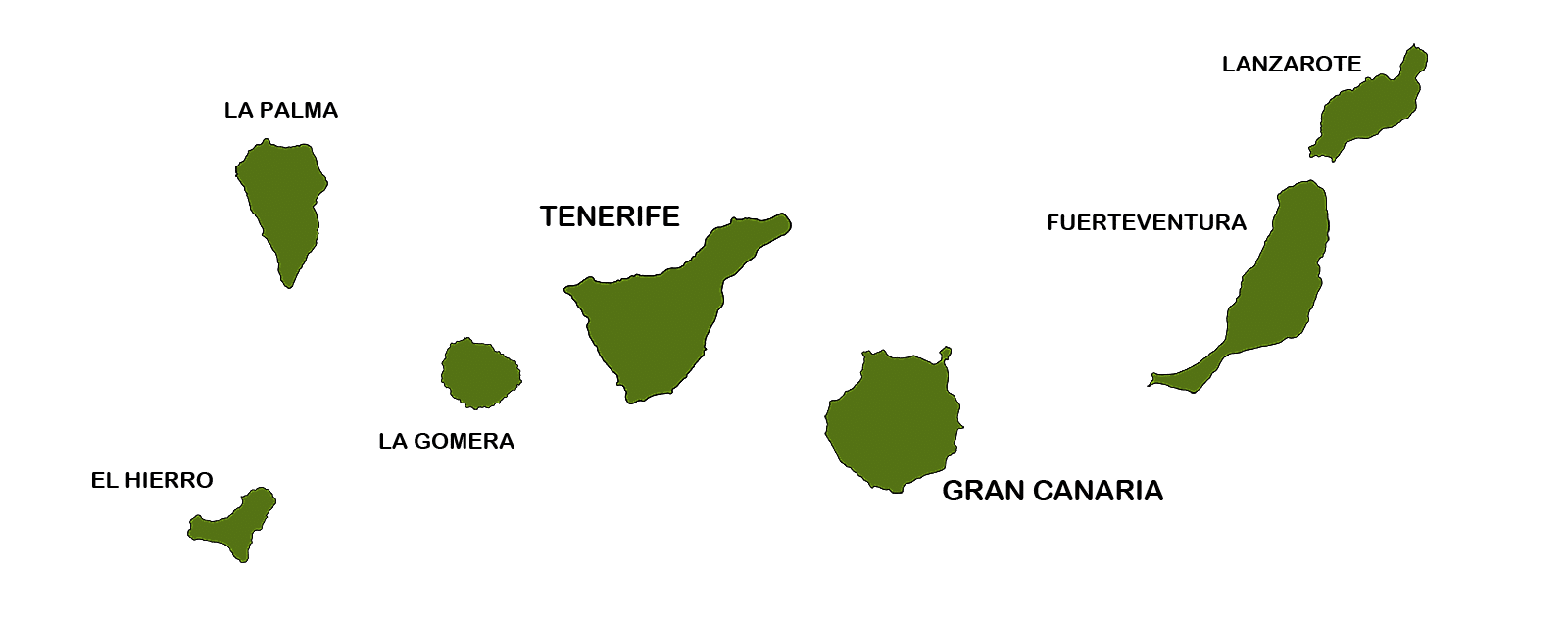
 The GR 131 is the great inter-island long-distance trail of the Canary Islands. It does not follow a single linear route, but links several sections across different islands. Hiking the GR 131 in full usually means completing all official stages from Lanzarote through Fuerteventura, Gran Canaria, Tenerife, La Gomera, La Palma and El Hierro — including the necessary ferry crossings and transfer stages.
What makes it special is obvious: you are not walking through the same landscape for weeks on end, but through seven very different island worlds. Lanzarote feels wide, dry and almost archaic. Fuerteventura is open, wind-shaped and surprisingly remote. Gran Canaria and Tenerife become more alpine, steeper and more demanding in terms of fitness. La Gomera, La Palma and El Hierro add yet another layer of depth to the experience — with laurel forest, volcanic ridges and often spectacular ascents and descents.
One important point: hiking it in full does not automatically mean doing it all in one go. For many hikers, it makes more sense to split the route into travel blocks or island sections.
Who is the complete GR 131 Canary Islands suited for?
Hiking the GR 131 in full is ideal for experienced hikers who want to be on the road for several weeks and enjoy changing landscapes. Those who already know multi-day tours, can comfortably walk six to eight hours a day and handle long ascents bring a very solid foundation.
The complete route is less suitable for anyone looking for an even, gentle long-distance walk. The GR 131 is not consistently technically difficult, but it is demanding in total. Elevation gain, heat, wind, long stages and island changes all require flexibility. On the western islands there are also some very steep sections that call for sure-footedness.
That is precisely why an honest self-assessment matters. Those who are ambitious but do not want to walk four or five weeks in a row often do better by combining selected islands rather than trying to do everything in one trip.
GR 131 stages: island by island, not just counting kilometres
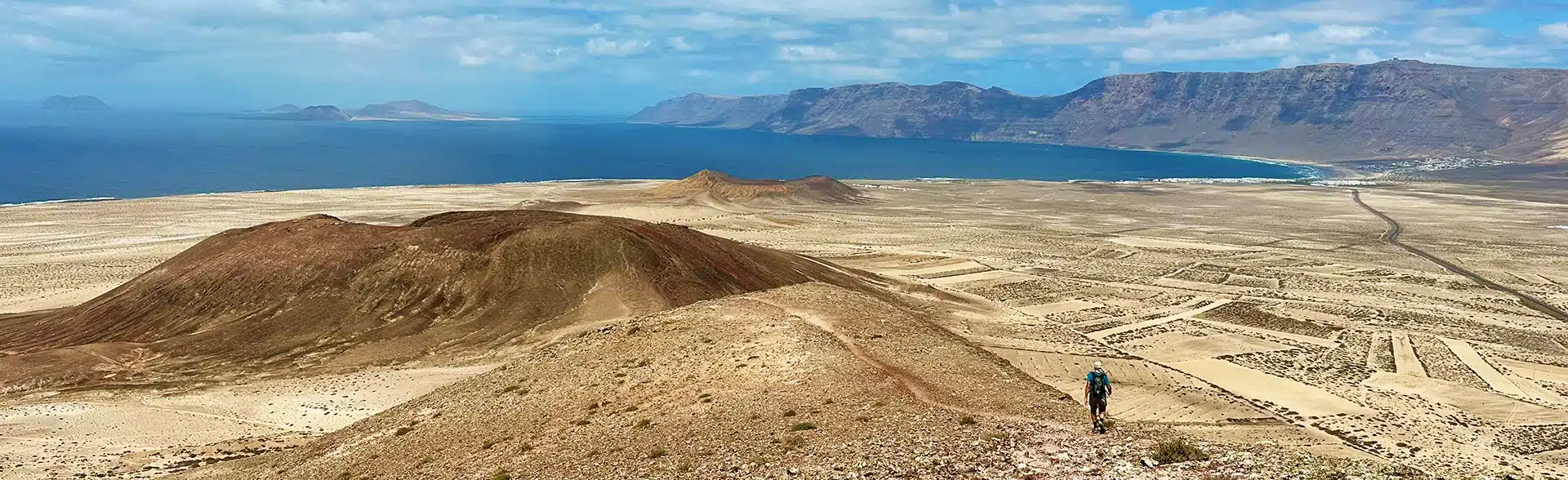
 On paper it sounds straightforward to connect all the sections one after another. In practice, a good order is crucial. Many hikers start on Lanzarote and continue westward, because the island characters build dramatically almost on their own. The dry, open volcanic landscapes in the east work like an overture. From there, the relief, vegetation and elevation differences grow more intense.
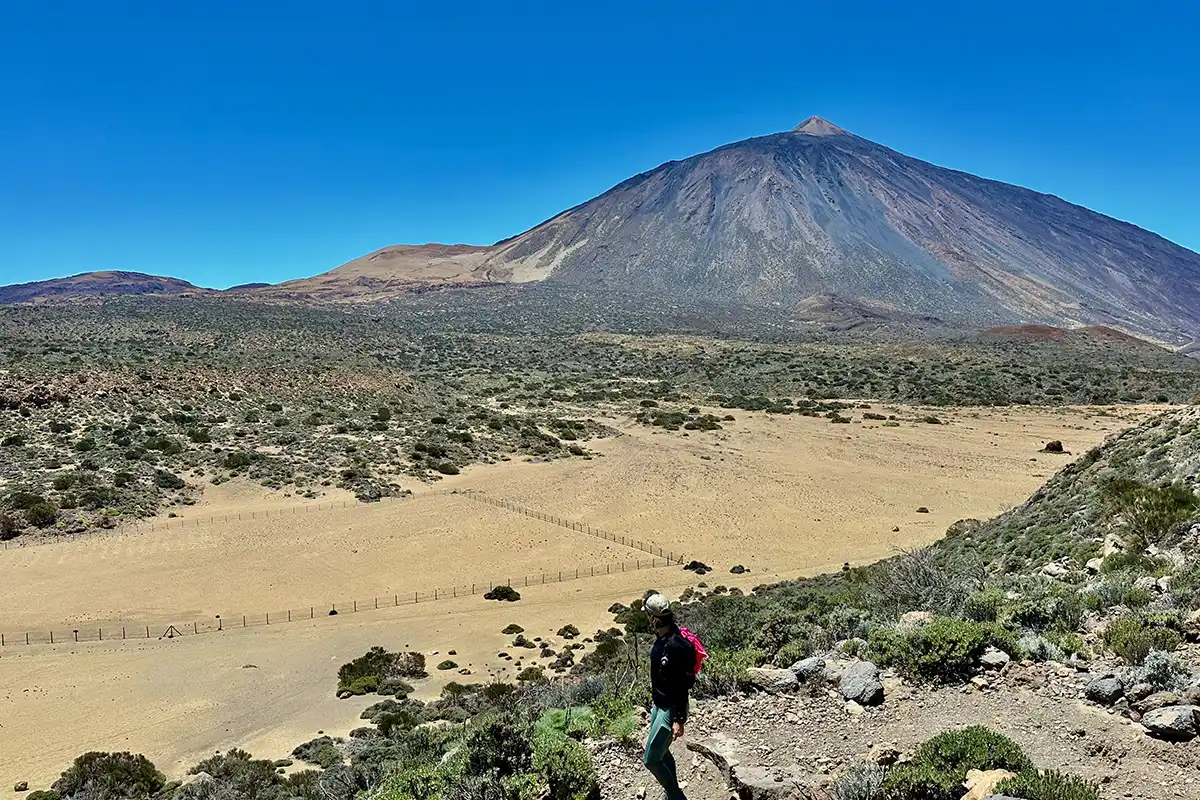
Lanzarote and Fuerteventura demand less extreme elevation gain, but call for endurance, tolerance for wind and a good feel for open landscapes. On Gran Canaria and Tenerife the focus shifts: fitness and altitude become the key factors. The western islands feel even more unspoilt, but are logistically more demanding.
What counts is therefore not just the distance of a stage, but its effect within the overall sequence. A seemingly short mountain stage after a travel day can be more tiring than a long coastal section with an even profile.
How long does it take to hike the GR 131 Canary Islands in full?
That depends a great deal on how you cut your stages and how many buffer or rest days you plan. Pure walking days usually add up to roughly three to four weeks. Ferry crossings, transfers and overnight stays at key points all come on top. Realistically, you should budget 24 to 35 days for the complete GR 131.
Those who travel at a sporty pace can compress individual sections. That saves time but makes the trip significantly harder. Anyone who also wants to enjoy the islands should plan in some breathing room. Especially when weather changes, ferry times or demanding elevation stages are involved, an extra buffer day is worth its weight in gold.
Where the GR 131 Canary Islands becomes particularly demanding
The biggest underestimation usually happens with the elevation. On maps, some stages look moderate because the distance in kilometres seems manageable. Out on the trail, however, long climbs, stony paths and often direct descents all the way to the coast or into deep valleys add up.
Especially on Tenerife, La Palma and El Hierro, do not focus only on length. Weather and terrain play a major role too. Sun can quickly drain your energy in open country, fog complicates navigation at higher elevations, and ten kilometres on volcanic ground feel very different from ten kilometres on forest paths.
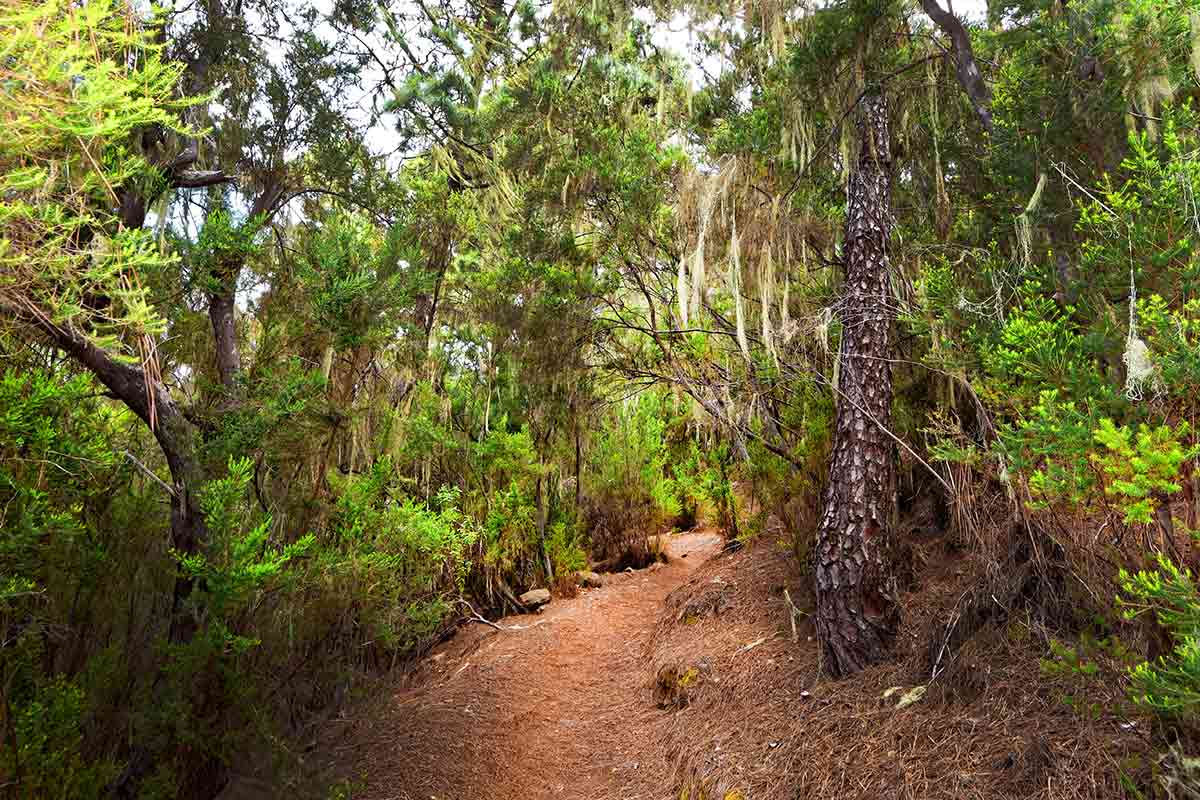
Add to this the transition between micro-climate zones: cool in the cloud forest in the morning, dry and warm on the ridge at midday, windy at the pass in the afternoon — these shifts are what make the route so compelling, but they also call for the right clothing and realistic daily planning.
Best time of year to hike the complete GR 131 Canary Islands
 If you want to hike the GR 131 in full, the shoulder seasons are usually the most pleasant. Spring and autumn in particular tend to offer the best balance of stable conditions, comfortable temperatures and good visibility. Winter can be very enjoyable on the eastern islands, but considerably more changeable at higher elevations on the central and western islands.
Summer is not ruled out entirely, but it demands greater heat tolerance and very early starts. On Lanzarote, Fuerteventura and at lower elevations on other islands, the sun can be relentless. At the same time, higher elevations are not automatically cool.
There is therefore no single perfect season for all the islands at once. That is exactly why the best travel period is always also a question of your personal profile.
Logistics: the real key to a relaxed long-distance hike
The walking is only one half of the equation. The other is logistics. Ferry connections, luggage organisation, transfers to stage starting points and the choice of suitable accommodation all determine whether the trip feels free or laborious.
When hiking the GR 131 in full, the organisation is more demanding than on many continental long-distance trails. Not every stage ends where you will automatically find good accommodation. Not every ferry runs on your ideal schedule. And not every island change fits neatly with your walking pace.
It therefore often makes sense to approach the route as an organised individual trip. When accommodation, luggage transfer, GPS data and necessary transfers are already carefully coordinated, your mind stays on the trail — not on timetables and reservations.
Accommodation, luggage and daily rhythm on the GR 131 Canary Islands
Anyone spending several weeks in the Canary Islands quickly feels how much a good daily structure matters. Light luggage transforms the trip enormously. A long ascent on La Palma or Tenerife simply feels different with a day pack than with a full trekking backpack.
The choice of accommodation also shapes the experience. Small guesthouses, rural houses or well-placed hotels can carry the rhythm of the trip when they match the stage. More important than the view is often being able to arrive without complications after a long day’s walking, find something to eat, and set off again the next morning without detours.
GR 131 in full or individual island sections – which is better?
That depends on what you are looking for. The complete route is wonderful if you want to experience the Canary Islands in their full diversity. It has a narrative power that individual island trips cannot fully replicate. You feel development, comparison and contrast — and that is exactly what stays with you for a long time.
If, on the other hand, you are primarily looking for intensive walking days with as little organisational effort as possible, an island section may be the smarter choice. Gran Canaria, Tenerife or La Palma each work very well as a self-contained long-distance walking trip.
In our view, this is not an either-or. Many experienced hikers approach the GR 131 Canary Islands in stages, building their personal overall project across several trips over the years. That too is a complete way of walking — just with more space, and often more enjoyment.
Our honest assessment: hiking the GR 131 in full
The GR 131 is one of the most exciting long-distance hikes in Europe, precisely because it does not come polished and uniform. It demands adaptability, fitness and a genuine appetite for change. In return it gives you very different island experiences within a single great route.
Those who enjoy travelling independently but do not want to wrestle personally with every ferry timetable and piece of luggage are particularly well served by a cleanly organised concept. That is also where the strength of specialised operators like NATOUR lies: you keep the freedom of individual hiking without having to carry all the exhausting background logistics on your own.
If you plan with genuine respect for the distance and the island changes, the wish to hike the GR 131 in full will not become a checklist — but a journey that leaves every section with its own colour in your memory.
Frequently asked questions about hiking the GR 131 in full
How many kilometres does the GR 131 cover in total?
Across all seven islands the GR 131 covers several hundred kilometres in total. Per island, depending on the variant, it is between 75 and 120 km. The exact total distance depends on which variants and connecting stages you choose. More important than the raw number of kilometres are the elevation gain and the time needed per island.
Do you have to hike the GR 131 all in one go?
No. Many experienced hikers split the GR 131 across several trips — island by island over several years. That is not a compromise; it is often the smarter decision. You can experience each island at its own pace and have time to recover between trips.
How difficult is the GR 131 on the different islands?
It varies considerably. Lanzarote and Fuerteventura are more accessible in terms of fitness, but demand wind tolerance and endurance in open terrain. Gran Canaria and Tenerife are more alpine and physically more demanding. La Gomera, La Palma and El Hierro require sure-footedness and have some very steep sections. Overall, the GR 131 presupposes solid hiking experience.
When is the best time to hike the GR 131 in the Canary Islands?
Spring (March to May) and autumn (October to November) offer the best balance of pleasant temperatures, stable weather and good visibility. Winter is often agreeable on the eastern islands but more changeable at higher elevations. Summer is possible but calls for early starts and greater heat tolerance.
Do you need an organised trip for the GR 131 Canary Islands, or can you plan it yourself?
Both are possible. Those with extensive planning experience can organise the GR 131 Canary Islands independently. For most hikers, however, a professionally prepared concept makes more sense: ferry times, stage cuts, luggage transfer and accommodation all need to be coordinated in a complex way. An organised individual trip saves time, avoids mistakes and keeps your mind free for the walking.
Is luggage transfer worth it on the GR 131?
Yes, absolutely. Especially on the more physically demanding islands such as Tenerife, La Palma or El Hierro, a light day pack makes an enormous difference. Organised luggage transfer between stage locations is one of the most effective measures for truly enjoying the long-distance hike.
 You might also be interested in:
 86,2 km ·
  6 Stages ·
  8 Days