

8 days
Camí de Cavalls – North
·
 98.8 km ·
  in 6 Stages ·
  8 days
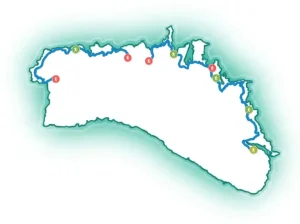
The Camí de Cavalls North is a coastal journey through Menorca that begins in Maó and ends in Ciutadella. It passes through unspoilt beaches, spectacular cliffs, turquoise coves and Roman-military historical remains. Stages range from 11–21 km, crossing wooded landscapes, farmland and sheltered inlets with magnificent views of the Mediterranean.
▸ Includes
 +
+  |
|  |
|  |
| 
from 865 €
8 days
Camí de Cavalls – South
·
90.2 km · in 6 Stages · 8 days
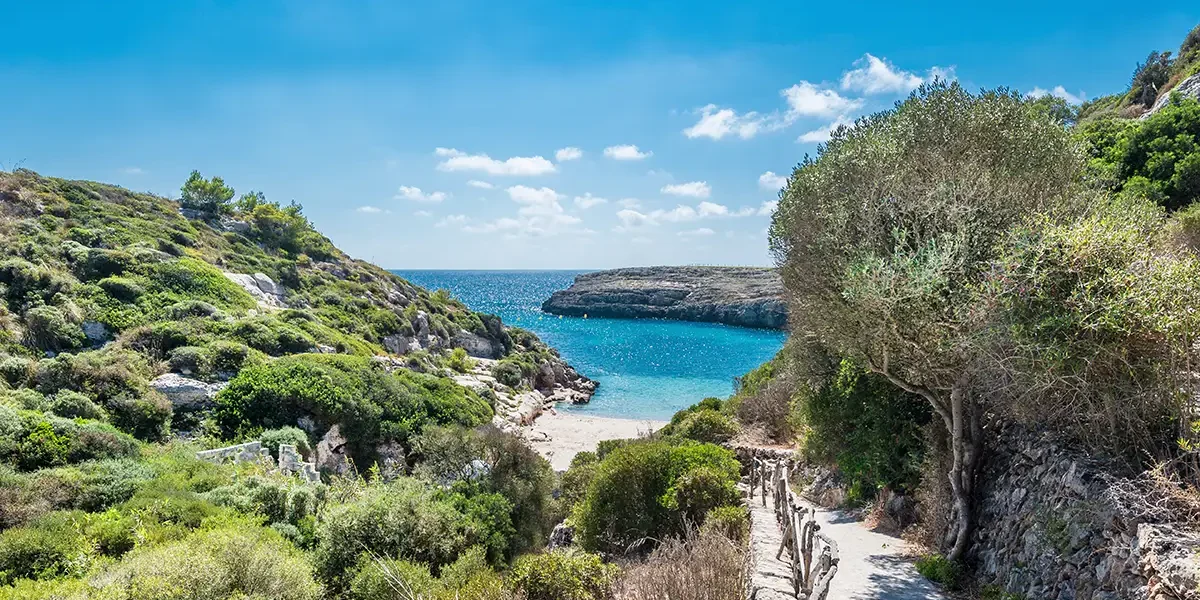
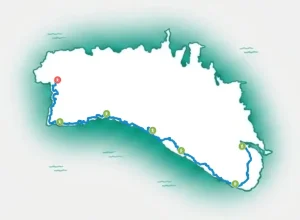
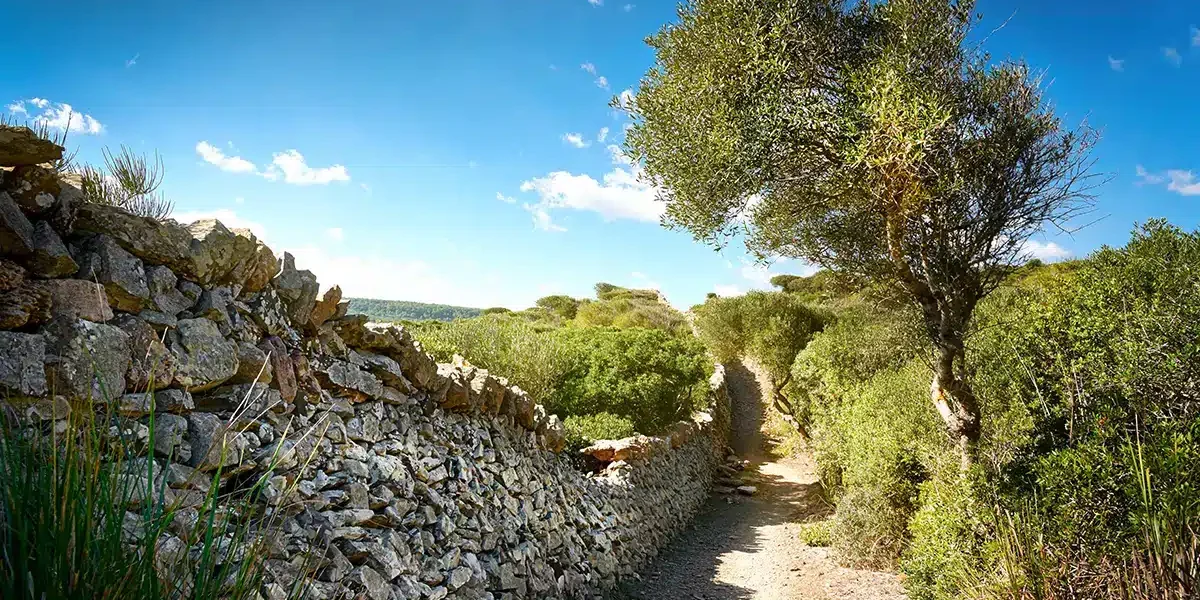
The Camí de Cavalls South follows the southern coast of Menorca from Maó to Ciutadella. It crosses paradise beaches, turquoise coves and wild cliffs with early Christian remains. The 6 stages (13–17 km) wind through scrubland, abandoned fields and sheltered inlets, offering swims in crystal-clear Mediterranean waters amid unspoilt, untouched landscapes.
▸ Includes
+ | |
from 844 €
10 or 12 days
Camí de Cavalls: 8 | 10 stages
·
180.2 km · in 8-10 Stages · 10-12 days
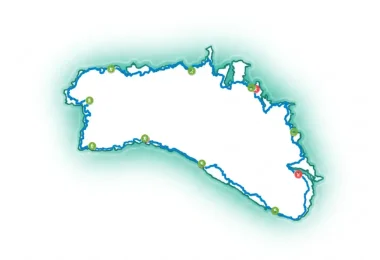
Full circumnavigation of Menorca departing from Maó. Covers the north coast (Cap Favàritx, Fornells) and south coast (Cala Galdana, Son Bou, Cala Morell), crossing turquoise beaches, paradise coves and Roman historical remains. Stages of 14–35 km with moderate to demanding elevation changes, offering a complete experience of the island across wild, untouched and unique Mediterranean landscapes.
▸ Includes
+ | | |
from 987 €
7 days
Camí de Cavalls – 5 Stages
·
83.8 km · in 5 Stages · 7 days
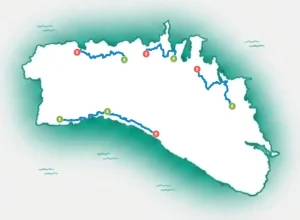
An abridged traverse of Menorca: Es Grau→Cala Galdana. Combines the north coast (Cap Favàritx, Roman encampments, Binimel-là) and south (Cala Morell, turquoise coves, Son Bou). Stages of 14–22 km with moderate elevation change crossing paradise beaches, spectacular cliffs and unspoilt Mediterranean pine landscapes. Transfers included. A condensed yet complete experience of Menorca.
▸ Includes
+ | | |
from 822 €

8 days
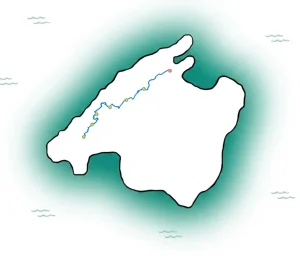
Sierra de Tramuntana GR 221
·
86.2 km · in 6 Stages · 8 days
UNESCO Heritage in the northwest of Mallorca. The Sierra de Tramuntana combines rugged peaks, stone villages, centuries-old holm oaks and steep cliffs. Follow the legendary Ruta de Pedra en Sec connecting Deià, Valldemossa and Sóller, with historic terraces, monasteries and ancient irrigation systems. Spectacular Mediterranean views from Puig Major. An inspiring destination for artists and writers, with an unchanged magical atmosphere.
▸ Includes
+ | | |
from 860 €


Stay in charming hotels
We choose accommodations with character, in areas away from conventional tourism but with a genuine local atmosphere

Spectacular routes
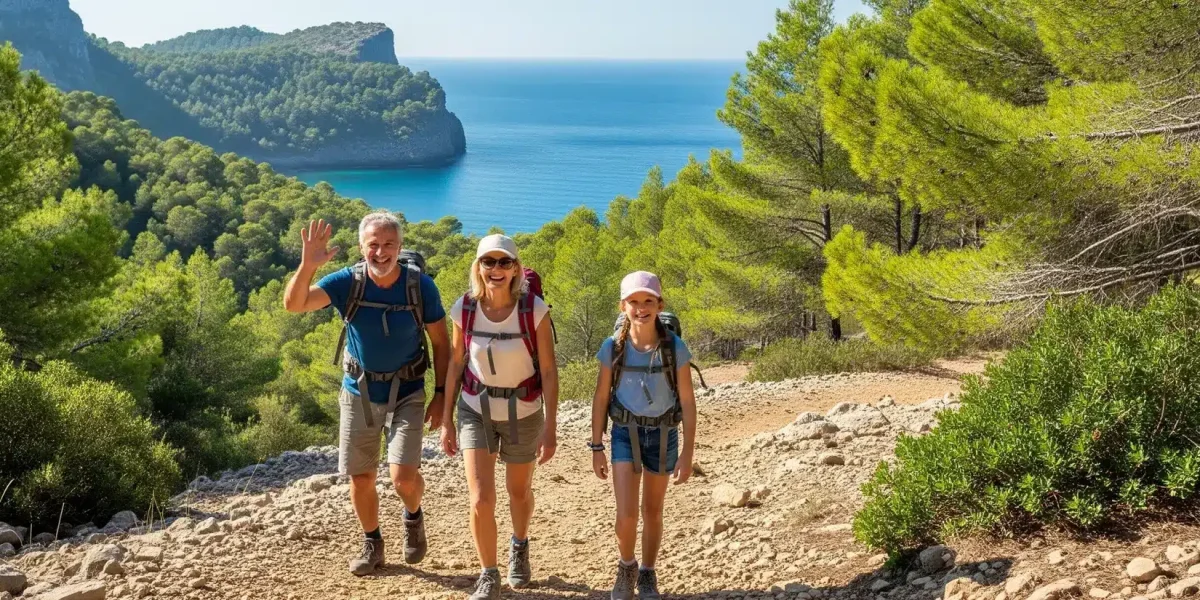
Walking the most spectacular routes on each island, along the coast or inland
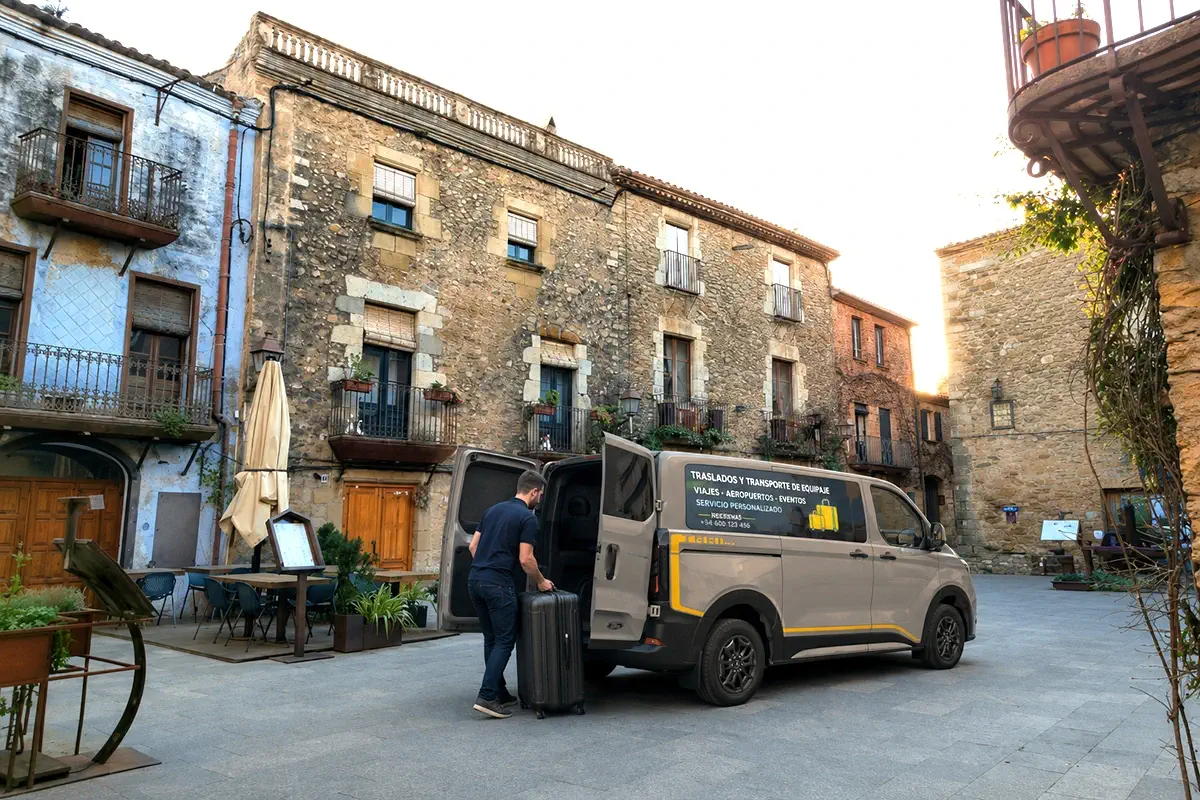
Luggage transfers
Forget about your luggage and walk in comfort. We move it from accommodation to accommodation.

GPS Navigation
Through our app you can follow the trail without fear of getting lost. Includes maps and information.

Natour reviews and comments on Google
What do our clients say about us?





Any questions?
We are here to help and happy to answer any query you may have. Ask us anything!
A different itinerary?
If you are thinking of doing the Camí de Cavalls in Menorca or the Sierra de Tramuntana in a different way or as a group, ask us about a programme tailored to your needs.

We offer you the best price and the best conditions
REQUEST MORE INFORMATION
…frequently asked questions
Camí de Cavalls or GR 221 — which one should I choose?
They offer very different experiences. The Camí de Cavalls (Menorca) is a coastal trail: gentle-to-moderate walking past turquoise coves, beaches and cliffs, ideal if you love the sea and want swims along the way. The GR 221 (Mallorca) is a mountain route through the UNESCO-listed Serra de Tramuntana: rugged peaks, ancient stone paths and villages like Deià, Valldemossa and Sóller. Choose the coast for relaxed scenery-and-swimming days, the mountains for a more dramatic, physical walk — or combine both islands in one trip.
How do I get to Menorca and Mallorca from the UK and elsewhere in Europe?
Both islands have international airports with direct flights from many UK and European cities — Palma de Mallorca year-round, and Maó (Menorca) with a wide seasonal schedule plus year-round connections via Barcelona or Palma. Our Menorca itineraries start in Maó, a short transfer from the airport, and the GR 221 route is easily reached from Palma. Frequent ferries also link Barcelona, Mallorca and Menorca if you prefer to travel by sea.
When is the best time to walk in the Balearic Islands?
Spring (March to May) and autumn (October and November) offer the ideal combination: pleasant walking temperatures, a sea still warm enough for swimming in autumn, and good accommodation availability. July and August are best avoided — intense heat, peak-season crowds and high prices — while in mid-winter many rural hotels close.
How fit do I need to be?
The Camí de Cavalls is graded low to moderate: no big climbs, with daily stages of roughly 11–21 km, so any reasonably active walker can enjoy it. The GR 221 is more demanding, with mountain ascents and rocky terrain that call for some hill-walking experience. Tell us about your walking background and we'll recommend the itinerary — and the number of stages — that fits you best before you book.
Can I swim during the walking stages?
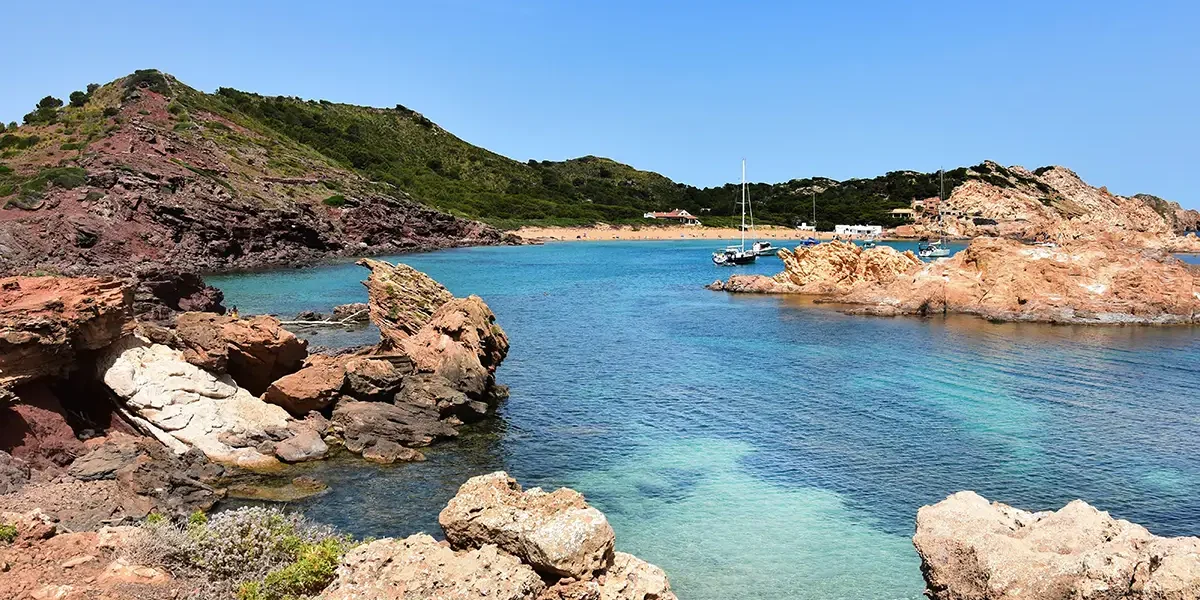
On the Camí de Cavalls, absolutely — it's one of the highlights. Many stages pass right by crystal-clear coves such as Cala Macarella, Cala Turqueta and Cala Pregonda, perfect for a mid-walk dip. Pack a swimsuit and a light towel in your daypack, along with sun protection and plenty of water for the exposed coastal sections.
How does the self-guided format work? Will I get lost without a guide?
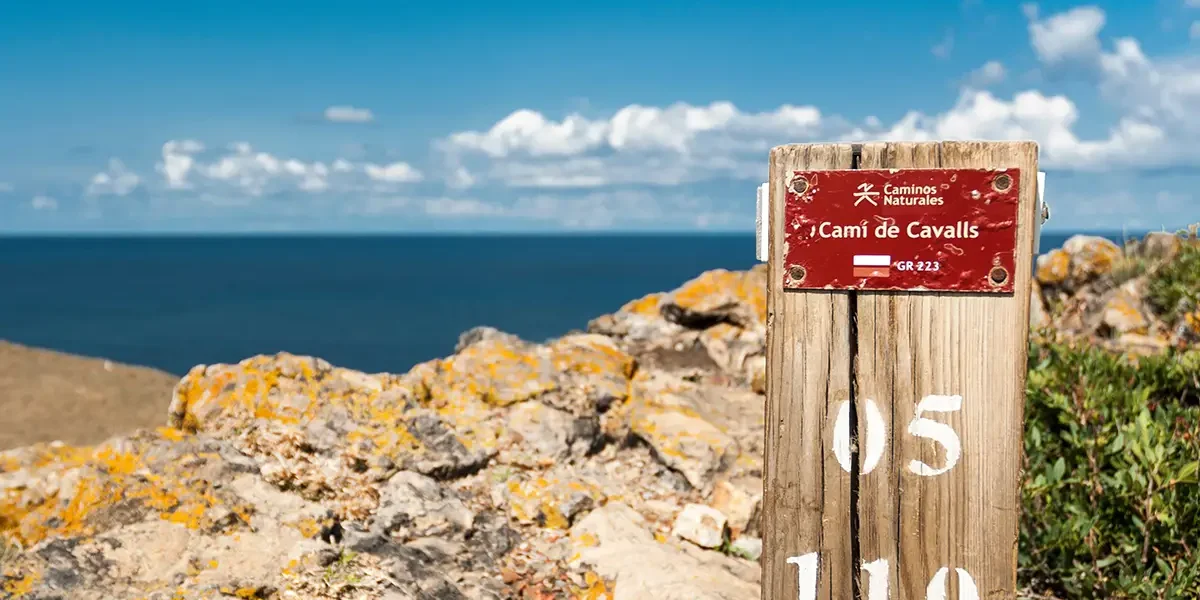
You walk independently, at your own pace, while we organise everything behind the scenes: hand-picked accommodation, daily luggage transfers and our navigation app with the exact GPS tracks, which works completely offline. The Camí de Cavalls is also a well-waymarked official trail (GR 223), and the GR 221 follows the historic Ruta de Pedra en Sec — with the app and waymarks combined, navigation is straightforward even for first-time self-guided walkers.
Where will I stay?
In small, characterful accommodation chosen by our team: rural hotels, agroturismos and village guesthouses in Menorca, and charming small hotels in the stone villages of the Tramuntana. All rooms have private bathrooms and breakfast is included, and your luggage travels ahead of you from one accommodation to the next while you walk with just a daypack.
How many days do I need?
For Menorca: the full circuit of the island takes 10–12 days (8 or 10 walking stages, 180 km), while the North route, the South route (both 8 days) or the 5-stage traverse (7 days) fit comfortably into a one-week holiday. For Mallorca, the GR 221 programme covers 86 km in 6 stages over 8 days. All itineraries run on the dates you choose.
Do I need to speak Spanish?
No. English is widely spoken in hotels and restaurants across both islands, all your route documentation and our app are available in English, and our team provides support in English throughout your trip — from your first enquiry to the assistance phone line while you're on the trail.
Can I combine Menorca and Mallorca in a single trip?
Yes — the islands are connected by short flights and ferries, making a two-island walking holiday very doable: for example, a week on the Camí de Cavalls followed by the Serra de Tramuntana. Tell us how many days you have and we'll design a tailor-made combination at the best price.
If you have any further questions that haven’t been covered here, please have a look at the general FAQs section or get in touch with our team. We have extensive knowledge of the Balearic Islands and the many opportunities they offer for hiking at your own pace.

Menorca, Pearl of the Mediterranean
Menorca & Mallorca: two Balearic islands, two very different walks
Menorca was designated a UNESCO Biosphere Reserve on October 8, 1993.
Menorca was declared a Biosphere Reserve by UNESCO on 8 October 1993. This designation highlights the island’s natural and cultural richness and its commitment to sustainable development.
Sister islands, yet barely on speaking terms when it comes to scenery: Menorca is a slow, horizontal island of turquoise coves and prehistoric stones, while Mallorca rears up into the grey limestone peaks of the Serra de Tramuntana. Between them they offer two of the Mediterranean’s great walking routes — the Camí de Cavalls circling one island, the GR 221 crossing the mountains of the other — and the rare luxury of choosing between coast and summit without leaving the archipelago.
Paths with history stamped in their passport: The Camí de Cavalls — the “Horse Path” — dates back to the fourteenth century, when mounted patrols circled Menorca watching for corsairs on the horizon. The British, who ruled the island for much of the eighteenth century, kept the path in service and left their own curious legacy behind: sash windows in Maó and a gin-distilling tradition that thrives to this day. After decades of neglect, the trail was lovingly restored and reopened in 2010 as the GR 223: 185 km of coastal path, all the way round. Mallorca’s GR 221 tells an older story still — the Ruta de Pedra en Sec, or Dry Stone Route, follows centuries-old cobbled ways built by charcoal burners, olive farmers and pilgrims, through a mountain landscape so remarkable that UNESCO inscribed the entire Serra de Tramuntana as a World Heritage cultural landscape.
 Menorca: the unhurried island: Menorca does everything at its own pace — which is precisely its charm. A UNESCO Biosphere Reserve since 1993, the island wraps the Camí de Cavalls around wetlands, dunes, wild north-coast cliffs sculpted by the tramuntana wind, and the south’s famous string of white-sand coves. Along the way you’ll pass talayots, taulas and navetas — mysterious Bronze Age monuments so singular that Talayotic Menorca joined the World Heritage list in its own right. Walk it in full, split it north and south, or take the five-stage traverse: however you slice it, the sea keeps you company at every step.
Mallorca: the vertical island: Turn to Mallorca and the walking changes register entirely. The GR 221 threads the Serra de Tramuntana from stone village to stone village: Valldemossa, where Chopin and George Sand spent their famous winter; Deià, where the English poet Robert Graves lived, wrote and lies buried in the hilltop churchyard; and Sóller, sitting in its valley of orange groves. Between the villages, the path climbs on ancient cobbles past olive terraces a thousand years old, mountain monasteries and ridgelines with the sea glittering far below — a route many walkers rank among Europe’s finest week-long journeys.
Two climates, one perfect season: The Balearic climate is kind to walkers — with caveats worth knowing. Spring (March to May) and autumn (October and November) bring ideal temperatures on both islands, and in autumn the sea is still warm from summer. High summer is best avoided: heat on the trails, crowds in the coves. Winter is quiet and often beautiful, though the tramuntana can blow hard on Menorca’s north coast and across Mallorca’s high ground — the mountain range is, after all, named after the wind.
Practical tips for the Balearics: ▸ Footwear: trainers or trail shoes will do for the Camí de Cavalls; the GR 221’s rocky staircases call for proper hiking boots — and poles are a knee-saver on the descents.
▸ Water and sun: carry plenty of both protection and supply; the coastal stages especially offer little shade.
▸ Navigation: both routes are well waymarked, and our GPS app with offline maps keeps you on track through the wilder stretches.
Walk gently and both islands repay you tenfold. Whether you circle Menorca cove by cove or climb Mallorca village by village — or, better still, combine the two — the Balearic Islands have a way of turning one walking holiday into a lifelong habit.
Menorca’s designation as a Biosphere Reserve not only recognises its natural and cultural values, but also promotes a model of development that balances conservation with the social and economic wellbeing of its inhabitants. This status helps to ensure that future generations can enjoy the island’s resources and beauty.
Camí de Cavalls – Natural Heritage: Today, the Camí de Cavalls is also valued for its ecological importance. The trail passes through protected natural areas, offering walkers spectacular views of the local flora and fauna. It is a green corridor connecting different ecosystems and landscapes across Menorca.
Medieval Origins of the Camí de Cavalls:
The origins of the Camí de Cavalls date back to the 14th century, during the occupation of the Kingdom of Aragon. It was established as a communication and defence route to protect the island from invaders and pirates.
The name Camí de Cavalls translates as “Path of Horses”, reflecting its original use by mounted soldiers who patrolled the coast.
Decline and Abandonment
Over the centuries, particularly during the 19th and early 20th century, the Camí de Cavalls fell into disuse. The modernisation of infrastructure and the development of new roads made the path less necessary for transport and defence. Much of the trail fell into disrepair, and some sections were even privatised or blocked by new construction.
Recovery Process – Initiatives of the 1990s
 The recovery of the Camí de Cavalls began in earnest in the 1990s, driven by growing environmental awareness and interest in sustainable tourism.
Civic and Political Mobilisation: Local organisations and groups of citizens began advocating for the restoration of the trail. In 1996, the Consell Insular de Menorca, the island’s local government, took the initiative to recover and reopen the path, keeping the name Camí de Cavalls.
Agreements and Expropriations: There was a lengthy process of negotiation and, in some cases, expropriation of private land that occupied sections of the trail. This process was complex and required a great deal of time and effort to resolve legal disputes and obtain the consent of landowners.
Restoration and Waymarking: Restoration work was carried out, including clearing and repairing the Camí de Cavalls, building bridges and boardwalks, and installing appropriate signage for hikers.
Official Opening and Current Use
The Camí de Cavalls was officially reopened in 2010. Today, the trail is divided into 20 stages and stretches approximately 185 kilometres around the island. It is used by hikers, cyclists and horse riders alike.