
12 Oct Seven Quiet Coastal Hikes to Discover Across Europe
Quiet coastal hikes happen where the path keeps going past the last village, the wind carries the noise away, and there is room between stages to simply look at the view. These seven routes show how different that experience can be: old fishermen’s trails, cliff paths, fragrant maquis scrub and small coves that never make it onto the tourist map. Quiet does not mean empty of people.
Even well-known coastal trails have popular sections, holiday peaks and busier villages. Travellers who avoid school holidays, choose their stages carefully and accept a longer transfer now and then still find a surprising amount of peace. For a self-guided walking holiday, that difference often separates a pleasant day out from a coastal week that stays with you for years.
Portugal’s Rota Vicentina: the Atlantic on its own terms
On Portugal’s southwest coast, the Rota Vicentina crosses a landscape that was never designed for easy access. The Fishermen’s Trail follows sandy clifftop paths, crosses dunes and skirts beaches where the sea sets its own pace. Between Porto Covo, Odeceixe and Cape São Vicente, open coastal views alternate with small whitewashed villages and quiet valleys.
The route demands sure-footedness: loose sand is tiring, and wind can turn a short stage into a surprisingly intense one. Spring and autumn are particularly pleasant, when temperatures suit walking and the vegetation shows its colour. Travellers who don’t want the longest coastal stretch every day can combine sections of the Fishermen’s Trail with calmer parts of the inland Historical Way.
Camí de Cavalls on Menorca: coves between stone walls and pines
The Camí de Cavalls circles Menorca on an ancient path network, proving the island is far more than a beach destination. The north coast brings red cliffs, broad dunes and a wilder, more open landscape, while the south feels more sheltered, with limestone cliffs, pine woods and turquoise calas shaping each stage.
On Menorca, the quiet often lies beyond the well-known swimming bays. Early mornings or longer stretches between villages offer a genuinely quiet coastal hike through a surprisingly unspoilt island world. Heat, stony ground and little shade should be taken seriously, so April, May, September or October usually offer the best balance of light, temperature and calm paths.
Camino dos Faros in Galicia: the wild edge of the Costa da Morte
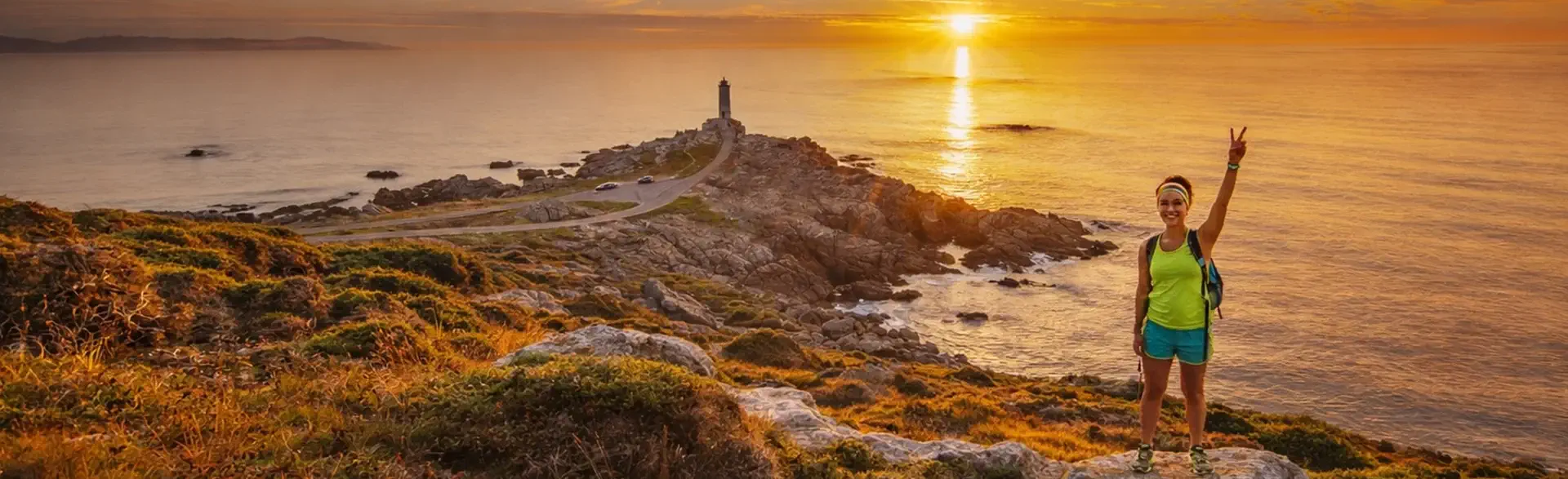
The Costa da Morte earns its name honestly. West of A Coruña, the Atlantic meets granite cliffs, small harbours and lonely sandy beaches with full force. The Camino dos Faros links lighthouses and coastal villages along this striking Galician shoreline, where fog, cloud and shifting light are part of the route’s character rather than a disturbance.
This hike suits travellers who value dramatic scenery more than guaranteed sunshine. Some sections are long, undulating and slippery in the rain. Anyone planning stages in advance can check distances and elevation in the Outdooractive hiking guide. Good rain gear and flexible expectations matter more here than an easy daily total.
Camí de Ronda on the Costa Brava: rocky coast, smart stage planning
The Costa Brava is no secret, yet it can still feel remarkably quiet. The key is not to rely only on the well-known promenades and main beaches. On the Camí de Ronda, coastal paths, old connecting trails and small coves link up between Blanes and the French border, with especially rewarding stretches north of Palamós and around Cap de Creus.
The contrast is part of the appeal: a rocky coastal path above sparkling water in the morning, a village with café, harbour and good food in the afternoon. Visitor numbers rise sharply in high summer, while spring and late autumn reveal the Costa Brava’s calmer side, perfect for a quiet coastal hike. On an organised point-to-point walk, luggage transfer and accommodation booked in advance simplify the planning, especially where overnight villages sit off the main path.
São Jorge in the Azores: walking down to the fajãs
São Jorge is long, narrow and shaped entirely by the Atlantic. The island’s most distinctive coastal landscape lies in its fajãs: small, fertile flats at the foot of steep slopes, reached along old paths. The descent works the legs hard, but at the bottom waits another world of black lava, lush green, simple houses and open sea.
Here, quiet is more a matter of geography than season. Many fajãs are remote, some reachable only on foot or via narrow roads, making for a genuinely quiet coastal hike. Weather can change quickly, and wet steps demand concentration, but the reward is a coastline that feels volcanic, agricultural and unmistakably alive.
Flores in the Azores: waterfalls above the ocean
Flores, the westernmost Azorean island, is small, green and remarkably rich in water. Coastal walks here cross high plateaus, pass crater lakes and reach steep slopes where streams plunge towards the Atlantic as waterfalls. Villages such as Fajã Grande or Ponta Delgada make good starting points for paths that reveal the island’s dramatic topography.
Flores suits travellers who appreciate remoteness and can handle changeable weather. Fog can limit visibility and rain makes paths slippery, so not every stage works in every condition. Taking several unhurried days instead of ticking off kilometres daily turns the walk into a quiet coastal hike and improves the chances of catching those quiet hours between showers.
La Palma: lava coast and laurel green in the northwest
La Palma is usually associated with volcano routes and high-altitude paths, yet its northwest reveals a calmer coastal side. Old connecting trails, terraced fields and deep ravines shape the sections around Puntagorda, Tijarafe and Santo Domingo, where the sea isn’t always right beside the path but remains present as a blue line or a distant roar.
This quiet coastal hike suits walkers who don’t mind elevation gain. Paths climb and drop steeply, and the combination of sun, wind and dark volcanic rock can be demanding. Conditions are often pleasant in winter, while the summer months bring more heat and call for careful water planning.
What makes a genuinely quiet coastal hike
The right route is only half the planning. Coastal paths depend more heavily on weather than many inland walks: wind lowers the felt temperature, rain changes how secure the footing feels, and sun without shade increases water needs. A stage that looks easy on the elevation profile can turn demanding on sand, rock or narrow paths.
For a relaxed trip, it pays to set realistic daily distances and build in some reserve. It also helps considerably when accommodation is already arranged, luggage has already moved ahead, and GPS navigation with accurate route information is ready to use. That way, the freedom of a self-guided walk stays intact, without every evening being spent searching for rooms or working out the next transfer.
Key Facts
Before booking a coastal route, these points help with orientation:
- Spring and autumn suit Atlantic routes such as the Rota Vicentina or Galicia best.
- September and October are usually the most pleasant months on Menorca and the Costa Brava.
- The Azores and La Palma call for flexible planning due to fast-changing weather.
- Sure-footedness matters more than raw fitness on sand, rock and lava paths.
- Luggage transfer and fixed accommodation noticeably reduce the planning workload.
- School holidays and high summer bring more visitors to well-known sections.
Frequently Asked Questions
What actually makes a coastal hike feel quiet?
Travelling outside school holidays, choosing stages carefully and accepting longer transfers all help turn a busy route into a quiet coastal hike. Quiet doesn’t mean deserted; it means deliberately avoiding the busiest hours and sections along a route.
Which route suits beginners best?
The Camí de Cavalls on Menorca is generally manageable technically and offers short to medium stages, making it a fine choice for a quiet coastal hike. Heat and stony ground still call for preparation, particularly during the summer months.
When is the best time for Atlantic coastal hikes?
Spring and autumn work well for the Rota Vicentina, Galicia, Flores and São Jorge. Temperatures suit walking, and the weather tends to be more predictable than in winter.
Do these hikes require special equipment?
Sure-footed shoes, rain protection and enough water are essential on every route. Depending on the destination, sun protection for shadeless sections or layered clothing for changeable Azorean weather becomes equally important.
How does luggage transfer support quiet coastal hikes?
Luggage is moved ahead between stages, so walking without a heavy pack makes each stage of a quiet coastal hike far more relaxed, and accommodation is already confirmed before arrival. That leaves time to linger at a clifftop instead of worrying about the next transfer.
The right moment to stop at the cliff edge
A quiet coastal hike doesn’t begin at the trailhead. It begins with a route that matches your own pace, and with enough time to stop at a clifftop instead of already thinking about the next hotel. Seven coasts, seven characters: choosing season, stage length and logistics with care brings a stillness in Portugal, the Azores, Galicia or the Canary Islands that stays with you long after the week ends.