
11 Sep La Gomera vs La Palma: Which Island Is Right for Your Hike?
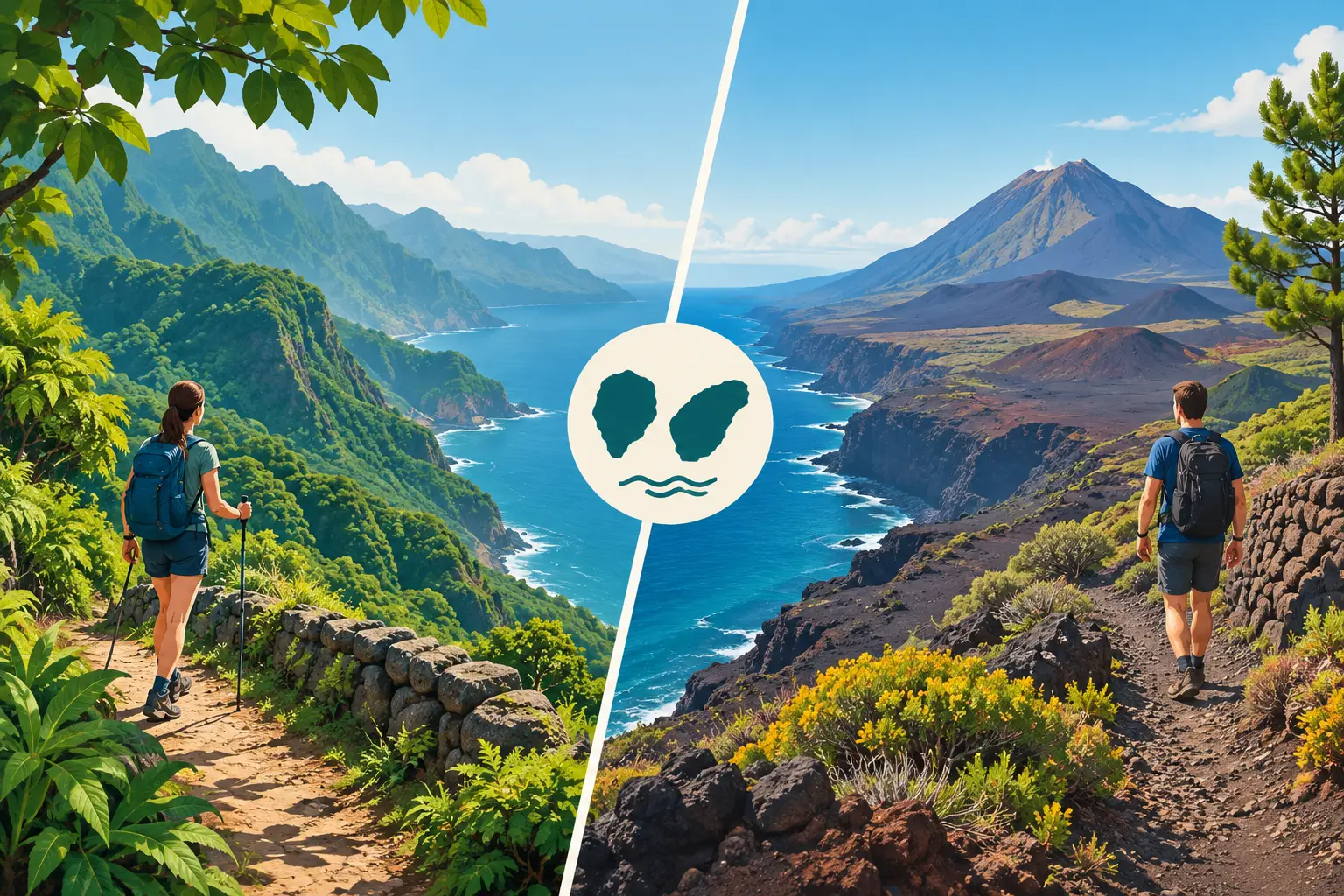
Choosing between La Gomera vs La Palma isn’t just about picking between two beautiful Canary Islands. Both are strong hiking destinations, both offer dramatic elevation gains, and both provide a welcome distance from typical beach holidays. Yet their character is fundamentally different: La Gomera is compact, authentic, and carved by deep ravines. La Palma feels larger, more expansive, and more volcanic—with long ridgelines, black lava fields, and spectacular high-altitude trails.
For an independent hiking trip, it’s worth looking beyond the photos. What matters most is your preferred pace, your sure-footedness, the length of your daily stages, and whether you’d rather hike through laurel forest and small hamlets or be drawn to wide crater landscapes and volcanic routes.
La Gomera vs La Palma: Character Comparison
La Gomera is the island for hikers who want to experience rich landscapes over short distances. Trails climb quickly from coastal towns into silent barrancos, wind along terraced slopes, and plunge into the moist, ancient laurel forest of Garajonay National Park in the island’s interior. The scenery often feels green, enchanted, and surprisingly quiet. Even on sunny days, mist can drift through the tree heather at higher elevations—this interplay is precisely what makes it special.
La Palma bears the nickname Isla Bonita for good reason, but for active travelers it’s primarily the island of grand vistas. The ridgeline of Caldera de Taburiente, the volcanic chain in the south, and the views from Roque de los Muchachos create hiking backdrops with true long-distance impact. Here you frequently traverse open crests, pass through pine forests, and walk over dark volcanic rock. Distances between start and finish are longer, elevation changes more pronounced.
Those seeking small villages, traditional cultural landscapes, and varied day hikes usually feel at home quickly on La Gomera. Those who love long high-altitude paths, vigorous ascents and descents, and volcanic expanses will experience La Palma particularly intensely.
Hiking on La Gomera: Ravines, Forest, and Short Routes
La Gomera works excellently for a week-long hiking trip with changing bases or a multi-stage route. The island is small but by no means flat. Many trails begin or end by the sea, while the highest points reach nearly 1,500 meters. This creates routes with significant climbs and long descents that can be physically demanding without necessarily requiring very long daily distances.
Particularly striking is the contrast between the drier coastal regions and the green center. In Valle Gran Rey, palm groves, terraced fields, and jagged rock walls accompany the hikes. Around Hermigua or Agulo, fertile valleys reveal the island’s rural side. In Garajonay, paths wind through laurel forest, tree heather, and mossy passages that feel almost fairytale-like when clouds roll in.
La Gomera is a good choice if you prefer varied stages and enjoy arriving in a manageable village after your hike. The island rewards curious exploration: an old connecting path, a small bodega along the way, or the view from one ravine to the next are often as much part of the day as the summit moment.
Who La Gomera Suits Best
La Gomera suits hikers with solid basic fitness who enjoy being out daily but don’t need extremely long stages. It’s also attractive for people planning their first self-guided Canary hiking trip: the routes are diverse, distances are manageable, and the landscape changes quickly. Sure-footedness remains important, as rocky descents and narrow paths are part of the experience on many routes.
Another advantage is the unhurried travel feeling. On La Gomera, collecting famous viewpoints takes a back seat to the journey itself from valley to valley. Those seeking peace and preferring to hike rather than drive will find particularly suitable conditions here.
Hiking on La Palma: High Trails and Volcanic Landscapes
La Palma demands somewhat more from hiking legs. While the island does offer pleasant valley paths and coastal walks, its great classics play out at altitude and on volcanic routes. The GR 131 crosses La Palma over impressive mountain sections and connects many of the most scenic regions. On a multi-day route, you experience how dramatically the island changes between north, center, and south.
The Caldera de Taburiente is one of the Canaries’ most striking hiking areas. Steep walls, deep cuts, and bright pine forests define the scenery. Above run high-altitude trails offering expansive views over the cloud layer and to neighboring islands on clear days. Such days remain memorable but demand realistic assessment: altitude, sun, wind, and long descents can significantly increase the strain.
In the south, La Palma becomes a volcanic island. The Ruta de los Volcanes leads through an open, dark landscape of ash, lapilli, and frozen lava. Hiking here is less shaded than in the north or the forested areas of the Caldera. Good sun protection, sufficient water, and reliable navigation are especially important. After volcanic activity, trails may be temporarily rerouted or closed. A carefully planned trip considers current conditions and offers suitable alternatives.
Who Should Choose La Palma
La Palma is ideal for experienced hikers looking forward to longer days and more elevation gain. Those who enjoy mountain hiking, move confidently on uneven terrain, and accept a demanding ascent for impressive panoramas will find an exceptionally diverse terrain here. This doesn’t mean La Palma is only for endurance athletes.
With sensibly structured stages, luggage transfer, and transfers to trailheads, the island can be hiked very comfortably. This organization is particularly valuable on linear routes: it transforms a challenging landscape into a journey where you can focus on the path, views, and stops rather than daily bus schedules.
Key Facts: La Gomera vs La Palma Overview
The most important differences between both islands at a glance:
- Size and distances: La Gomera is more compact, shorter transfers, smaller villages. La Palma larger, longer driving times for point-to-point hikes.
- Landscape character: La Gomera green, ravines, laurel forest. La Palma volcanic, open high trails, pine forest, lava fields.
- Elevation profile: La Gomera frequent ups and downs over short distances. La Palma longer ascents, greater absolute elevation changes.
- Difficulty level: La Gomera moderate, good basic fitness required. La Palma more demanding, longer stages, more elevation gain.
- Climate on routes: La Gomera variable between coast and altitude, mist possible in Garajonay. La Palma large differences, heat in the south, wind at altitude.
- Best time to visit: Both islands hikeable year-round, spring and autumn particularly pleasant.
- Best choice for: La Gomera for varied day hikes and culture-rich routes. La Palma for ambitious high-altitude hikers and volcano enthusiasts.
The Practical Decision: Stages, Climate, and Logistics
When choosing between La Gomera vs La Palma, timing also matters. La Gomera is climatically diverse due to its elevations. The coast can be warm and dry while Garajonay is noticeably cooler, windier, or damper. A light extra layer belongs in your daypack even when the morning starts sunny.
On La Palma, temperature differences between coast and mountains are also significant, often especially pronounced on high-altitude trails. In summer, heat on open volcanic passages is an important factor. In winter, wind and clouds can dominate the highlands. Spring and autumn are particularly pleasant times for many hikers, though even then the specific route determines the right equipment.
Logistically, La Gomera is compact but not always quick. Winding roads and deep valleys mean short distances as the crow flies can result in longer driving times. La Palma is larger and often requires more transfers or a rental car for point-to-point hikes. With a well-designed stage route, however, this becomes no disadvantage: accommodations, luggage transport, GPS navigation, and route descriptions ensure the daily schedule stays clear and hiking remains the focus.
Those who enjoy independent travel but don’t want to assemble the planning of route, accommodations, and luggage themselves can choose a self-guided hiking trip with professional organization. Especially on islands with strong elevation profiles, this creates freedom: you walk at your own rhythm while knowing the organizational pieces are coordinated.
Two Questions That Make the Decision Easier
First imagine what images you want to take home from the trip. Are they green ravines, cloud forest, palm terraces, and quiet village paths? Then much speaks for La Gomera. Do you see yourself on a volcanic ridge, over black ash fields, or high above a caldera? Then La Palma is probably your island.
The second question is physically concrete: Do you want daily elevation gain in compact form or are you seeking long, alpine-feeling hiking days? La Gomera challenges frequently through constant ups and downs. La Palma additionally challenges through length, altitude, and open exposure. Both are rewarding, but not the same.
If you’re still undecided between both islands, don’t choose the more spectacular photo backdrop, but rather the landscape you’ll enjoy moving through for several days. The best Canary hiking trip is one where the last stage not only looks beautiful but also still feels good.
Frequently Asked Questions About La Gomera vs La Palma
Which island is better for beginners: La Gomera vs La Palma?
La Gomera is generally better suited for hiking beginners with good basic fitness. Stages are shorter and more varied, infrastructure more compact, and trails less exposed than on La Palma’s long high-altitude routes. However, those with prior mountain experience who don’t shy from longer days can also master La Palma as their first Canary hike.
How do La Gomera vs La Palma differ climatically for hiking?
Both islands show large climate differences between coast and altitude. La Gomera often has mist and moisture in Garajonay while the coast stays dry. La Palma offers more sun at altitude but also more wind, and intense heat in the south on open volcanic paths. Weatherproof layers and sun protection are important on both islands.
Which island has more spectacular views?
La Palma often has more dramatic long-distance views, especially from Roque de los Muchachos and along the volcanic ridges. La Gomera scores with more intimate, green landscapes and surprising perspectives from the barrancos. Both islands impress, but in different ways: La Palma more monumental, La Gomera more layered.
Do I need a rental car on La Gomera vs La Palma?
With an organized stage hike including luggage transfer and included transfers, a rental car isn’t necessary on either island. Those planning individual day hikes benefit more from a car on La Palma, as the island is larger and the bus network less dense. On La Gomera, buses and transfers are often sufficient.
Can you combine both islands in one trip?
Theoretically yes, practically it’s exhausting. Both islands deserve several hiking days, and ferry connections via Tenerife cost time. For an intensive hiking experience, it makes more sense to choose one island and properly experience it rather than superficially skimming both.
Conclusion: Decide According to Your Hiking Style
The question La Gomera vs La Palma can’t be answered universally, as both islands are excellent hiking destinations. La Gomera convinces through its compactness, its variety, and its closeness to nature in a small space. La Palma impresses through its volcanic expanse, its challenging high-altitude trails, and its powerful landscapes. The best choice depends on how you want to hike—not just what you want to see.
For more in-depth exploration of the Canary hiking islands’ unique features, the official Outdooractive platform provides comprehensive route information, elevation profiles, and user reviews for both islands.