
31 Oct GR 131 or Rota Vicentina: Which Trail Fits You Best?
GR 131 or Rota Vicentina: this is the question once you start planning a point-to-point walking holiday where black volcanic ground competes with endless Atlantic cliffs. Both long-distance trails suit self-guided travel beautifully, yet they feel completely different underfoot: the GR 131 demands climbing and sure-footedness on volcanic terrain, while the Rota Vicentina keeps the coast at your side for days on end.
Choosing the right trail means starting your holiday with realistic expectations, leaving more room for what actually matters: scenery, movement and the satisfaction of covering a day’s distance under your own steam. This comparison shows which route suits your fitness, your preferred landscape and your travel season best.
GR 131 or Rota Vicentina: two very different characters
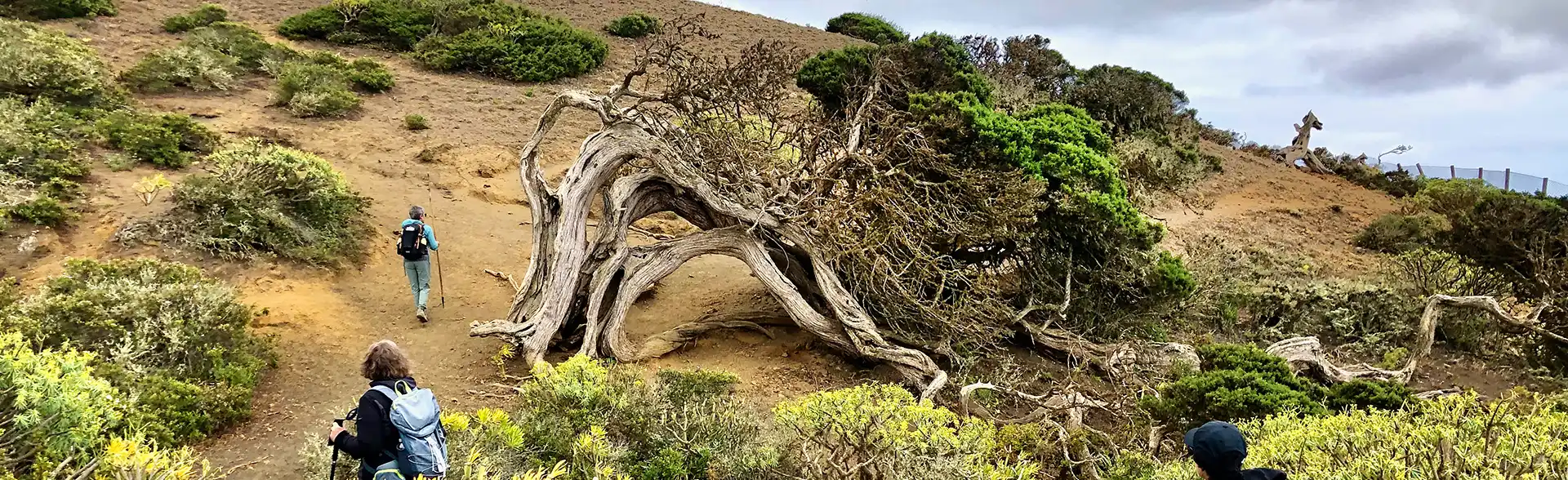
The GR 131 links the Canary Islands as one great long-distance trail. In practice, travellers walk individual island sections or combine selected stages into a single trip through volcanic landscapes, pine forests, high plateaus, ravines and small mountain villages. The scenery changes fast, and climbing is usually part of the daily routine.
The Rota Vicentina runs through south-west Portugal, across the Alentejo and the Algarve. Its best-known section, the Fishermen’s Trail, repeatedly hugs the wild Atlantic coastline. Sandy paths, dunes, cliffs and coves define the route, complemented by the quieter Historical Way through cork oak landscapes and small villages.
The core difference is simple: when comparing GR 131 or Rota Vicentina, one is a mountain and island trail with a volcanic character, while the other is primarily a coastal walk where the Atlantic stays with you for most of the journey. Neither route is an easy stroll, but each one challenges you in its own way.
Who the GR 131 suits best
The GR 131 suits hikers who see climbing not as a hurdle but as part of the experience. Ascents and descents open up views over craters, jagged coastlines and mountain ridges, but they demand fitness, sure-footedness and a realistic sense of your own daily form. A 15-kilometre day on stony paths with long climbs can feel far more intense than the same distance on flatter ground.
The trail is particularly rewarding for travellers who enjoy contrast: walking across an open, lava-shaped plateau in the morning and descending through fragrant pine forest in the afternoon is quite normal in the Canary Islands. Higher sections can be cool, windy or cloudy in winter, while summer heat calls for an adjusted pace and plenty of water.
For solo travellers, a well-prepared point-to-point walk is especially comfortable: GPS navigation, detailed route notes, pre-booked accommodation and organised transfers take the organisational pressure off each day, without limiting the freedom to start early or linger in a village at the end of a stage.
What makes the GR 131 demanding
Not every section is technically difficult. The challenge usually comes from the combination of terrain, climbing, sun and distance. Loose volcanic stones, long descents or exposed sections all require attention. Hikers who walk regularly and are used to longer climbs will find an exceptionally varied terrain on well-chosen GR 131 stages.
The trail suits you less if you are mainly looking for even coastal stages without significant climbing. In that case, the Rota Vicentina usually offers a gentler rhythm, although its sandy sections should never be underestimated.
Why the Rota Vicentina is worth choosing
The Rota Vicentina is the right choice for anyone who wants to experience the Atlantic as closely as possible. The Fishermen’s Trail often runs along narrow coastal paths, through soft sand and past spectacular cliff edges. The light changes constantly, gulls circle overhead, and on many days the sound of the waves accompanies the entire walk.
Thanks to less climbing, stages often feel more accessible than many GR 131 sections. Less hilly, however, does not automatically mean easy: deep sand drains energy, especially in warm weather, and coastal wind can increase the effort required. Whichever you choose, GR 131 or Rota Vicentina, good hiking boots, sun protection and enough water belong in your daypack just as much as on a volcanic route.
The Historical Way is worth considering if you want to explore the region at a quieter pace. It runs more often inland and offers firmer paths and gentler scenery. Walkers who want dramatic cliffs every single day tend to stick with the Fishermen’s Trail, while those who also appreciate small villages, fields and cork oaks find the Historical Way a fitting complement.
The best season for Portugal’s south-west coast
Spring and autumn are particularly pleasant for most hikers: temperatures are usually moderate, spring landscapes are often green and in bloom, and autumn can bring calm, clear walking days. Summer draws crowds to the coast, but heat, strong sun and dry trail sections increase the effort, making shorter stages and an early start essential.
Winter can make the Rota Vicentina wonderfully quiet, though you should expect rain, wind and changeable Atlantic weather. For experienced independent travellers with the right gear, this is not a reason to rule the season out, just something to plan around.
Navigation and luggage transfer compared
Both long-distance trails work well for independent walking holidays as long as stages are chosen carefully and reliable GPS tracks are used. Trail markings help along the way but are no substitute for attention, especially at junctions, after bad weather or on sandy coastal paths. Walkers researching trail conditions in more detail can turn to the Outdooractive hiking guide for additional background on both regions.
On the GR 131, the key is judging climbing and terrain correctly: plan not just distance but also ascent and descent time. On the Rota Vicentina, distance is often easier to calculate, although sand and wind can noticeably slow your pace. Whether you choose GR 131 or Rota Vicentina, hikers used to walking on asphalt or firm forest tracks will feel the difference quickly.
A luggage transfer changes the experience noticeably on both routes. Instead of carrying a full backpack, a daypack with water, weather protection, snacks and personal items is enough. That spares your knees and shoulders, especially on long GR 131 descents or when walking through deep Rota Vicentina sand. Your main luggage is already waiting at the next hotel by the evening.
The main differences between both long-distance trails at a glance:
- GR 131: volcanic mountain terrain with significant climbing in the Canary Islands
- Rota Vicentina: coastal walk with sandy sections in south-west Portugal
- GR 131 requires sure-footedness and fitness for steep ascents and descents
- Rota Vicentina demands stamina for deep sand and exposed sunny stretches
- Best season for both trails: spring and autumn
- Luggage transfer eases the load on knees and shoulders on both routes
- GPS navigation helps at junctions and on unmarked sections
Frequently asked questions
Is the GR 131 harder than the Rota Vicentina?
Yes, the GR 131 usually requires more fitness because it involves significantly more climbing and technically demanding terrain. The Rota Vicentina is flatter but tiring in its own way, due to deep sand and long sun-exposed coastal stretches. Which of GR 131 or Rota Vicentina feels harder depends largely on your own hiking experience.
GR 131 or Rota Vicentina: which is better for beginners?
The Rota Vicentina is often more accessible for beginners because its elevation profile is more even. Hikers with some mountain experience can still choose moderate GR 131 stages that suit their level. Either way, an honest assessment of your own daily fitness matters most.
What is the best time of year for both trails?
Spring and autumn are considered the most pleasant seasons for both routes, with moderate temperatures and less extreme heat. In summer, an early start and plenty of water are essential on the Canary Islands and the Atlantic coast alike. Winter is possible on both trails but requires weather protection and flexibility.
How easy is navigation without prior long-distance hiking experience?
A well-prepared, self-guided trip with GPS navigation makes GR 131 or Rota Vicentina manageable even for less experienced hikers. The app guides you stage by stage and alerts you if you stray off the route. Physical trail markings complement the digital navigation but do not fully replace it.
Is a luggage transfer worth it on these trails?
Yes, a luggage transfer is particularly worthwhile on multi-day, point-to-point walks with daily hotel changes. It spares your knees and shoulders on the GR 131’s climbs just as much as when walking through the Rota Vicentina’s deep sand. Your main bag is already waiting at the next stop by the time you arrive.
Which trail is right for you in the end
Choose the GR 131 if you’re drawn to mountain scenery, volcanic landforms and sportier stages, and if you enjoy climbing to earn sweeping views as your reward. Choose the Rota Vicentina if your idea of hiking happiness involves salty air, coastal paths and long views out over the Atlantic.
Still undecided? Think back to your favourite past hiking holidays. If the best days involved long climbs and spectacular summit views, the GR 131 is likely your trail. If you’ve never tired of coastal paths and want the sea at your side every day, the Rota Vicentina will probably suit you better. Whichever of GR 131 or Rota Vicentina you choose, a route doesn’t need to be the hardest one to be memorable, just the one that matches your fitness, your favourite scenery and your preferred pace.