
03 Oct Fishermen’s Trail Portugal: which route suits you?
Anyone planning to walk Portugal’s wildest Atlantic coastline eventually asks about the Fishermen’s Trail Portugal offers along the Rota Vicentina network. Strictly speaking, it is not an either-or choice. The Rota Vicentina is the whole trail network in southwest Portugal, and the Fishermen’s Trail is its most spectacular coastal route. The real question is whether you want clifftop paths right above the sea, or a more varied crossing of the Alentejo and Costa Vicentina.
Between the quiet Alentejo and the Algarve lies a coastline that has kept its original character: wide beaches, red-brown cliffs, cork oaks, small fishing villages, and an unbroken view of the Atlantic. Both routes cross this landscape, but each demands something different from walkers.
Fishermen’s Trail Portugal versus the Historical Way
The Rota Vicentina links several waymarked long-distance trails and loop walks. Its two main branches are the Historical Way inland and the Fishermen’s Trail along the coast. Travellers planning a self-guided walking holiday can choose one line or combine both.
The Historical Way runs from Santiago do Cacem south towards Cabo de Sao Vicente, through cork oak groves, gentle hills and sleepy villages. The Fishermen’s Trail follows the old fishermen’s paths, linking villages such as Porto Covo, Vila Nova de Milfontes, Almograve, Zambujeira do Mar, Odeceixe, Aljezur and Sagres or Lagos.
Who should choose the Fishermen’s Trail?
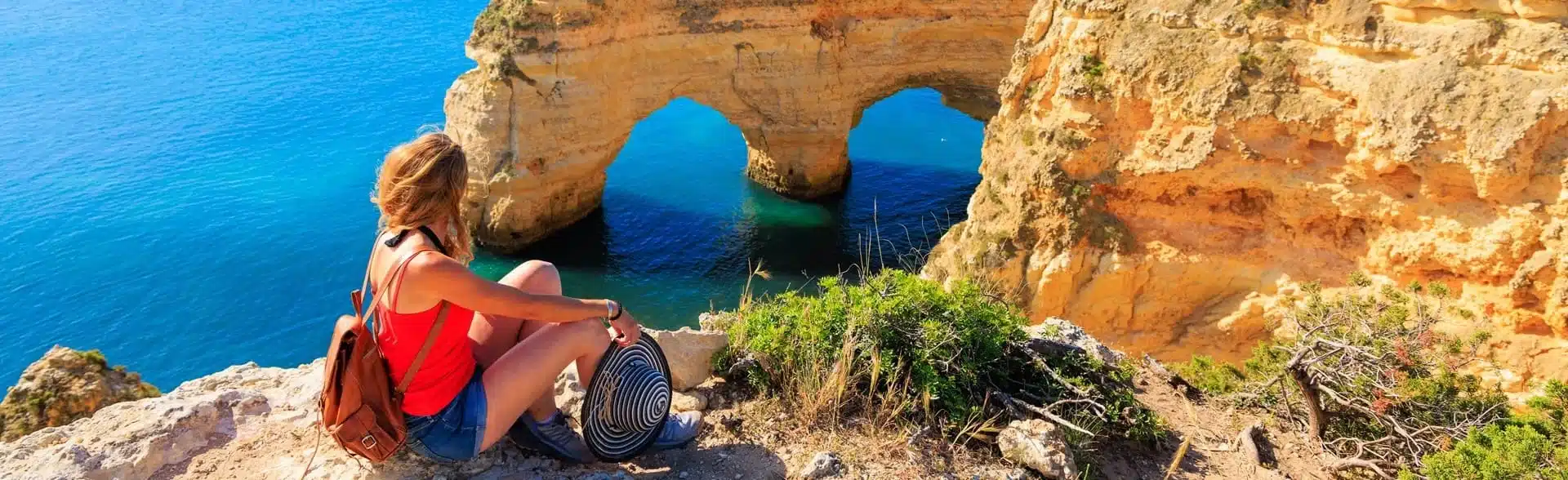
The Fishermen’s Trail suits travellers who want coastal walking as the main focus. Stages offer dramatic views of rock arches, hidden coves and beaches with barely any footprints in the morning. The sections through the Southwest Alentejo and Vicentina Coast Natural Park are especially striking.
Technically it is rarely difficult, but it is tougher than the elevation figures suggest. Deep sand takes energy, and exposed clifftop sections can be demanding in sun and wind. Walkers who enjoy varied terrain and reasonable fitness will love this route.
Sand, cliffs and the trail underfoot
Many sections run along narrow paths right at the cliff edge. The trail is well marked, but attention is still needed, especially in wind or after rain. This is not about alpine difficulty, but about respecting the coast: keep your distance from the edge and stay on the marked path.
Sand is the defining element of the route. It keeps the trail wild but can tire ankles and calves. Lightweight, well broken-in shoes with good grip are worth packing, and poles help on long sandy stretches.
When the Historical Way is the better choice
The Historical Way is the calmer, more varied side of the Rota Vicentina. Instead of constant sea views, expect rural paths, the scent of pine and herbs, whitewashed houses among fields, and a noticeably slower pace. Its surfaces are generally firmer and more even, which makes consecutive walking days easier for many travellers.
Combining the coast and the inland route
For many walkers, combining both routes is the ideal solution. A few stages on the Historical Way offer a gentle start, before the Fishermen’s Trail delivers a striking contrast along the coast. You can explore tailor-made itineraries via our walking route guides or browse other self-guided destinations for inspiration.
A few points to weigh when deciding:
- Trip length: one week favours a clear focus
- Fitness: sandy paths demand more energy than firm trails
- Weather sensitivity: wind and sun are stronger on the coast
- Interest: ocean views or Alentejo hinterland
Weather and timing: the Atlantic sets the pace
The most pleasant months are spring and autumn. In summer, the Fishermen’s Trail is only fully recommended for heat-tolerant walkers, since shade is scarce. In winter the coast turns wilder, but sunny days can be especially rewarding.
Key Facts
- Fishermen’s Trail: coastal route from Porto Covo to Lagos/Sagres
- Historical Way: inland route through the Alentejo
- Best season: April/May and September to November
- Sandy sections call for broken-in footwear
- Luggage transfer simplifies stage planning
- Combining both routes suits longer holidays
Frequently Asked Questions
What is the difference between the Rota Vicentina and the Fishermen’s Trail?
The Rota Vicentina is the whole trail network, while the Fishermen’s Trail is its coastal route.
Is the Fishermen’s Trail suitable for beginners?
Technically yes, though reasonable fitness helps, mainly due to the sandy stretches.
Which season suits the Fishermen’s Trail Portugal walk best?
Spring and autumn offer the most comfortable walking conditions.
Can both routes be combined?
Yes, many travellers mix Historical Way stages with sections of the Fishermen’s Trail.
Do I need special gear for Fishermen’s Trail Portugal?
Lightweight broken-in shoes and sun protection are generally enough.
A decision worth taking your time over
In the end, it is not about ticking off the most kilometres. The right trip is the one where you still have time to pause at a cliff edge and look forward to the next day’s walk.
For further trail planning resources, see the Outdooractive hiking guide.