
14 Sep Benefits of Luggage Transfer When Hiking
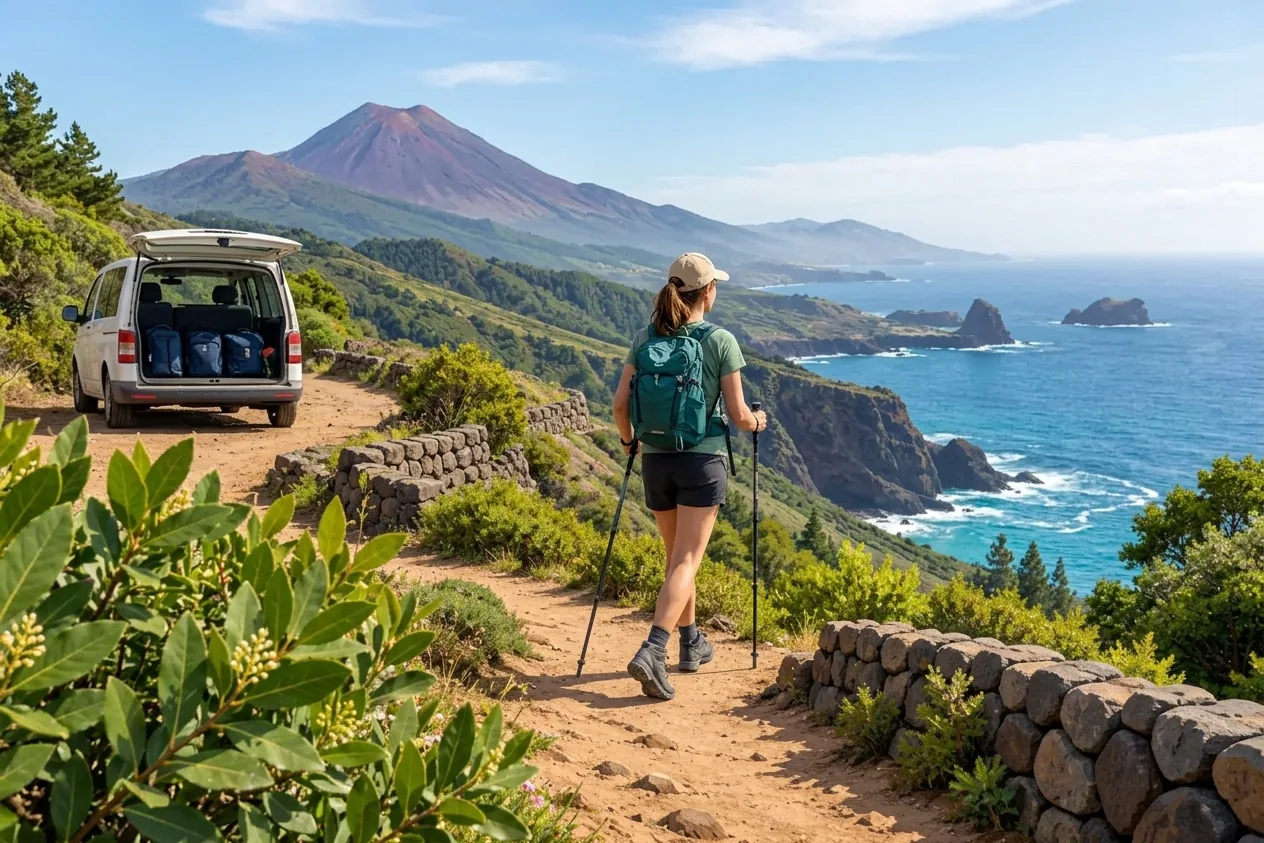
When you set off on a coastal path in the morning, you want to focus on the sound of the Atlantic, the scent of pine trees, or the next viewpoint – not on shoulder straps, pressure points, and every extra kilo. The benefits of luggage transfer when hiking become apparent not just in the evening at your accommodation, but on every kilometre in between: you hike more freely, recover better, and can enjoy multi-day treks the way they were meant to be experienced.
On a self-guided hiking trip, your main luggage doesn’t stay behind somewhere. It’s transported from accommodation to accommodation while you carry only a light daypack. There’s room for water, snacks, weather protection, sunscreen, navigation, and an extra layer for windy heights or shady gorges. Everything else is already waiting for you at the day’s destination.
Benefits of Luggage Transfer When Hiking at a Glance
The most obvious benefit is physical relief. But luggage transfer changes far more than the weight on your back. It creates flexibility in daily planning, makes longer routes accessible to leisure hikers, and helps you distribute your energy sensibly over multiple stages.
This is particularly noticeable on long-distance trails with changing terrain. Steep ascents, loose scree, long descents, or sandy coastal sections demand concentration and sure-footedness. With a daypack, you move more confidently and keep reserves for the passages that deserve your full attention.
Less Weight, More Joy on Each Stage
A large trekking backpack can quickly weigh ten to fifteen kilograms – with clothing, toiletries, chargers, spare clothes, and everything that seems necessary for several days. Even well-trained hikers notice this weight after several hours. Shoulders tense up, knees are stressed more on descents, and an attractive passage can become a gruelling task.
With luggage transfer, you usually carry only what you actually need during the day. This not only makes each step easier but also hiking itself: you maintain better posture, progress more safely on technical paths, and can linger longer at a viewpoint without immediately thinking about the remaining distance.
This doesn’t mean a tour automatically becomes easy. Elevation gain, heat, wind, and trail conditions remain the determining factors. A luggage transfer doesn’t take away the movement, but it reduces a burden that often brings no additional value to the nature experience.
Better Recovery, Longer Enjoyment
Multi-day treks are not a single hiking day but a sequence of exertion and recovery. Someone who arrives in the evening with tired shoulders and aching feet starts the next morning differently from someone who could invest their strength mainly in the route. This difference becomes particularly noticeable on trips with five, seven, or more stages.
At your accommodation, you can shower, put on dry clothes, and eat in peace while your main luggage is already there. You don’t have to pull anything out of a compressed backpack or repack equipment for the next night. These small conveniences create time for a break on the terrace, a stroll through the stage town, or simply looking at the next day’s map.
Those hiking with trekking poles also benefit. They support on long descents and help maintain rhythm. Without a heavy backpack, their effect can often be used even better because the upper body works more freely and the overall load on joints and muscles decreases.
More Flexible Stages Without Logistical Burden
Luggage transfer gives a trip structure without restricting your independence. Accommodations and transfers are organized, stages follow a sensible sequence – but you decide when to start, how long to pause, and whether to make a detour to a viewpoint along the way.
This is particularly valuable on island and coastal routes. Starting and finishing points don’t always coincide with where you would park your vehicle. When a rental car, transfer, or return journey at the end of the trip makes more sense, luggage doesn’t have to become a daily planning problem. The route can follow the landscape instead of having to orient itself around a single accommodation.
At NATOUR, this form of organization is part of many self-guided hiking trips: stages, accommodations, navigation, and luggage logistics mesh together so that you travel independently yet don’t have to arrange the next connection or your suitcase transport every evening.
More Choice in Clothing and Equipment
With a light daypack, you don’t have to sacrifice comfort during the day because the rest of your equipment travels in your main luggage. A fresh shirt for the evening, light shoes for the village, a warmer jacket, or a second pair of hiking socks make a real difference after a long stage.
This is also pleasant in changeable weather. You can have rain gear and an extra warm layer in your daypack without having to pack minimally for all overnight stays. Main luggage can be organized a bit more generously – sensibly, not overloaded.
Nevertheless, conscious packing is worthwhile. Luggage transfer is not a free pass for an overstuffed suitcase. Many accommodations are in small villages, some transfers take place on narrow roads, and weight or piece limits usually apply per person depending on the trip. A medium-sized, well-closing suitcase or travel bag is often more practical than bulky hard-shell luggage.
Who Benefits Most from Luggage Transfer
Leisure hikers appreciate the relief because they don’t view stages as sporting competition but want to consciously experience landscape, regional cuisine, and special accommodations. Couples or groups of friends with different paces also benefit: whoever walks faster can wait relaxed at the destination instead of losing additional energy with heavy luggage.
The service is also interesting for experienced hikers. Those who have already undertaken long tours with full backpacks know exactly what planning and fitness lie behind it. On a trip meant to combine recovery and active travel, forgoing the large load can be a very conscious decision.
Luggage transfer is particularly useful on long routes with many accommodation changes, on routes with pronounced ascents and descents, and in warm climates. Under sun and wind, fluid requirements increase – water belongs in the daypack and already brings enough weight. When clothing and toiletries don’t have to be carried additionally, the daily load remains manageable.
Key Facts About Luggage Transfer When Hiking
The most important points at a glance:
- Daypack usually weighs 3–5 kg instead of 10–15 kg
- Physical relief improves sure-footedness and concentration
- Faster recovery after each stage
- More flexibility in route planning and daily schedule
- Observe luggage guidelines: usually one suitcase up to 20 kg per person
- Particularly useful on multi-day treks from five stages onwards
- Ideal for routes with many elevation meters or warm climate
Frequently Asked Questions
What Benefits of Luggage Transfer When Hiking are most noticeable?
The physical relief is immediately noticeable: you move more confidently, stress knees and shoulders less, and can concentrate better on technical passages. Over multiple stages, recovery also improves significantly.
Is luggage transfer only useful for untrained hikers?
No. Even experienced hikers appreciate the opportunity to experience a route more intensely and have more energy for demanding sections. Luggage transfer is not a sign of lacking fitness but a conscious decision for more enjoyment on the trail.
What belongs in the daypack despite luggage transfer?
Water, snacks, sun and rain protection, navigation, first-aid kit, a warm layer, and personal medications. Everything you might need during the stage should be readily accessible.
What Benefits of Luggage Transfer When Hiking exist on multi-day treks?
On longer trips, the relief accumulates over several days. You start each morning refreshed, can distribute your energy better, and experience the landscape more focused. Daily arrival also becomes more relaxed because your luggage is already waiting.
Are there routes where luggage transfer is particularly important?
Yes, especially on coastal and mountain paths with many elevation meters, on routes through warm regions, and on tours with daily accommodation changes. Technically demanding sections are also managed more safely with a light backpack. Routes on La Palma, La Gomera, or along the Rota Vicentina particularly benefit from this logistics.
What Luggage Transfer Doesn’t Replace
As convenient as the logistics are: a realistic assessment of the route remains crucial. Check stage length, elevation gain, terrain, and expected temperatures before booking. A light backpack makes a demanding mountain stage more accessible but doesn’t transform it into a walk in the park.
Daily equipment must also be right. Well broken-in hiking boots, sufficient water, sun protection, a light rain jacket, and the provided navigation belong on every stage. Those traveling on foot bear responsibility for their own safety – regardless of where the suitcase travels.
Sometimes a classic base hiking trip fits better. If you stay several nights in the same accommodation and start daily with short transfers to circular routes, luggage changes aren’t necessary. The transport service shows its strength especially when you want to truly experience a route from place to place.
The most beautiful moment of a stage trip often lies just before the destination: the daylight softens, the path leads into a new village, and you know that shower, dinner, and your luggage are already waiting for you. That’s when good organization becomes not a visible programme but what it should be: the freedom to have the trail entirely to yourself. More information about organized multi-day treks with luggage transfer can be found in the Outdooractive hiking guide.