
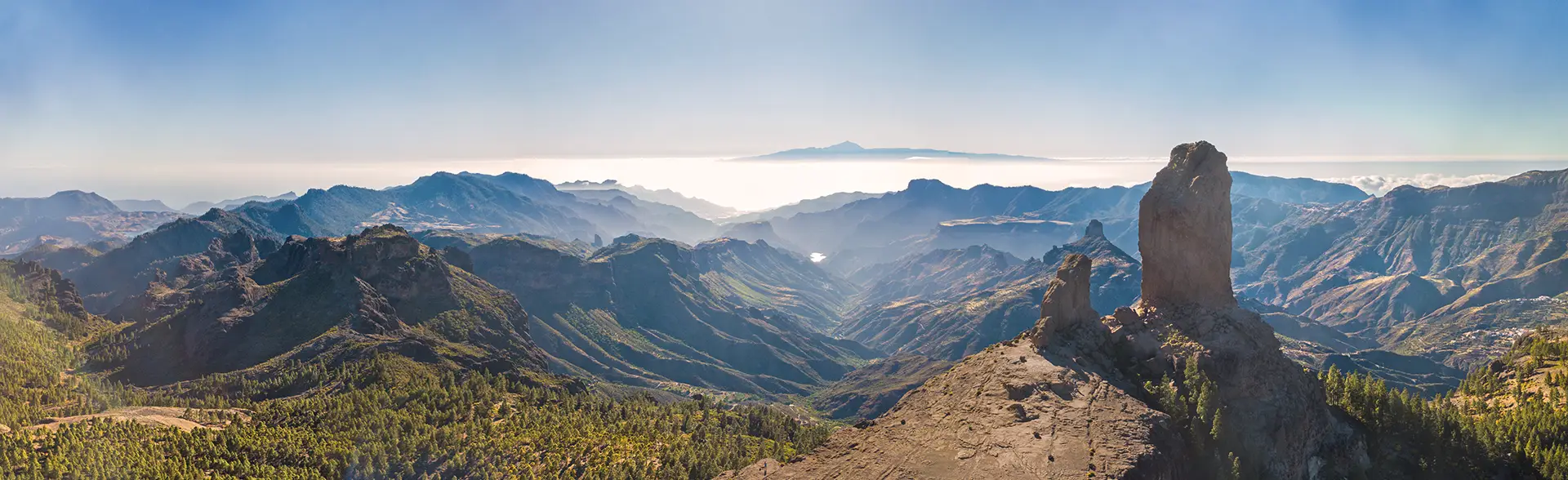
20 Jun Water Route to Agaete: ravines and subtropical vegetation in the heart of Gran Canaria
The Water Route to Agaete is one of the most surprising hiking trails in Gran Canaria. Unlike the volcanic and arid image that many travellers associate with the Canary Islands, this route crosses deep ravines, lush vegetation and landscapes shaped by water, offering an experience completely different from many other trails on the island.
For many hikers, this route reveals the greenest and least-known side of Gran Canaria. It is no coincidence that Belén, from Natour’s Organisation and Groups team, considers it her favourite route in the entire Gran Canaria hiking programme.
Discovering the greenest side of Gran Canaria
Gran Canaria is famous for the extraordinary variety of landscapes concentrated within a relatively small territory.
In just a few kilometres, it is possible to move from dry coastal areas to mountain environments dominated by ravines, forests and surprisingly abundant vegetation.
The Water Route is the perfect way to discover this diversity.
As the journey progresses, hikers quickly understand why Gran Canaria is often described as a miniature continent.
A landscape shaped by water
The true protagonist of this route is water.
Throughout the trail, visitors encounter elements that have shaped both life and the landscape of this part of the island for generations.
The presence of reservoirs and traditional water storage systems has created an environment where vegetation thrives despite the island’s volcanic origin.
This balance between nature and traditional resource management makes the route particularly interesting from both a scenic and cultural perspective.
Spectacular ravines and unforgettable panoramas
One of the main attractions of the route is the series of ravines it crosses.
Over thousands of years, erosion has sculpted a spectacular landscape characterised by deep valleys and steep slopes.
Along the way, numerous natural viewpoints offer stunning perspectives over the surrounding scenery.
These panoramas reveal the geological complexity of Gran Canaria and the immense power of the natural processes that have shaped the island.
Subtropical vegetation in the island’s interior
The abundance of water has encouraged the growth of vegetation very different from that found in many other parts of the Canary Islands.
Along the trail, hikers encounter:
- Palm trees.
- Fruit trees.
- Riverside vegetation.
- Species adapted to humid environments.
- Traditional agricultural areas.
This setting creates a refreshing atmosphere throughout much of the route and makes the walk especially appealing for those who enjoy greener landscapes.
Gran Canaria’s microclimates
One of the island’s most fascinating characteristics is its wide range of microclimates.
The combination of altitude, orientation and terrain creates very different climatic conditions within relatively short distances.
The Water Route is one of the best examples of this phenomenon.
While other areas of the island display drier landscapes, the constant presence of moisture here supports a fertile and lush environment that surprises most visitors.
Agaete: the final destination of the route
Arriving in Agaete is one of the most rewarding moments of the entire journey.
This historic town retains an authentic character that sets it apart from many of the Canary Islands’ tourist destinations.
Its peaceful streets, beautiful natural surroundings and proximity to the ocean make Agaete one of the most special places in Gran Canaria.
For many hikers, reaching the town provides the perfect conclusion to a day of nature and discovery.
The charm of the Agaete Valley
Beyond the town itself, the Agaete Valley is one of the most distinctive agricultural landscapes in the Canary Islands.
Thanks to its privileged climate, the area has developed a strong agricultural tradition that remains visible throughout the route.
The landscape is characterised by historic farms, terraced fields and crops that form an important part of the valley’s cultural identity.
Coffee grown in Europe
One of the most surprising aspects of the Agaete Valley is its coffee plantations.
Few travellers realise that Gran Canaria is home to some of the very few coffee-growing estates in Europe.
The valley’s unique climatic conditions allow coffee to be cultivated using traditional methods passed down through generations.
This makes Agaete a truly unique destination within Europe.
Tropical fruits and agricultural traditions
Alongside coffee plantations, visitors can also discover other characteristic crops of the valley.
During the hike, it is possible to see farms dedicated to tropical fruit production that benefit from the exceptional local conditions.
This connection between nature and agriculture adds significant cultural value to the hiking experience.
The route is not only about walking through spectacular landscapes but also about understanding the historical relationship between local communities and their environment.
Belén’s favourite route
Within the Natour team, Belén highlights this route as the most special of all those included in the Gran Canaria hiking programme.
The reasons are numerous.
On one hand, there is the spectacular scenery of the ravines and lush vegetation. On the other, there is the satisfaction of ending the day in a charming town such as Agaete.
The combination of nature, landscape and cultural heritage makes this a truly complete experience.
Self-guided hiking to discover Gran Canaria
The Water Route forms part of the Hiking GRAN CANARIA programme, designed for travellers who wish to explore the island with complete freedom.
The self-guided format allows hikers to set their own pace, stop whenever they wish and enjoy a much more personal experience.
All of this comes with the reassurance of having a professional organisation managing the trip behind the scenes.
Easy navigation with maps and GPX files
To ensure safe navigation throughout the route, Natour provides:
- Detailed maps.
- Accurate route descriptions.
- GPX files compatible with GPS devices and smartphones.
This documentation allows travellers to follow the route with confidence and fully enjoy the surroundings.
Organised transfers and stress-free logistics
One of the most appreciated aspects of the programme is its logistical support.
Natour organises the transfers required to reach the start of the route and return comfortably from Agaete at the end of the day.
This removes any transportation concerns and allows hikers to focus entirely on the walking experience.
Charming hotels in the island’s interior
The programme includes accommodation in small hotels selected for their authenticity and quality.
These establishments allow visitors to experience local hospitality and enjoy a stay that reflects the traditional character of Gran Canaria.
They also provide the comfort needed after a day exploring ravines and mountain trails.
What makes the Water Route to Agaete special?
Few hiking routes in the Canary Islands combine so many different elements within a single day:
- Spectacular ravines.
- Subtropical vegetation.
- Remarkable microclimates.
- Traditional agricultural heritage.
- Coffee and tropical fruit cultivation.
- Arrival in a charming historic town.
This combination makes the route one of the most complete and varied hiking experiences in Gran Canaria.
Key facts about the Water Route to Agaete
- Location: inland and north-west Gran Canaria.
- Final destination: Agaete.
- Main landscape: ravines and subtropical vegetation.
- Format: self-guided hiking.
- Includes: maps, GPX files, transfers and accommodation.
- Recommended programme: Hiking GRAN CANARIA.
Frequently asked questions about the Water Route to Agaete
Why is it called the Water Route?
Because much of the trail is shaped by reservoirs, irrigation channels and areas where water has enabled exceptional vegetation to flourish.
Is it a difficult route?
It is generally considered a moderate hike and is accessible to regular walkers.
What makes the Agaete Valley special?
Its agricultural traditions, coffee plantations, tropical fruit crops and exceptional natural surroundings.
Can the route be completed without a guide?
Yes. The self-guided programme includes maps, detailed descriptions and GPX files.
Why is it one of Natour’s favourite routes?
Because of the spectacular ravines, rich vegetation and the charm of finishing in Agaete.
Conclusion
The Water Route to Agaete is one of the best ways to discover the greenest and most authentic side of Gran Canaria.
Between ravines, subtropical vegetation, historic farms and landscapes shaped by water, hikers enjoy an experience that is very different from the typical image of volcanic islands.
Arriving in Agaete provides the perfect ending to a day that combines nature, culture and some of the most surprising landscapes in the Canary Islands.